

REVIEW · ENGLAND
The Sweet Spots of Covent Garden
Sweet treats plus theatre stories, on foot. This 2-hour Covent Garden stroll mixes theatre history with snack stops in classic London corners, and it is led by Paul, a local guide who keeps the mood light and funny. I also love how the route feels like a real walk through performance London, with enough built-in sweetness to keep you paying attention.
The main thing to weigh is that several theatre sights are view-only, not ticketed, so you will spend time looking and listening from outside (and a couple of admissions depend on timing).
In This Review
- Key Sweet Spots Highlights
- A sweet-tooth route through Covent Garden and West End stages
- Theatre Royal Drury Lane, and the thrill of catching a theatre in motion
- Covent Garden Market: street performance, then sweet and savory bites
- St Paul’s Church: a tranquil actor-friendly pause in the middle of it all
- Royal Ballet and Opera area, plus Seven Dials’ art-and-food shift
- Novello Theatre and Cambridge Theatre: architecture you can appreciate without going inside
- Trafalgar Square and the Nelson’s Column viewpoint, then past two National galleries
- St Martin-in-the-Fields: the covered patio meeting point that sets the rhythm
- Price, timing, and group size: what you are really paying for
- Who this tour fits best (and who might want something else)
- A quick way to enjoy it more on the day
- Should you book the Sweet Spots of Covent Garden tour?
- FAQ
- What is the duration of the Sweet Spots of Covent Garden tour?
- How much does the tour cost per person?
- Is the tour offered in English?
- Is there a group size limit?
- Are admissions included for all stops?
- Is it possible to cancel for a full refund?
Key Sweet Spots Highlights
- Paul’s local stories connect the streets to what went on there for generations
- Covered Covent Garden Market brings you food-market energy, not just photos on busy sidewalks
- Church stops at St Paul’s and St Martin-in-the-Fields give you a calm reset in the middle of the action
- Seven Dials transformation from rough reputation to a mix of art and food
- Matilda-era Cambridge Theatre facts plus Art Nouveau details from the outside
- Sweet tastings built into the walk, with favorites like macarons and hot chocolate mentioned by guests
Undecided so far? Here are further London tours we have written up.
- Stonehenge, Windsor Castle, and Bath from London★ 4.5 · 18,662 reviews
- London Big Bus Hop-On Hop-Off Tour with Optional River Cruise★ 3.5 · 10,803 reviews
- London Small Group Tour of Historical Pubs★ 5.0 · 10,422 reviews
- Stonehenge, Windsor Castle and Bath with Pub Lunch in Lacock★ 4.5 · 7,402 reviews
A sweet-tooth route through Covent Garden and West End stages
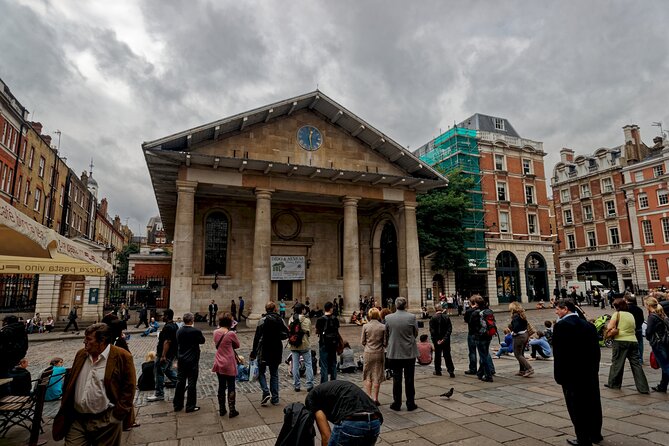
Covent Garden can feel like two different places at once. You get street performers, theatre signage, and crowds near the market, yet you also stumble into pockets of quiet where actors and audiences once escaped the noise.
This walk leans hard into that split personality. You are guided from big-name landmarks to smaller, story-heavy corners, with enough stops that the whole experience stays easy to follow. If you like your sightseeing with a payoff, this is one of those routes that makes you look up, then look again when something unexpected shows up.
Theatre Royal Drury Lane, and the thrill of catching a theatre in motion
Your tour begins in theatre land at Theatre Royal Drury Lane. From here, you get the kind of context that helps the West End make sense, not just look impressive. The standout detail you will hear about is that the theatre has two royal boxes, which is the sort of fact that turns a façade into a real clue about how theatre once worked.
One practical note: whether you can enter depends on the time of day and whether the building is in use. If it is not the right moment, you will still get value from seeing the place and hearing how it fits into the wider theatre story. Either way, the start sets the tone, since you are immediately thinking about performance, power, and who got to watch from where.
Covent Garden Market: street performance, then sweet and savory bites
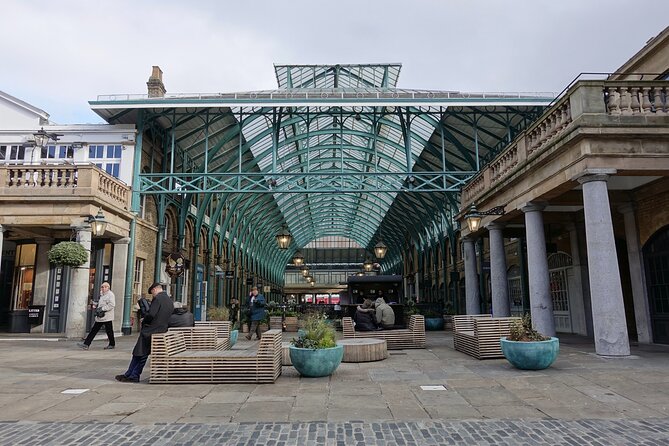
Next comes the Covent Garden proper area, including the covered market feel. This is where the tour turns from general theatre talk into lived-in street energy. You will see the kind of scene that makes Covent Garden famous: sights to spot, people moving, and that food-market buzz that makes it feel more like a neighborhood than a tourist theme park.
This is also where the sweet-tooth part of the experience becomes real. You will get the chance to enjoy market-style treats at set points along the way, and the overall vibe is indulgent without turning into a heavy food tour. I like that the food is tied to place, not just handed to you, so each stop feels like part of the Covent Garden story.
St Paul’s Church: a tranquil actor-friendly pause in the middle of it all
Then you step into St Paul’s Church, and the shift is immediate. You go from noise and theatre energy into a calm interior moment in the heart of the city. The reason this stop works is simple: you get breathing room while your guide keeps feeding you performance-related context, including how this area has been favored by the acting fraternity.
This kind of contrast is what makes the route more memorable than a straight line of exterior landmarks. If you are the type who likes your sightseeing to slow down for a moment, this stop is a strong reason to book. Even if you are not a church person, think of it as a reset button for your legs and your attention.



Royal Ballet and Opera area, plus Seven Dials’ art-and-food shift
After the calm, you swing back into show-world territory with the Royal Ballet and Opera area. You will get details about the buildings in the area, which helps you connect the dots between the big institutions and the smaller streets around them. Admission here is not included, so you mainly treat this as a guided streetscape moment, with your guide pointing out what matters as you walk.
Soon after, you reach Seven Dials, and this stop brings a fascinating contrast. You hear how it was once the most dangerous place in the West End, and then you see what it has become: a more fashionable, eclectic mix where art and food sit side by side. That history-to-today arc is the kind of thing you cannot get from a map pin.
Practical tip: plan to slow down here. Seven Dials is the kind of area where you will want to look around, not just follow the group. If you are traveling with kids, this is often a good moment to keep everyone engaged because you can point out art-style storefront energy and food choices without needing a museum ticket.
Novello Theatre and Cambridge Theatre: architecture you can appreciate without going inside

At Novello Theatre, you admire the architecture but you do not enter the building. You will hear a fun fact that it was originally the Waldorf, and yes, the guide makes room for the joke that it is not the place where the salad was invented. It is a light moment, but it also adds a real sense of how London spaces get reused and rebranded over time.
Next you pause at Cambridge Theatre. This one is rich in visual details even from the outside. The building is designed in a 20s Art Nouveau style by Wimperis, Simpson and Guthrie, and you also learn it is where Matilda played. Your guide also explains that during periods when it is not staging productions, it can be used as a trade location.
This is another view-only stop, so do not expect a guided inside visit. What you get instead is an education in noticing: you look at façades differently when you know who designed them and what stage life happened within those walls.
Trafalgar Square and the Nelson’s Column viewpoint, then past two National galleries
You meet at Trafalgar Square, and that matters because it gives you a clear, central anchor. From there, you overlook the square and see Nelson’s Column up close in your line of sight. Even though you are not paying for any ticketed attraction here, the viewpoint helps you recalibrate your bearings and understand the layout of the West End.
From Trafalgar Square, the tour walks past both the National Gallery and the National Portrait Gallery. These are big, iconic buildings, and you are not going inside on this route. Still, the walk-past approach is valuable if you want the city scale without turning the day into a museum marathon.
If you love architecture and public spaces, I think you will enjoy how the tour alternates big sights with smaller, more personal stops. It keeps your eyes fresh.
St Martin-in-the-Fields: the covered patio meeting point that sets the rhythm
The end of your walking loop ties back to St Martin-in-the-Fields. This is the meeting point on the covered patio, at the top of the stairs. It also means you have an easy reference point when you want to check where you are in the route.
I like this choice because it is practical. You are not trying to find a hidden side street with no landmarks. You also start and end in a familiar pocket of central London where you can hop back onto transit easily if you want to continue the day on your own.
Price, timing, and group size: what you are really paying for
The price is $107.26 per person for about two hours, and that is worth thinking about in terms of value, not just cost. You are paying for a guided route that keeps you from wandering randomly through Covent Garden. Instead of figuring out what to prioritize, you get a planned flow that connects theatre landmarks, churches, and streets like Seven Dials into one narrative.
You also get a mobile ticket and a group size capped at 20 people, which keeps things from turning into a shuffle. That small-group feel matters when you are stopping frequently and listening for details, especially if you want a guide who can keep track of everyone’s attention.
In terms of admissions, you should know the pattern: several stops are ticket-free, while a few theatre or opera-related buildings are not included because you mainly view them from the outside. Theatre Royal Drury Lane can vary depending on whether the building is in use and the time of day, so you get flexibility, but you do not get a guaranteed inside ticket every time.
Who this tour fits best (and who might want something else)
This is a great fit if you want theatre context without committing to a full performance evening. You get real stories about the stages and surrounding spaces, plus the kind of sweetness stop that works even if you are not trying to “do” London food tours.
It also works nicely for families, since the walk is paced and the mix of streets, church calm, and theatre architecture gives different kids something to latch onto. If you have a sweet tooth, this is basically designed for you.
The one group that might hesitate is someone who only wants indoor museum-style visits. This route includes lots of look-from-the-sidewalk moments. You still get meaning from it, but if you measure value strictly by doors you can walk through, you might prefer a different kind of tour.
A quick way to enjoy it more on the day
A couple of simple choices can make a difference. Wear comfortable shoes, because the route is a walking loop through central London. Bring an open mind for the mix of big-name landmarks and smaller story corners, because the payoff is in how they connect.
If you are hungry, pace yourself. The sweet stops are part of the point, and it is easy to overdo sugar early. Better strategy: go for one treat you really want, then let the rest of the route carry you until the next stop.
Should you book the Sweet Spots of Covent Garden tour?
I would book it if you want a two-hour London hit that blends theatre landmarks with the kind of food-market atmosphere you feel in your body, not just see in photos. The guide, Paul, brings local energy and funny anecdotes, and the route makes you notice details at Drury Lane, Seven Dials, and Cambridge Theatre instead of just passing them.
Skip it only if you know you do not like view-only stops and want guaranteed ticketed entrances throughout. Otherwise, this is a smart way to get oriented in Covent Garden and the West End, with a sweet payoff that fits the setting rather than fighting it.
FAQ
What is the duration of the Sweet Spots of Covent Garden tour?
It lasts about 2 hours.
How much does the tour cost per person?
The price is $107.26 per person.
Is the tour offered in English?
Yes, it is offered in English.
Is there a group size limit?
Yes. The tour has a maximum of 20 travelers.
Are admissions included for all stops?
No. Theatre Royal Drury Lane depends on the time of day and whether the building is in use, while Royal Ballet and Opera, Novello Theatre, and Cambridge Theatre have admissions noted as not included. Other points are ticket-free, and some locations are walk-past.
Is it possible to cancel for a full refund?
Yes, free cancellation is available up to 24 hours in advance for a full refund.
Fresh off the notebook in London
- Witchcraft, Ancient Cults & MI15 Spy Secrets
★ 4.0 · 3 reviews - Arrival Transfer: London Train Stations to London Hotels
★ 5.0 · 3 reviews - Royal Afternoon Tea & Walk at Kensington Palace
★ 4.5 · 3 reviews - Bridgerton Tour in London
★ 5.0 · 3 reviews - Private Transfer from central London to Southampton Cruise Terminal
★ 5.0 · 3 reviews - Photographer, Professional Photo Shoot – London
★ 5.0 · 3 reviews