
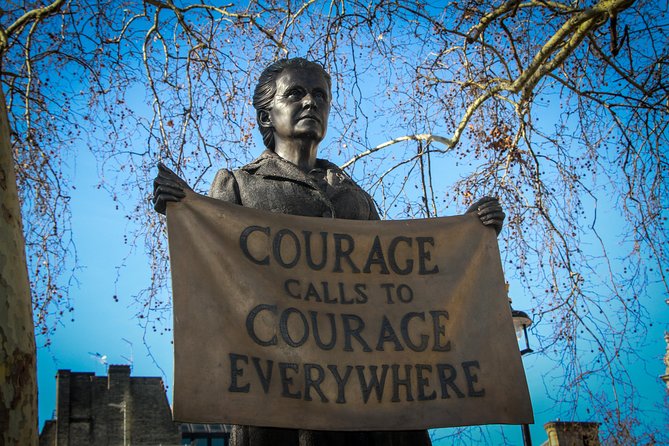
REVIEW · ENGLAND
The women of London
London’s feminist landmarks are everywhere once you know where to look. I love the small-group size and the way the route builds a clear story through big monuments. I also love how the guide makes women’s suffrage feel personal, not textbook. A small drawback: Buckingham Palace views are included but palace entry is not, so if you want to go inside you’ll need a separate ticket.
This is a 2 hours 30 minutes walking tour with a mobile ticket, set up for no more than 10 people, and offered in Spanish or French. You’ll start at the Constance Fund fountain of DianaLondon near St. James’s and end at the Agatha Christie memorial, with time to ask questions along the way.
In This Review
- Key points to know before you go
- Starting at Diana’s Fountain, then walking into the story
- Buckingham Palace and the Mall: royal power, then a pivot
- Crimean War Memorial: Florence Nightingale’s kind of impact
- Parliament Square and the suffrage fight: Millicent Fawcett and Black Friday
- Emmeline Pankhurst Memorial and the WSPU: protest in plain sight
- Downing Street area and the Women of World War II Memorial
- Trafalgar Square and the push for votes after WWI
- Edith Cavell Memorial: a quick stop with emotional weight
- Agatha Christie Memorial to the finish: a smart way to end
- The role of the guide, and why small-group matters
- Price and value: $20.53 for central London focus
- Who should book this women-focused route?
- Should you book The Women of London tour?
- FAQ
- FAQ
- How long is the Women of London tour?
- What languages are the tours offered in?
- How big is the group?
- Where does the tour start?
- Where does the tour end?
- What time does it start?
- Do I need an admission ticket for Buckingham Palace?
- Are the other stops free?
- Is the tour ticket mobile?
- Is cancellation free?
Key points to know before you go
- Max 10 people, so you get conversation time, not a lecture line
- Spanish or French guide, handy in London where English-only tours can feel limiting
- Central landmarks in one loop, including Buckingham Palace area, Parliament Square, and Trafalgar Square
- Suffrage stories tied to specific memorials, so the history has a physical anchor
- Carmen is a standout guide name in the feedback, praised for her suffragette knowledge and genuine enthusiasm
Undecided so far? Here are further London tours we have written up.
- Stonehenge, Windsor Castle, and Bath from London★ 4.5 · 18,662 reviews
- London Big Bus Hop-On Hop-Off Tour with Optional River Cruise★ 3.5 · 10,803 reviews
- London Small Group Tour of Historical Pubs★ 5.0 · 10,422 reviews
- Stonehenge, Windsor Castle and Bath with Pub Lunch in Lacock★ 4.5 · 7,402 reviews
Starting at Diana’s Fountain, then walking into the story
The tour starts at the Constance Fund fountain of DianaLondon (SW1A 1RD). It’s a smart starting point because it puts you right in the thick of central London, and it’s not a “meet in a random alley and hope for the best” situation. The end point is the Agatha Christie memorial at Cranbourn St (WC2H 7AB), which is a fun way to close: from politics and protest to literature.
The tour runs at 2:00 pm and lasts about 2 hours 30 minutes. Since it’s built around multiple outdoor stops, you should plan for some walking and standing, even if the pace is kept friendly for a mixed group. Also note that it’s near public transportation, so you’re not stuck with a long commute before you even start.
One practical tip: if you’re coming from elsewhere in the city, give yourself extra buffer time. Central London can slow down, and you’ll want to arrive before the group settles so you can get quick answers during the route.
Buckingham Palace and the Mall: royal power, then a pivot
Your first stop is Buckingham Palace, along The Mall, with the focus set on what the area represents. The tour gives you 15 minutes here, and you’ll look at the palace frontage as part of the broader story of women shaping public life. One catch: admission is not included for this stop, so you’re sightseeing from the outside.
Why I like this approach: it avoids the common London problem where a tour is either all inside-ticket time or all outside-photo time. Here, you get to see the iconic setting, but the guide can keep the flow moving toward the women’s stories that most visitors miss.
If you really want palace interiors, you can treat this as the day’s history kickoff and plan a separate ticket for another time. For this specific tour, your value is the guided interpretation of what the landmarks meant in women’s lives and public campaigns.
Crimean War Memorial: Florence Nightingale’s kind of impact
Next up is the Crimean War Memorial, with Florence Nightingale as the focus. The stop is 10 minutes and free admission. This is more than a statue stop. It’s a shift in the kind of “influence” you’re tracking, from political change to social change.
I think this matters because feminist history isn’t only about voting or protest posters. It’s also about how women created real-world improvements, pushed systems to work better, and gained public visibility in eras that often tried to limit women’s roles.
You’ll get a guided explanation that ties Nightingale into the larger theme of women acting at moments when action was urgently needed. If you’ve only ever thought of her as a name from school, this kind of stop can help you see the scale of the legacy.
Parliament Square and the suffrage fight: Millicent Fawcett and Black Friday
At Parliament Square, you’ll spend 20 minutes and focus on Millicent Garrett Fawcett and Black Friday. Admission here is free, so this stop is all about the guide’s narration and your questions.
This is one of those London locations that feels like it should be “just another grand square,” but the stories attached to it make it tense and specific. Black Friday, in the suffrage timeline, is a key moment when protest escalated and the public face of the movement came under harsh pressure. With a guided stop, you can connect that to broader efforts to win votes and to the long arc of organizing.
What makes this stop valuable for you is the setting. Parliament Square is built for political theater, and when the guide explains the figures and events tied to it, the place stops being decorative and starts behaving like a textbook you can walk around.
If you tend to enjoy history when it’s linked to a physical location, you’ll feel a payoff here. If you prefer museums, this can still work because it’s narrative-led, not just looking at names on stone.

Emmeline Pankhurst Memorial and the WSPU: protest in plain sight
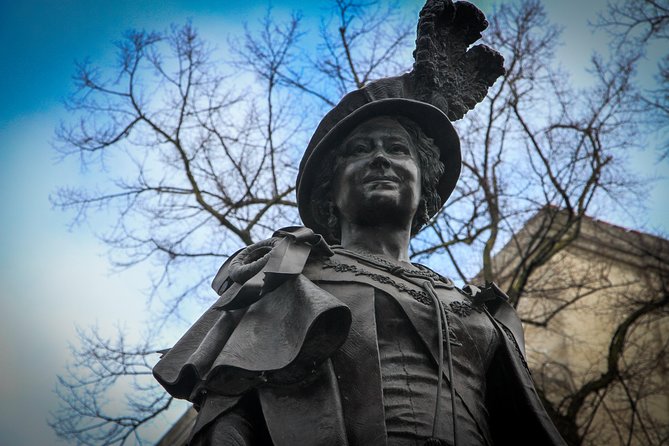
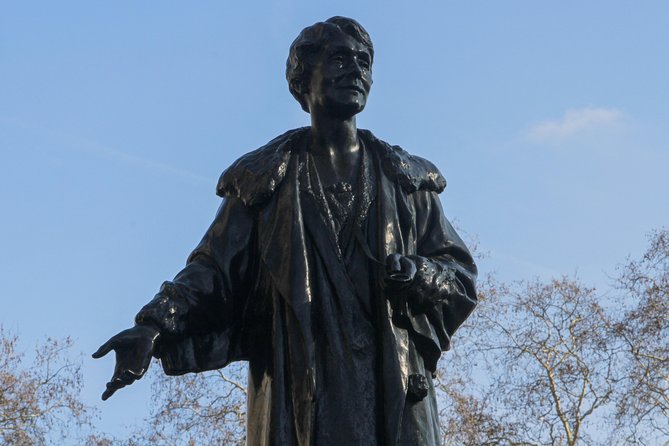
The Emmeline Pankhurst Memorial is next, with 15 minutes focused on Emmeline Pankhurst and the WSPU. Admission is free. This stop is the kind of moment where you realize that the suffrage story is not one single strategy. It’s a mix of tactics, arguments, and pressure that changed over time.
Pankhurst and the WSPU are commonly associated with bold, direct action, and you’ll hear how that played out and why it mattered. I like how this tour keeps the story grounded: you’re not just hearing the slogans, you’re standing near the references that shaped public debate.
Also, the small group size really helps here. When you have a question about terms you’ve heard before, you can ask it without feeling rushed. The tour time is set up to make Q and A part of the experience, not an afterthought.
Downing Street area and the Women of World War II Memorial
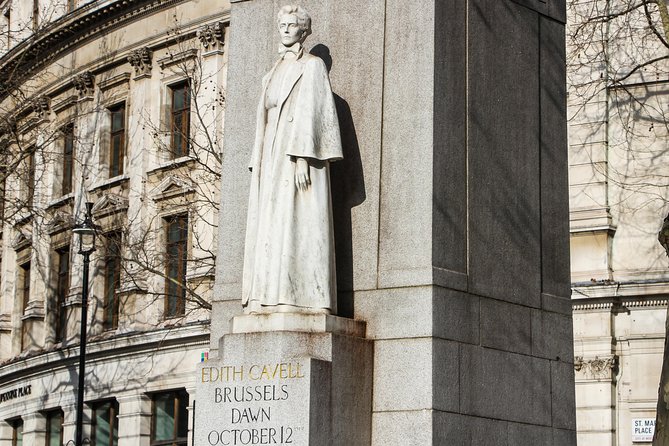
You’ll then reach a Women of World War II Memorial stop described through the lens of the Downing Street area and the Suffragettes. This one is 5 minutes and also free.
A short stop can be risky on walking tours, because “quick” sometimes becomes “surface-level.” Here, the value is that the guide keeps it tight and connects it to the larger theme: women’s public role kept changing and expanding, especially under pressure from major world events and political urgency.
Even though this is brief, it functions like a bridge. You go from the intense protest era to the broader sense of women being forced into visibility, responsibility, and influence, even in times when society tried to push them back into the margins.
Trafalgar Square and the push for votes after WWI
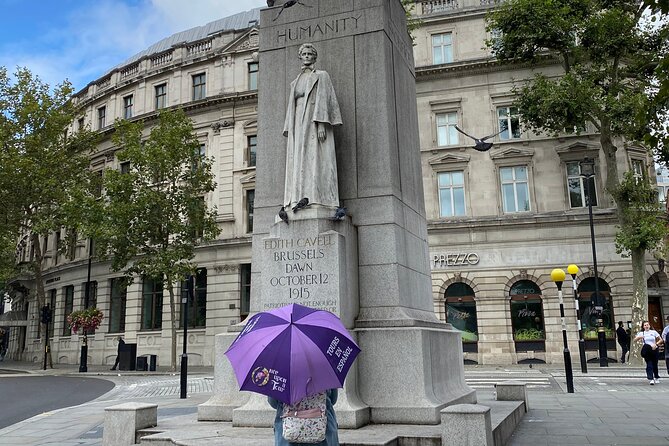
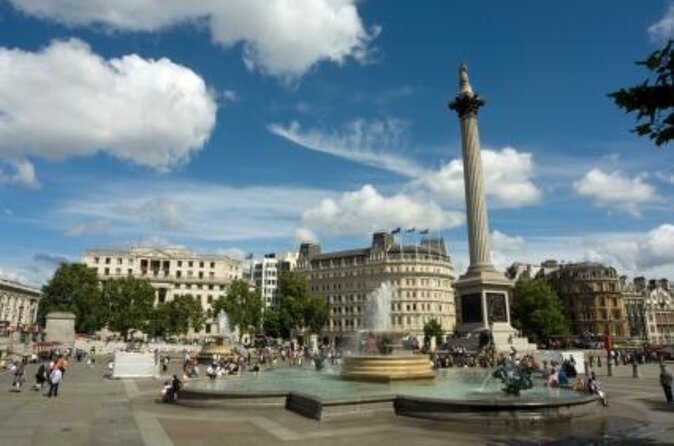
At Trafalgar Square, you’ll spend 10 minutes with a focus on WWI and votes for women. Admission is free, and the stop fits well because Trafalgar is already such a symbolic public square.
This part of the route matters because it connects the fight for suffrage to the pressure points of the early 20th century. WWI is a major historical hinge, and the women’s voting movement is closely tangled with how governments and society responded to changing labor, service, and political expectations.
I like that this tour doesn’t treat suffrage as an isolated “movement moment.” It frames it as connected to real historical turning points. When you connect events like WWI to voting, the story reads more clearly, and it becomes easier to remember.
Edith Cavell Memorial: a quick stop with emotional weight
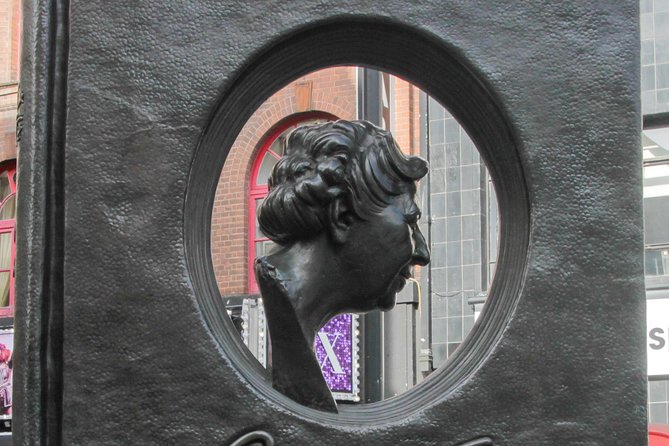
Next is the Edith Cavell Memorial, with 5 minutes focused on the life of Edith Cavell. Admission is free. It’s brief, but that can work well if the guide uses the time to set context, and if you’re the type who prefers not to be over-sold at every corner.
Cavell’s name carries strong historical meaning in the public memory. On a women-focused route, that name becomes part of the bigger picture: women as moral voices, women as figures whose choices and fates shaped headlines and national conversations.
If you want a tour that honors women beyond one category of achievement, this stop helps. You’re not only tracking politics. You’re tracking how women’s stories were recorded, remembered, and used to shape the way societies thought.
Agatha Christie Memorial to the finish: a smart way to end
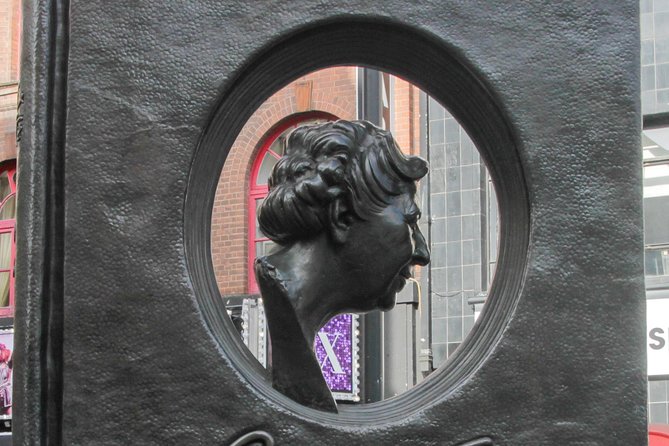
Finally, you’ll arrive at the Agatha Christie memorial at the tour’s end. The stop is 10 minutes and it ties the route to cultural influence, not only political activism.
This is a clever finish. Many history tours end where the monuments are grandest. Here, the ending points you toward a different kind of legacy, the kind that changes how people think and how stories get told. If you like your city history to include art and popular culture as well as politics, you’ll probably enjoy this shift.
It’s also a useful psychological finish line. By the time you reach Christie’s memorial, you’ve already traveled through suffrage pressure, public memorials, and war-era connections. Ending with a writer gives your brain a breather while keeping the theme of women’s impact alive.
The role of the guide, and why small-group matters
The tour is offered with a guide available in Spanish or French, and it’s designed for a maximum group size of 10. In practice, that means the guide can slow down when something needs clarification, and you’re more likely to get direct answers.
Carmen is a name that shows up strongly in the feedback for this tour, described as someone who knows a lot about the suffragettes and presents it in a way that feels alive. That matters because suffrage stories can turn into lists if the guide lacks energy or clarity. When the guide brings both knowledge and personality, the monuments stop reading like random plaques.
Also, you get plenty of time for questions. If you’re the kind of person who collects details for later, this format works well. You can ask what a term means, connect a person to a wider movement, or ask how one event relates to another without feeling like you’re hijacking someone’s script.
Price and value: $20.53 for central London focus
At $20.53 per person, this is one of those London experiences that feels like a bargain because you’re paying primarily for guided interpretation. You’re also getting a tight route that includes major central landmarks, and most stops are free. The only notable exception is Buckingham Palace, where you see the area but admission is not included.
So where does the value come from? First, it’s time-efficient. In about 2 hours 30 minutes, you get multiple locations that are usually spread out across separate days. Second, the guide does the work of connecting the dots for you, so you’re not trying to research monuments on your phone while standing in the wind.
If you’re traveling on a tighter budget, this price point is a big deal. If you’re not, it still offers a good deal of value because it’s not a generic “photo tour.” It’s a women-focused narrative that gives the city a new layer.
Just go in with the right expectation: it’s a walking tour with outdoor stops. If your priority is museum-style interiors, you may want to pair this with additional ticketed visits elsewhere.
Who should book this women-focused route?
I’d book this if you want London to feel more personal and less like a checklist. It’s especially a good fit if you:
- like feminist history tied to real places, not only books
- prefer smaller groups where questions are welcome
- want Spanish or French guiding instead of relying on your own translation
- have limited time and want a concentrated route through central landmarks
It’s also a solid choice if you’re not sure where to start. Women’s history in London can feel scattered unless someone helps you connect the dots. This tour builds that connection for you, stop by stop.
Should you book The Women of London tour?
Yes, if you want a guided walk that connects major London landmarks with the women behind the headlines. The combination of small-group size, Spanish or French options, and a route packed with suffrage and women’s memorial sites is a strong value play at $20.53.
Book it especially if you enjoy asking questions and if you want a guide who can make the stories feel human. If your main goal is entering Buckingham Palace interiors, plan for that separately, because this tour keeps palace entry out of the ticket.
FAQ
FAQ
How long is the Women of London tour?
It lasts about 2 hours 30 minutes.
What languages are the tours offered in?
The guide is available in Spanish or French.
How big is the group?
The group size is limited to a maximum of 10 travelers.
Where does the tour start?
It starts at the Constance Fund fountain of DianaLondon (SW1A 1RD).
Where does the tour end?
It ends at the Agatha Christie memorial on Cranbourn St (WC2H 7AB).
What time does it start?
The start time is 2:00 pm.
Do I need an admission ticket for Buckingham Palace?
No admission ticket is included for Buckingham Palace.
Are the other stops free?
Most stops listed on the route show free admission, while Buckingham Palace is the one noted as not included.
Is the tour ticket mobile?
Yes, it includes a mobile ticket.
Is cancellation free?
Free cancellation is available up to 24 hours before the experience’s start time for a full refund.
Fresh off the notebook in London
- Witchcraft, Ancient Cults & MI15 Spy Secrets
★ 4.0 · 3 reviews - Arrival Transfer: London Train Stations to London Hotels
★ 5.0 · 3 reviews - Royal Afternoon Tea & Walk at Kensington Palace
★ 4.5 · 3 reviews - Bridgerton Tour in London
★ 5.0 · 3 reviews - Private Transfer from central London to Southampton Cruise Terminal
★ 5.0 · 3 reviews - Photographer, Professional Photo Shoot – London
★ 5.0 · 3 reviews