
REVIEW · WALKING TOURS
Walking tour of Lancaster – Execution Slavery Industry
Execution and slavery, right in central Lancaster.
This 3-hour walking tour strings together what happened in the streets and what happened far beyond them, using real local landmarks like Lancaster Castle and the River Lune quay. I especially like that it is structured for limited time, with short stops that still manage to feel story-driven, and it runs with a small-to-medium group (up to 20). One possible drawback: you will stand and walk for a solid stretch, so bring layers and plan for an honest winter-cold reality when the weather is rough.
What I like even more is the value for the money, because the listed sights are marked as admission ticket free, so your cost is mostly the guide and time. I also appreciate the simple meeting point, Castle Approach in front of the castle, which makes it easy to get oriented fast if you are new to town. The main consideration is the subject matter, since the route includes executions and the international slave trade, so go in prepared for heavy themes.
In This Review
- Key points to know before you go
- Is it worth $20.81 for a 3-hour Lancaster walk?
- Finding Castle Approach and what the small-group pace feels like
- Why this tour is about more than scares
- Stop-by-stop: the Lancaster route you will keep thinking about
- Lancaster Castle: prisoners, trials, and executions
- Saint George’s Quay: the River Lune and the slave trade link
- Judges’ Lodgings: the oldest house and witchcraft links
- Church Street: a missing prince and talk of a king
- Market Street: two royal princes, 300 years apart
- Dalton Square: forensic science, murder, and a government bonus tied to slavery
- Lancaster Canal: White Cross Mill, the canal heyday, and the Storey brothers
- Penny’s Almshouses: still functioning today
- The Storey: an educational institute that fed the university tradition
- The guide effect: humour, facts, and stamina
- Who should book, and who might not love it
- Should you book this Lancaster Execution Slavery Industry tour?
- FAQ
- How long is the walking tour of Lancaster?
- Where does the tour start and where does it end?
- What language is the tour offered in?
- Is there a mobile ticket?
- How many people are in the group?
- Are the stops free to enter?
- What is the cancellation policy?
Key points to know before you go
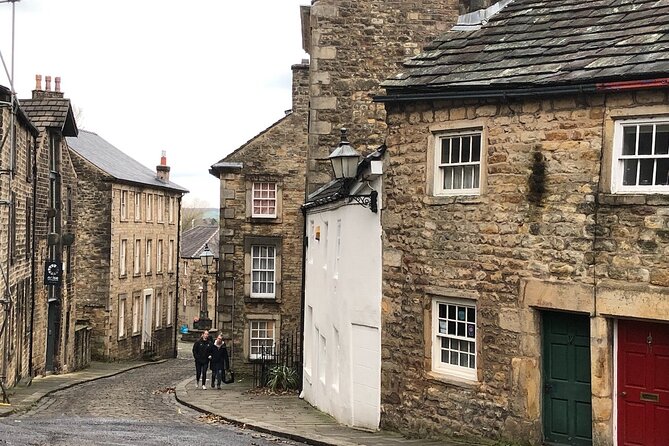
- Lancaster Castle first, so the setting for prisons, trials, and executions clicks immediately.
- Free entry at every listed stop, which makes the tour feel like value instead of add-on costs.
- Small group up to 20, so you can ask questions and keep pace without feeling lost.
- A serious theme with local anchors, from the quay’s slave-trade connections to later civic sites.
- Short stops, about 10 to 20 minutes each, which is great when you want depth without a long day.
- Weather matters, because the tour depends on good conditions and is outdoors most of the time.
Undecided so far? Here are further England tours we have written up.
- British Motor Museum Entry Ticket in Gaydon★ 5.0 · 288 reviews
- Outdoor Rock Climbing Taster Day in Peak District★ 5.0 · 74 reviews
- Walking tour of Lancaster – Execution Slavery Industry★ 5.0 · 71 reviews
- Shared Gin, Vodka & Rum Making Experience at Nelson’s Distillery★ 5.0 · 64 reviews
Is it worth $20.81 for a 3-hour Lancaster walk?
At $20.81 per person for about 3 hours, you are buying two things: guided interpretation and a tight route that hits the city core. The big value hook is that every stop on the route is marked as admission ticket free, including Lancaster Castle, the quay area, and the civic buildings. That is the difference between a tour that feels like you are constantly paying again versus one that uses your time well.
This is also the kind of tour that helps you decide what to revisit. I like that the route is built around visible places in Lancaster’s center, so when you step back out into the streets, the stories stay attached to real walls, not just a vague timeline. Many people highlight how the guide keeps things entertaining and paced, with strong stamina even in cold conditions. If you are coming to Lancaster as part of a wider trip through Lancashire, it works well as a first look, not just a final checkbox.
The only reason it might feel expensive to you is personal preference. If you want light and fluffy sightseeing only, the theme will tug at you. But if you are the type who likes to understand how local decisions connected to big, brutal systems, this tour gives you a focused route for your time.
Finding Castle Approach and what the small-group pace feels like
The tour meets at Castle Approach, Lancaster LA1 1YN, and it ends back at the meeting point. That matters more than it sounds. When you start in front of Lancaster Castle, you get your bearings fast, and you do not spend the first 20 minutes wandering around looking for a group.
It is offered in English with a mobile ticket, and it runs with a maximum of 20 travelers. Because the group stays small-to-medium, you can usually hear the guide and follow along without bottlenecks at each stop. The walking is described as easy enough for most people to join, but the reality is you will be on your feet for a while, with frequent short breaks at each point of interest.
You are also near public transportation, which helps if you are mixing this with another plan around Lancaster or farther afield in Lancashire. One practical note: the tour requires good weather, and if the day is cold, you will feel it because you are outside for the whole route. Bring a warm layer and something for damp weather, just in case.
Why this tour is about more than scares
This is not a ghost story tour. It is a grounded walk through Lancaster, using crime, punishment, and economic ties as a lens. The route frames local sites around big historical forces: prisons and executions, maritime trade, and how power shows up in civic buildings and institutions.
You will see that the stories are not isolated. For example, at the quay you focus on connections to the international slave trade, and later at another stop the narrative turns to a murder linked to early forensic science and a government bonus tied to slave owners. That structure can feel startling, because it shows how distant violence and exploitation can connect to decisions made closer to home.
I like that the guide uses humour and pacing to keep the tour engaging while still taking the subject seriously. The emphasis is on interpretation, not shock for shock’s sake. Still, you should go in knowing you will hear dark material. If that makes you shut down, consider a lighter city walk instead.
Stop-by-stop: the Lancaster route you will keep thinking about
Below is what you can expect at each point, and what makes each stop worth your time.
Lancaster Castle: prisoners, trials, and executions
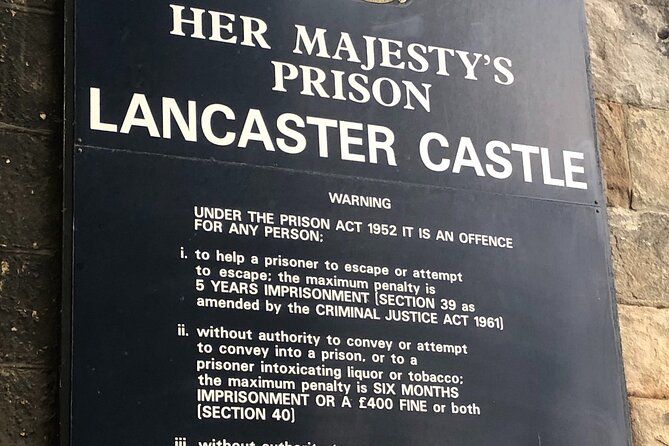
This is your first stop, and it sets the tone fast. You meet the tour at Castle Approach, then head into the story world of Lancaster Castle, an ancient castle with famous and less famous prisoners, trials, and executions. The stop is about 20 minutes, with an admission ticket marked as free.
What I like about starting here is that you do not have to guess the context. You are inside the place where justice was carried out, and the guide can connect the broader theme to the actual walls around you. Drawback: if you have limited mobility, castle areas can require extra attention while moving around, and you will be standing for your share of the time.
Saint George’s Quay: the River Lune and the slave trade link
Next you move to Saint George’s Quay, about 15 minutes. This is an eighteenth century harbour on the River Lune, and the focus becomes Lancaster’s connections to the international slave trade, plus specific characters tied to the area.
This stop is valuable because it turns the theme outward. You get a maritime angle, which helps you understand how a port town could be entangled in global trade networks that profited from human suffering. If you like visuals, this is one of the easier stops to imagine, since the water and quay setting naturally triggers the mental picture of ships and commerce.
Judges’ Lodgings: the oldest house and witchcraft links
About 10 minutes at Judges’ Lodgings, often described as the oldest house in Lancaster. Here the story centers on who owned it and its link to witchcraft.
I find this kind of stop useful because it adds texture. Not everything is courts and canals. You get a glimpse of how fear, belief, and authority could overlap in daily life. Consideration: because it is a short stop, you will want to ask questions if a detail grabs you. The guide’s approach seems built for that, and people mention asking lots of questions.
Church Street: a missing prince and talk of a king
Then it is on to Church Street for another 10 minute story stop. The theme here is a prince going missing, and the talk includes stories about a potential king of England.
This is the more legend-tinged part of the route. It helps break up the heavier material, but it also reminds you that Lancaster’s center is packed with story fragments you will miss if you just walk through on your own. If you are the kind of visitor who likes to compare myths to what is documented, this stop can prompt good follow-up reading later.
Market Street: two royal princes, 300 years apart
At Market Street, you get another 10 minute set of tales. The focus includes a prince raising a banner, another losing a shoe, and stories about two royal princes separated by about 300 years.
This is fun without feeling random. The guide uses these street tales as a way to make the city feel lived in, with recognizable spots tied to recognizable human drama. Drawback: if you are hoping for lots of time for photos, you will need to move quickly between the story beats, since each section is intentionally short.
Dalton Square: forensic science, murder, and a government bonus tied to slavery
At Dalton Square, you get 10 minutes and a sharper turn in tone. The story covers a murder and a government bonus, including the idea of the first murder solved by forensic science and a bonus paid to slave owners.
This is one of the most emotionally loaded stops on the route, because it connects a landmark in policing and evidence with money linked to slavery. I do not think it is meant to be abstract. It is placed where you can connect the crime story to the local civic fabric around you. If you want to avoid the hardest material, you might mentally prepare for this stop and take a breath before it begins.
Lancaster Canal: White Cross Mill, the canal heyday, and the Storey brothers
Next you head to Lancaster Canal for about 10 minutes. The focus is the White Cross Mill, the Lancaster Canal itself, and stories about the Storey Brothers and the canal’s heyday.
This is where the tour adds practical economic history. Instead of punishment and trade in general terms, you see industry tied to a specific infrastructure story. It is also a refreshing change of pace, since the setting naturally supports imagining how goods moved and how workers’ lives connected to the canal system.
Penny’s Almshouses: still functioning today
At Penny’s Almshouses, you spend around 10 minutes. The story is about an almshouse that is still functioning today, who founded it, and how it was financed.
I like this stop because it shifts the theme into social care. You are not just learning about institutions that punished people. You are seeing how communities provided support and how that support was funded. Consideration: because the stop is brief, your best chance to learn the key details is to listen closely at the start and jot down anything you want to verify later.
The Storey: an educational institute that fed the university tradition
The final stop is The Storey for another 10 minutes. You hear about an educational institute founded by donations, and how it became a forerunner of the university tradition in the city.
This ending works well if you like the arc of a place. You start with justice and punishment, trace trade and power, then end with learning and civic investment. It is not a happy ending in the sense of forgetting the dark parts, but it gives Lancaster a forward-looking note.
The guide effect: humour, facts, and stamina
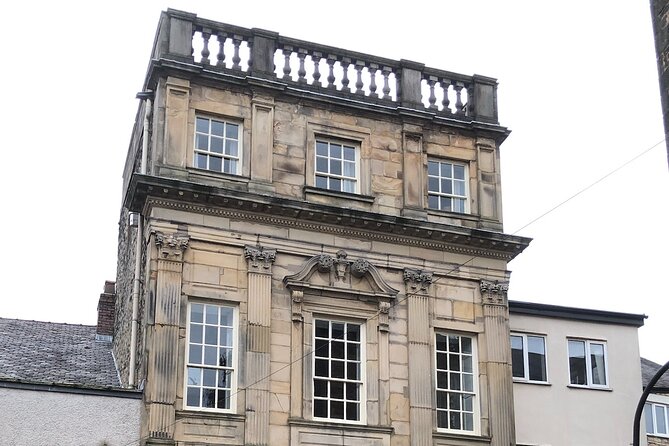
Most of the strong praise around this tour points to the same ingredient: the guide’s energy. People repeatedly highlight Barrie for delivering a large amount of material with humour and strong knowledge, while keeping the group engaged even when the weather is miserable. You also get a sense that Barrie does not talk down to anyone, because the pace and tone seem to fit a mixed crowd.
So here is my practical advice: treat the tour like a guided orientation. At each stop, you will likely learn one detail that triggers a question. Ask it. The best moments come when you connect the story to something you can see right then. And if your group is chatty, you can probably turn the walking route into a discussion about what happened, why it mattered, and how Lancaster fits into bigger patterns.
If you prefer to absorb quietly, that is fine too. The route is tight enough that you can listen without needing to keep conversations going.
Who should book, and who might not love it
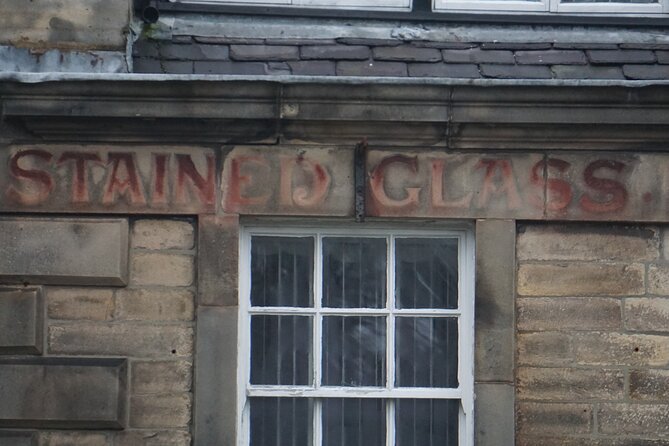
This tour is a strong fit if you want a high-impact city overview in a short window. It is especially useful when you are also planning other things around Lancashire, because it gives you Lancaster’s core stories without demanding a full day of wandering.
It is also a good pick if you like tours that point out spots you might miss on your own. One of the themes in the praise is that the guide calls attention to additional options, meaning the tour can help you plan your next walk or return visit.
You might want to skip it if:
- You dislike serious themes like executions and the international slave trade
- You struggle with cold or standing for frequent short segments
- You want a mostly light, casual walk with little emotional weight
On the other hand, if you can handle tough stories and you enjoy local places with clear context, this is the kind of walk you will remember.
Should you book this Lancaster Execution Slavery Industry tour?
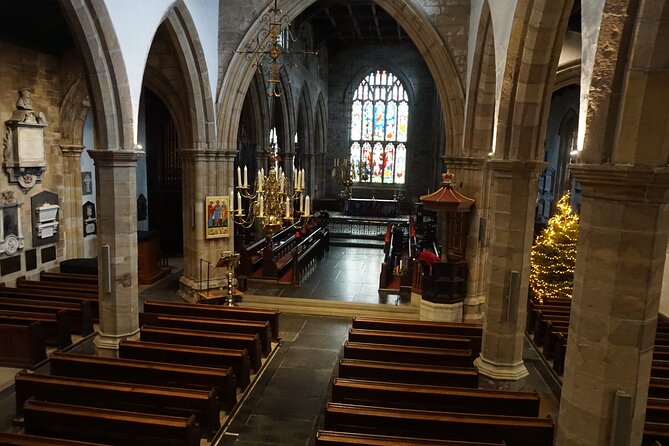
I think you should book if you have a few hours in Lancaster and you want more than surface-level sightseeing. For the price, the route hits major anchors, the stops are marked as admission free, and the small group size helps the guide keep your attention. The theme is heavy, but it is placed on real landmarks, and the guide’s humour and stamina make it easier to follow without feeling overwhelmed.
If you are on the fence, use this rule of thumb: if you come to England wanting to understand how local history connects to national and international systems, this tour is a smart buy. If you want an easy, light walk with minimal emotional content, pick a different option.
FAQ
How long is the walking tour of Lancaster?
The tour lasts about 3 hours.
Where does the tour start and where does it end?
It starts at Castle Approach, Lancaster LA1 1YN, UK, and ends back at the meeting point.
What language is the tour offered in?
The tour is offered in English.
Is there a mobile ticket?
Yes, the tour uses a mobile ticket.
How many people are in the group?
The maximum group size is 20.
Are the stops free to enter?
The itinerary lists admission ticket free for the stops.
What is the cancellation policy?
You can cancel for free and get a full refund if you cancel up to 24 hours in advance. The experience may also be rescheduled or refunded if canceled due to poor weather.
Fresh off the notebook in England
- Shared Gin, Vodka & Rum Making Experience at Nelson’s Distillery
★ 5.0 · 64 reviews - Walking tour of Lancaster – Execution Slavery Industry
★ 5.0 · 71 reviews - Outdoor Rock Climbing Taster Day in Peak District
★ 5.0 · 74 reviews - British Motor Museum Entry Ticket in Gaydon
★ 5.0 · 288 reviews
Walking Tours, compared.
 ★ 5.0Oxford University Walking Tour With University Alumni GuideFrom $416,905 reviews
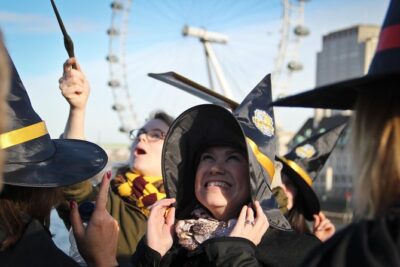 ★ 5.0Tour for Muggles The Ultimate Harry Potter Walking Tour in LondonFrom $234,684 reviews
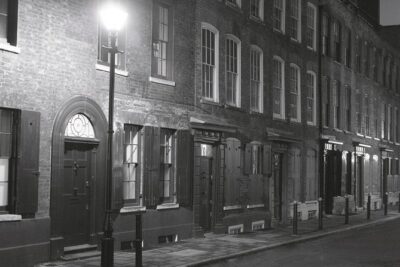 ★ 5.0London Jack The Ripper Guided Walking TourFrom $03,131 reviews
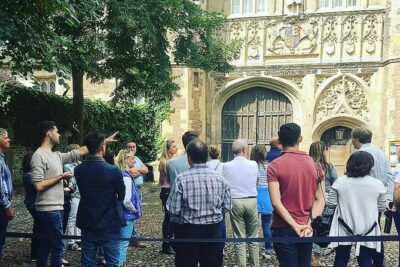 ★ 5.0Cambridge University Walking Tour by Alumni™ Kings College OptionFrom $332,336 reviews
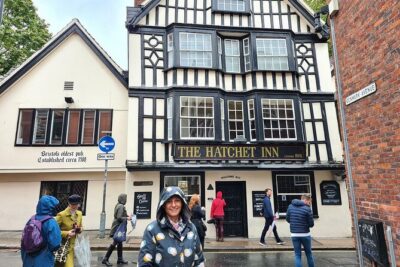 ★ 5.0Blackbeard to Banksy – The Ultimate Walking Tour of BristolFrom $181,961 reviews
 ★ 5.0Air Raid Shelter + St. Nicholas Market Walking TourFrom $171,950 reviews
 ★ 5.0Walking Tour of Bath with Blue Badge Tourist GuideFrom $301,877 reviews
 ★ 5.0Changing of the Guard Guided Walking Tour in LondonFrom $251,793 reviews
Browse the lists this tour appears in