
REVIEW · BRISTOL AND THE WEST COUNTRY
Bristol Harbourside Self-Guided Walking Tour
Follow the harbourside story, one stop at a time. I like the human audio by Helen, and I like that you can do it at your pace with free, ticket-free stops. The only catch is navigation can be a bit finicky in places, so plan for extra minutes and keep GPS on.
This is a 2 to 3 hour self-guided walk in Bristol’s harbor area, offered in English for about $12.33 per person. You get 3 weeks unlimited access in the app, plus a map, GPS route, and stop-by-stop audio. If you want a solid orientation walk that ends right at Brunel’s SS Great Britain, this is a great use of a half-day.
In This Review
- Quick hits before you go
- Entering Bristol Harbourside: what this walk is really for
- How the self-guided audio tour works (Helen’s voice and your schedule)
- Stop-by-stop along the riverside: Millennium Square to Queen Square
- Millennium Square (Canon’s Marsh)
- Bristol Amphitheatre and Waterfront Square
- Pero’s Bridge
- The medieval harbor area by the fountains
- College Green
- King Street
- Queen Square
- King Street to Welsh Back: canals, quays, and the living name of places
- Welsh Back
- Castle Park
- Bridge Quay and the Bristol Bridge view
- From St Mary Redcliffe to Redcliffe Caves: geology meets church history
- St Mary Redcliffe Church
- Redcliffe Caves
- Into the docks: Bathurst Basin, Princes Wharf, and the story of ships
- Bathurst Basin and the Ostrich pub area
- Princes Wharf
- The Matthew of Bristol replica
- M Shed, Wapping Wharf, and the SS Great Britain finale
- M Shed
- Wapping Wharf
- Brunel’s SS Great Britain: the big ending
- Price and value: what $12.33 is buying you in Bristol
- Timing and navigation: the one thing to watch on harborside walks
- Who should book this self-guided Harbourside walk
- Should you book this Bristol Harbourside self-guided tour?
- FAQ
- How long is the Bristol Harbourside self-guided walking tour?
- What language is the tour available in?
- Do I need to pay admission at the stops?
- Is there an in-person guide with the tour?
- Where does the tour start and end?
- How long do I have access to the tour after booking?
Quick hits before you go
- Helen’s audio, not a robot voice: you’re guided by a real person through the route.
- GPS route and stop markers: your phone does the heavy lifting.
- Mostly free sights along the way: the listed stops are admission free.
- A walk that traces Bristol’s water-based growth: rivers, quays, basins, and docks in one sweep.
- Ends with a big finale: you finish in the Great Western Dockyard area.
More of the west: harbour, gorge and abbey
- Blackbeard to Banksy – The Ultimate Walking Tour of Bristol★ 5.0 · 1,961 reviews
- The House Magicians’ Comedy Magic Show at Smoke & Mirrors in Bristol (Sat 7pm)★ 5.0 · 296 reviews
- Ghosts, Ghouls & Gallows :The Original Bristol Ghost Walk★ 5.0 · 262 reviews
- Only Fools and Horses Tour of Bristol★ 5.0 · 253 reviews
Entering Bristol Harbourside: what this walk is really for
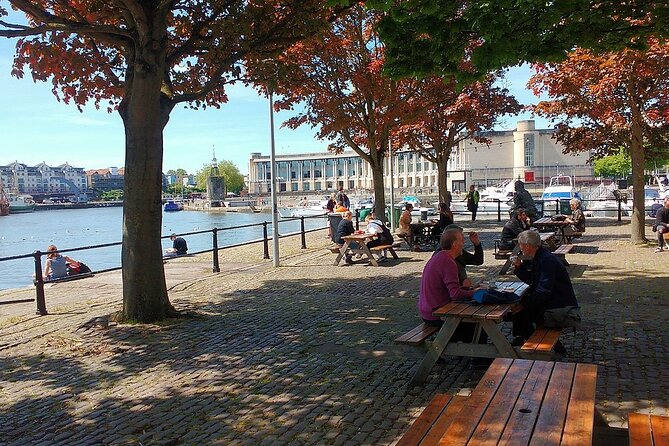
This tour is built for people who want the harbor story without waiting on schedules or trying to read every plaque. The route strings together the key places where Bristol’s rivers, trading docks, and shipbuilding history all shaped the city you see today.
You also get something practical: the audio guide is designed around short time blocks. That means you can treat it like a moving checklist. If you’re traveling solo, it feels focused instead of wandering. If you’re traveling with family or friends, it keeps everyone pointed the same way.
One more smart thing: the walk is set up to end in a central place where you can keep going after the tour finishes. In this case, it ties neatly into the Bristol docks experience, right at Brunel’s SS Great Britain.
How the self-guided audio tour works (Helen’s voice and your schedule)
There’s no in-person guide. Instead, you use the app for three weeks of unlimited access to the same walking tour content. You also get a map, directions, GPS route, and the stops preloaded, so you are not trying to figure it out from scratch while you’re standing on a sidewalk.
The audio is by Helen, and it’s not computer-generated voice. That matters more than it sounds. Human narration tends to be easier to follow when you’re walking and your attention is split between streets and scenery.
Practical tip: download your app content and keep your phone charged. You’re relying on GPS and audio at the same time, and the harborside streets can change block by block.
Stop-by-stop along the riverside: Millennium Square to Queen Square
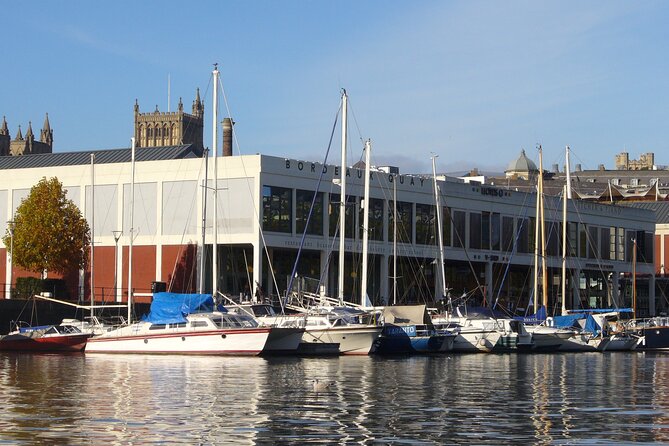
The route starts near central Bristol and begins with Millennium Square, a standout starting point because the ground itself has a backstory. This area sits on what used to be Canon’s Marsh, drained and built on in the early 18th century. The guide connects it to the confluence of the rivers Frome and Avon, so you start understanding the harbor city from the water up.
Millennium Square (Canon’s Marsh)
I like this opener because it gives you a mental map fast. If you know the Frome meets the Avon here, the rest of the harborside walk feels less random and more like a trail with reasons.
You’ll likely move on quickly here, since the stop is short, but it’s a strong start.
More on foot, at a pace you can hear the guide
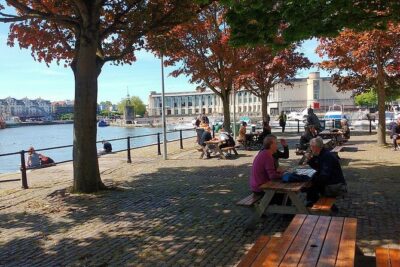
Bristol Amphitheatre and Waterfront Square
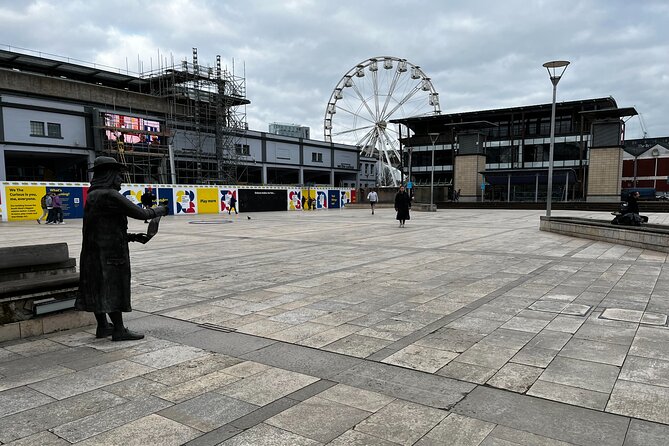
Next comes the Bristol Amphitheatre area, where you may see skateboarders. The tour notes that this is one part of the city where skaters can ride, while other places may have anti-skateboarding design. That contrast is useful because it helps you read the space as a city compromise, not just a cool view.
Even if you’re not a skateboard fan, watching for a minute makes the area feel current, not museum-only.
Pero’s Bridge
Pero’s Bridge opened in 1999, and it is named for a notable local figure. The tour also points out the pair of horn-shaped sculptures and explains the story behind them.
This is exactly the kind of stop that turns a bridge from a crossing point into a conversation. You’ll look up, notice the shapes, and suddenly the bridge feels designed, not accidental.
The medieval harbor area by the fountains
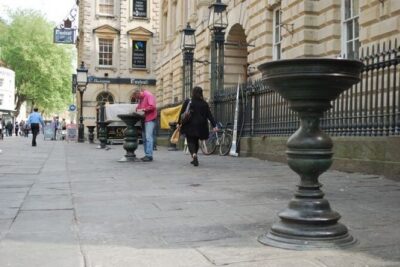
Then you shift to a broader historical moment: during the Middle Ages, a harbor developed along the riverside at the confluence of Avon and Frome. The guide places it near the approximate location of the fountains you see now.
This stop is your reminder that the Bristol harbor has not been static. Waterways, industry, and the city’s layout have all evolved, and that’s why the walking route matters.
College Green
College Green is one of those places where people naturally gather, and the tour uses that to your advantage. You learn about an important church connection, some artworks tied to a very famous artist, another chapel, and a museum nearby.
If you like stops that combine architecture with story, this is one of your payoff areas. Even if you do not go inside everything, you’ll leave with clearer context for what you’re looking at.
King Street
King Street is framed as the old trade artery. The guide asks you to imagine ship captains, traders, and ship workers moving goods between boats and stores.
You might not picture it perfectly while you walk modern storefronts, but that kind of mental image helps. It turns streets into evidence of a working port.
Queen Square
Finally in this section, you reach Queen Square, a Georgian park surrounded by trees and cobbled streets. The tour explains it used to be marshland, used for dumping rubbish and weapon practice, and then houses were built starting from 1699.
This is a weirdly satisfying stop because it’s a reminder that attractive places can have rough origins. You’ll look at the cobbles and trees with a different eye when you know what used to happen there.
King Street to Welsh Back: canals, quays, and the living name of places
After Queen Square, the walk keeps tightening around the harbor vibe.
Welsh Back
Welsh Back is a busy evening area with bars and restaurants, and some of them are on boats. The tour also focuses on the unusual name and what it hints at about the area’s past.
I like this stop because it connects history and current use. You’re not just learning what used to be there, you’re seeing how the riverfront still works as a social space.
If you’re walking at night, this is where you’ll feel Bristol’s energy most clearly.
Castle Park
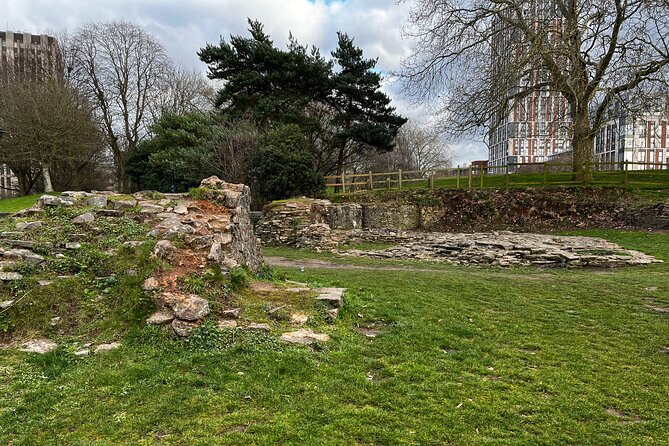
Castle Park marks the old castle site and Bristol’s medieval settlement. This is another place where you get a sense of why people built here in the first place, even if you only see park space today.
A short audio stop, yes, but it helps you place the city’s old power center on the map.
Bridge Quay and the Bristol Bridge view
Next is Bridge Quay, with a good view of Bristol Bridge. The tour also points to St Peter’s, St Nicholas’, and St Mary Le Port in the background and ties the bridge area to the settlement of Bristol’s beginning.
This is a great moment to pause and just look. The audio works well here because you can actually see multiple landmarks in one direction.
From St Mary Redcliffe to Redcliffe Caves: geology meets church history
Now the walk turns more scenic and more specific.
St Mary Redcliffe Church
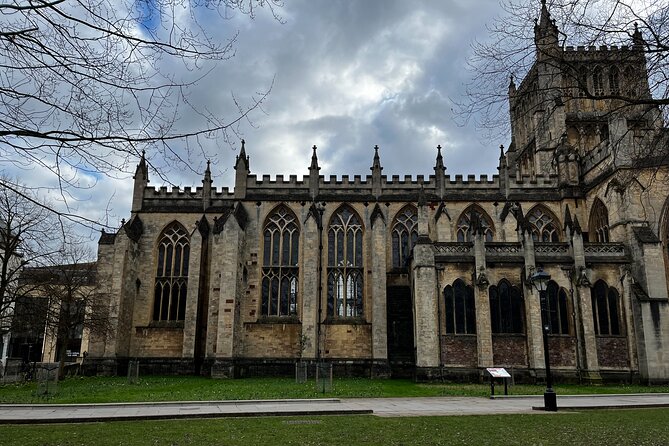
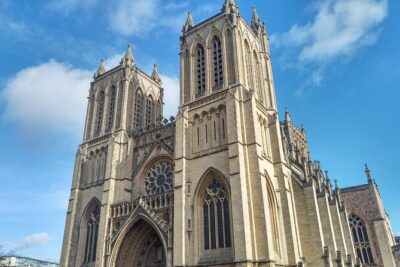
At St Mary Redcliffe, the guide explains that the church you see is not the original. A church from Henry I’s time fell into disrepair, and it was rebuilt in the 14th century.
This stop gives you a clear timeline in plain language. Even if you only spend a few minutes outside, you’ll understand why this church is such a landmark.
Redcliffe Caves
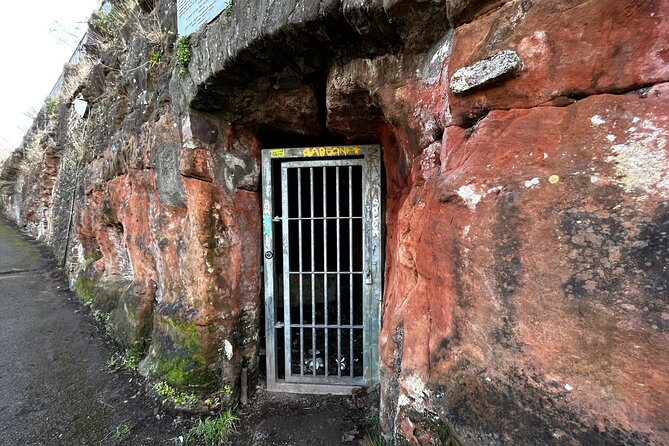
Then you move to the Redcliffe Caves area. Redcliffe gets its name from bright red Triassic sandstone rocks visible from where you stand. Houses along Redcliffe Wharf sit above a cave system that leads back toward St Mary Redcliffe church.
This is one of those stops that changes how you interpret the ground under your feet. The city feels more physical once you understand there’s a cave system involved.
Into the docks: Bathurst Basin, Princes Wharf, and the story of ships
Here the tour leans into the working harbor. You start seeing docks as infrastructure, not just scenery.
Bathurst Basin and the Ostrich pub area
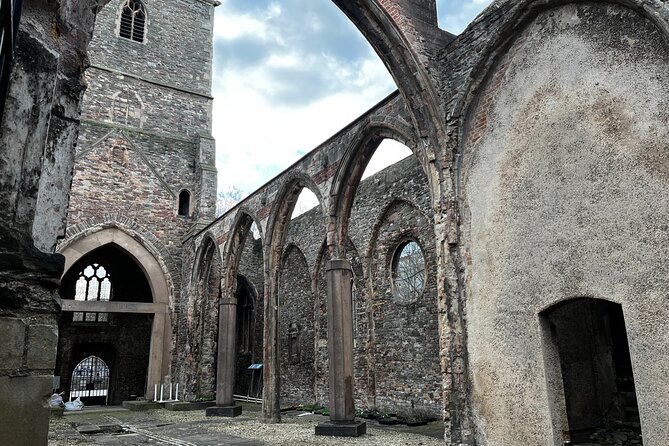
Bathurst Basin lost its water supply when the New Cut was dug out in 1809. The tour also mentions the Ostrich pub at the entrance, built around 1745, and connects it to sailors, dock workers, and merchants.
I like stops like this because they’re small and human. A pub is not just a building, it’s where working people spent time, waited out weather, or talked shop.
Princes Wharf
Princes Wharf is where you get the contrast: most city docks are now closed to cargo ships. The result is a different feel from the busy trading times of the past.
The audio encourages you to look closely for evidence of what docks were like. Even on a short walk, that turns the area into something you can read, not just pass through.
The Matthew of Bristol replica
Next is the Matthew of Bristol, a replica of the original Matthew John Cabot sailed in 1497. The guide notes that the replica made an Atlantic crossing to Canada in 1997 to mark the 500th anniversary of Cabot’s journey.
This is a surprising cultural anchor in a docks walk. Cabot’s voyage gives Bristol’s maritime identity a longer arc than just local industry.
M Shed, Wapping Wharf, and the SS Great Britain finale
This is where you finish strong, and where you can choose to extend your day.
M Shed
M Shed is free to enter and is described as one of the parts of the harborside to retain original features. The audio positions it as worth your time if you have it.
If you want a break from walking, this is your easiest win. Even a quick museum visit can help you connect the street-level story to objects and visuals.
Wapping Wharf
Wapping Wharf was used for shipbuilding and repair. The tour also reminds you that in the 1800s, Bristol Docks would have been packed with boats loading and unloading goods.
This stop is useful even if you think you already know what docks are. The audio nudges you to imagine labor, not just ships.
Brunel’s SS Great Britain: the big ending
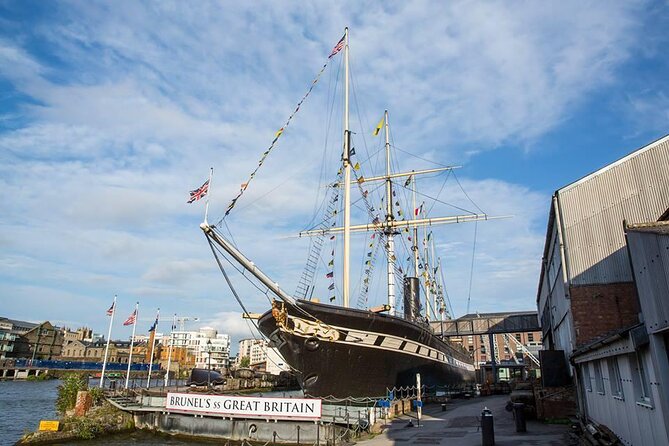
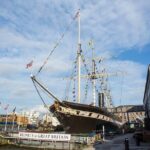
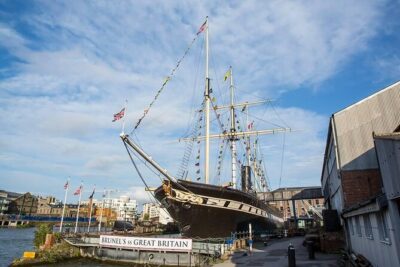
Finally, you end at Brunel’s SS Great Britain in the Great Western Dockyard area. The guide explains the ship was built on this dock by Isambard Kingdom Brunel, was the largest ship at the time, and was the first ship constructed using iron. When it launched in 1843, people called it the greatest experiment since creation.
This ending does two jobs. First, it gives you a modern reason to be here beyond a walking route. Second, it locks in the maritime story with a single iconic object.
Price and value: what $12.33 is buying you in Bristol
At about $12.33 per person, you are paying for three things: the audio narration, the routing tools in the app, and the convenience of not needing an in-person guide.
The value part is not just the content. It’s the flexibility. You get 3 weeks of unlimited access, so if you want to repeat it on another day, or you miss a turn and need to catch up, you are not stuck with a one-time window.
Also, the stops are ticket-free as listed, which keeps your budget predictable. You can spend your money on a drink or a longer museum stop instead of adding admission fees every few blocks.
Where value can slip a bit is timing. If navigation takes longer than expected, you may feel like you bought a 2 to 3 hour plan but ended up with more walking. That’s not a deal-breaker, but it’s why I suggest a little extra buffer in your day.
Timing and navigation: the one thing to watch on harborside walks
This tour is designed for a smooth, stop-by-stop flow, but Bristol’s city layout can be tricky around busy waterfront areas. One thing to plan for: you might hit moments where street naming is unclear, or access feels blocked, which can create detours and add time.
My practical advice:
- Keep GPS on and follow the on-screen route.
- Pause the audio if you need to confirm you’re on the right street.
- Allow extra time if you are doing this during peak crowds or if weather is rough.
If you do that, the self-guided format stays fun instead of stressful.
Who should book this self-guided Harbourside walk
Book it if you want:
- A structured walk through Bristol’s harbor area, without hiring a guide.
- A strong mix of streets, bridges, churches, docks, and museum time.
- A narration-led experience where Helen’s voice keeps the story moving.
Skip it if:
- You prefer tours with heavy signage at every turn, all the time.
- You cannot handle occasional routing ambiguity and would rather pay for a person to manage it.
If you like planning your own day but still want direction, this hits a sweet spot.
Should you book this Bristol Harbourside self-guided tour?
Yes, if you want a low-cost, flexible way to connect Bristol’s rivers, Georgian streets, and dock history into one walk. The Helen audio guide and the GPS-based routing are a strong match for travelers who learn best by moving through real places.
Give yourself a little breathing room for timing. Then use the end point to turn the finale into an extra stop at Brunel’s SS Great Britain and, if you have time, pop into M Shed since it’s free to enter.
If you want your Bristol day to feel connected instead of random, this is an easy recommendation.
FAQ
How long is the Bristol Harbourside self-guided walking tour?
The tour is listed as approximately 2 to 3 hours.
What language is the tour available in?
The tour is offered in English.
Do I need to pay admission at the stops?
The tour descriptions list the stops as admission ticket free.
Is there an in-person guide with the tour?
No. It is a self-guided tour, and you use the audio guide in the app.
Where does the tour start and end?
It starts at the Bristol, UK meeting point shown by the provided location code, and it ends at Brunel’s SS Great Britain, Great Western Dockyard, Gas Ferry Rd, Bristol BS1 6TY, UK.
How long do I have access to the tour after booking?
You get 3 weeks unlimited access to the self-guided tour on the app.
Routes You Can Walk Unaccompanied



More Of Bristol On Foot




West Country, Further Out



Fresh off the notebook in Bristol
- Afternoon Bath City Tour – Private tour from Bristol with a local guide
★ 5.0 · 7 reviews - Brunel’s Bristol: A Self-Guided Tour from SS Great Britain to Clifton Bridge
★ 4.5 · 11 reviews - Bristol Harbourside Self-Guided Walking Tour
★ 4.5 · 12 reviews - Wine & Cheese in the Somerset Valleys – with Michelin-star lunch!
★ 5.0 · 12 reviews - Cocktail Classes in Bristol, England
★ 4.5 · 15 reviews - Bristol Old City Food & drink Tour
★ 5.0 · 15 reviews
Bristol and the West Country, compared.
 ★ 5.0Blackbeard to Banksy – The Ultimate Walking Tour of BristolFrom $181,961 reviews
 ★ 5.0The House Magicians’ Comedy Magic Show at Smoke & Mirrors in Bristol (Sat 7pm)From $35296 reviews
 ★ 5.0Ghosts, Ghouls & Gallows :The Original Bristol Ghost WalkFrom $27262 reviews
 ★ 5.0Only Fools and Horses Tour of BristolFrom $48253 reviews
 ★ 5.0Guided Walking Tour of Bristol Old City and HarbourFrom $29166 reviews
 ★ 5.0Fully guided Bristol Ghost ToursFrom $23130 reviews
 ★ 5.0Fun, Flexible Treasure Hunt Around Bristol with Cryptic Clues & Hidden GemsFrom $20101 reviews
 ★ 5.0Guided Walking Tour Suspension Bridge Clifton Splendour & City.From $34100 reviews
Browse the lists this tour appears in