

REVIEW · BRISTOL AND THE WEST COUNTRY
Brunel’s Bristol: A Self-Guided Tour from SS Great Britain to Clifton Bridge
Brunel’s story in Bristol feels close-up. This self-guided walk takes you from the Lloyds Amphitheatre area toward Clifton, with voice-led stops along the waterfront and bridges so you can go at your pace. I like the offline access built into the VoiceMap app, so you can keep moving without hunting for cell service, and I like the lifetime access that lets you repeat it later when you have time to linger.
One real consideration: the finish includes a steep climb, and parts of the route can be tricky on foot, especially if construction is shifting paths or sidewalks.
In This Review
- Key Things to Know Before You Go
- What This Self-Guided Brunel Walk Actually Is
- Starting at Lloyds Amphitheatre, Get Oriented in Minutes
- Along Hanover Quay to Spitfire Barbecue, Bristol as a Port City
- Harbour Inlet, Spoke and Stringer, and Capricorn Place
- The Brief Statue Stop, the Landing, and the Pump House
- Over Cumberland Basin, Then Two Swing Bridges
- The Zig Zag and Old Clifton Rocks Railway: Where the Tour Starts to Work
- Ending at Clifton Suspension Bridge Views and the Lookout Lectern
- Price, Timing, and Real Value at 8.99 USD
- Route Comfort, Headphones, and the Little Things That Affect Your Day
- Who Should Book This Brunel’s Bristol Walk
- Should You Book Brunel’s Bristol from SS Great Britain to Clifton Bridge?
- FAQ
- How long is the Brunel’s Bristol self-guided tour?
- What is the price per person?
- Is the tour offered in English?
- Does the tour work without mobile data?
- Do I need tickets for stops along the route?
- What should I bring with me?
- Where does the tour start and end?
- Is it near public transportation?
- Is there a fitness level recommendation?
- Is this a private tour?
- Can I cancel and get a refund?
Key Things to Know Before You Go
- Offline audio and maps: VoiceMap includes offline access for audio, maps, and geodata, so you can travel with less worry about data.
- Lifetime access: You pay once and keep the tour, in English, for the long haul.
- GPS-style help: The app’s directions can help you if you take a wrong turn.
- A dock-to-bridge storyline: The route threads through basins, swing bridges, and the Zig Zag so you see how the engineering fits together.
- Steep ending: Plan for a tougher final stretch as you work your way toward Clifton.
- Good value for time: Around 1 hour to 1 hour 15 minutes, packed with meaningful waypoints.
More of the west: harbour, gorge and abbey
- Blackbeard to Banksy – The Ultimate Walking Tour of Bristol★ 5.0 · 1,961 reviews
- The House Magicians’ Comedy Magic Show at Smoke & Mirrors in Bristol (Sat 7pm)★ 5.0 · 296 reviews
- Ghosts, Ghouls & Gallows :The Original Bristol Ghost Walk★ 5.0 · 262 reviews
- Only Fools and Horses Tour of Bristol★ 5.0 · 253 reviews
What This Self-Guided Brunel Walk Actually Is
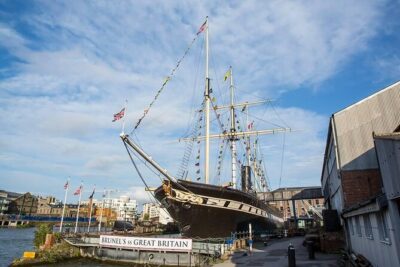
This is a self-guided audio tour in Bristol, focused on Isambard Kingdom Brunel’s engineering landmarks, from the SS Great Britain area toward Clifton Suspension Bridge. You use the VoiceMap Audio Tours app on your own smartphone, and you follow the walking route waypoint by waypoint instead of joining a group that moves on someone else’s schedule.
You get lifetime access to the tour in English, plus offline audio, offline maps, and offline geodata. That matters in Bristol because you’re moving between waterfront areas and viewpoints where signal can be spotty. It also matters because audio tours only feel relaxing if they do not depend on your phone acting right.
Starting at Lloyds Amphitheatre, Get Oriented in Minutes
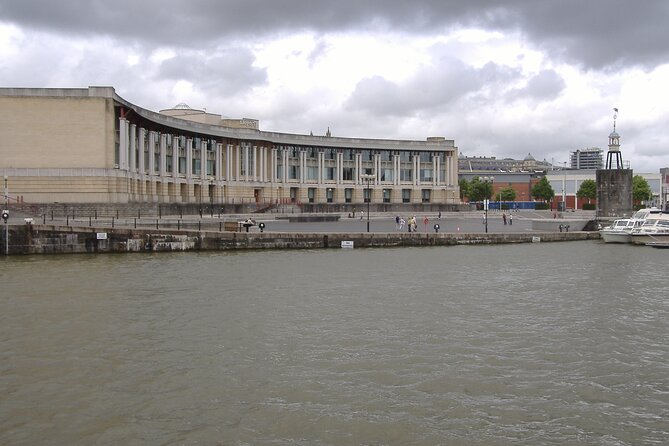
Your tour begins at Lloyds Amphitheatre, Explore Ln, Bristol BS1 5LL. If you arrive a few minutes early, you can get your phone ready, load the tour in the VoiceMap app, and start listening before you commit to walking.
This opening stretch sets the tone. The audio leads you from the amphitheatre into the dockside world, and the early wayfinding is designed to help you feel confident quickly. Based on how the tour is described, this first phase is less about climbing and more about getting your bearings, so you can settle into the route rhythm.
Tip: keep your volume comfortable but not too loud. On a waterfront walk, you still want to hear traffic and other pedestrians, especially where sidewalks can narrow.
Along Hanover Quay to Spitfire Barbecue, Bristol as a Port City
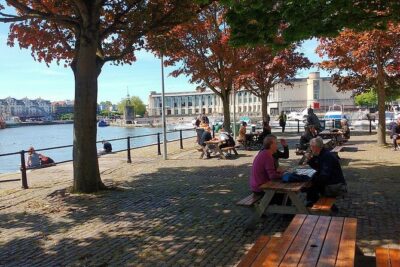
Next, the route goes along Hanover Quay. This is where you start seeing Bristol as a working port city, not just a postcard view. The audio framing helps you connect the dots between structures and the way they were meant to move people and goods.
The tour then passes by Spitfire Barbecue. Even if you are not stopping to eat, the point of that stop is simple: you’re moving along a lively, real-world stretch where the city’s past and present overlap. It is the kind of segment that makes an engineering story feel grounded.
From there, you continue toward Harbour Inlet. When an audio tour takes you to a body of water, it’s usually doing two jobs at once. One is visual, it helps you line up viewpoints. The other is narrative, it gives context for why Brunel’s work mattered in the larger layout of docks, crossings, and routes.
Harbour Inlet, Spoke and Stringer, and Capricorn Place
After Harbour Inlet, you pass by Spoke and Stringer, then continue along Capricorn Place. This is a good section for slowing down just a bit. If you rush, you miss why these waypoints work together.
The audio commentary here is described as clear and informative, with a focus on Brunel and how the engineering shows up in everyday spaces. The more you pay attention to what you are walking past, the more the story clicks. And if you are the kind of traveler who likes a few laughs along the way, you’ll probably appreciate the tone reported by others, including humorous takes on bridge architecture and the engineer himself.
Drawback to keep in mind: like many urban waterfront routes, you can encounter construction or temporary path changes. One practical lesson from the route experience is to stay alert and be willing to adapt if you hit blocked sections. The app can help with recalculating your sense of direction, but you should still use common sense on the ground.
Rather go alone? More self led routes here


The Brief Statue Stop, the Landing, and the Pump House
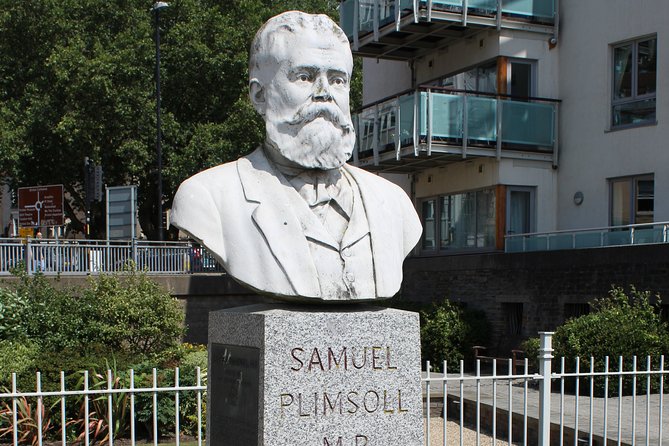
The tour makes a brief stop at the statue. Even though it is short, it can be a useful “pause point.” Audio tours often work best when you take one or two micro-breaks to reset your eyes and decide what to photograph, what to ignore, and what you want to hear more about later.
After the statue, you pass by the landing, then the Pump House. This segment is a nice reminder that historic ports depend on systems, not just big bridge silhouettes. You are moving through the kind of spaces where engineering does its quiet work: movement, access, and infrastructure that keeps everything functioning.
If your phone battery is running low, this is a safe moment to check it. You’ll need power for audio navigation, so it helps to treat the statue and the Pump House area as your “quick battery check” zone.
Over Cumberland Basin, Then Two Swing Bridges
Then comes one of the most visually satisfying stretches: crossing over Cumberland Basin. Water and basins tend to do something special for self-guided tours. They give you instant geographic context, so you can see why a particular route makes sense.
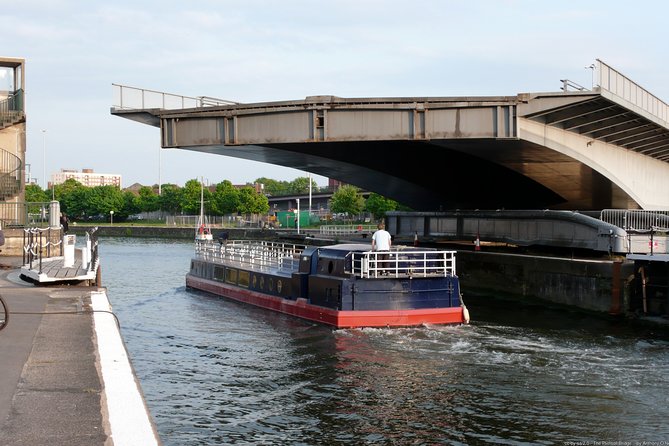
From there, the tour passes by Plimsoll Swing Bridge, then passes by Brunel’s Swing Bridge. This is the engineering highlight zone. You are not just seeing a bridge, you are seeing the idea of a swing bridge in action as part of the dockside system.
One thing I like about this structure is that it keeps you moving through layers of meaning. You get multiple crossings close together, which makes it easier to understand the engineering concept without needing a museum to explain it. The audio commentary is the main guide here, so having headphones makes a real difference, and you’ll likely want your phone volume high enough to catch details.
The Zig Zag and Old Clifton Rocks Railway: Where the Tour Starts to Work
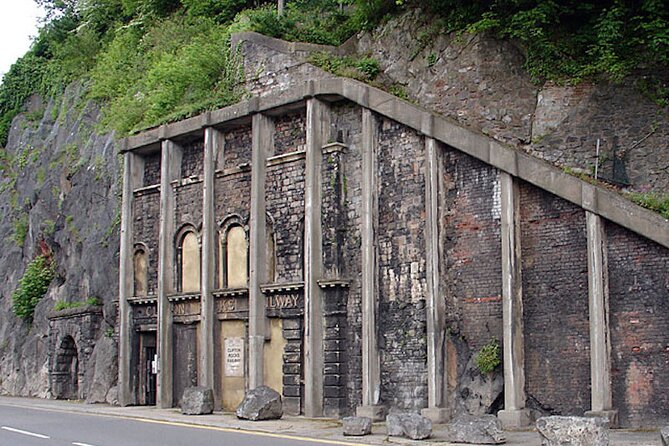
Now you shift from waterfront crossings toward the route that leads uphill. The tour goes along the Zig Zag, then passes by Old Clifton Rocks Railway. This is where the walk becomes more physically demanding and more visually dramatic.
The Zig Zag is exactly the kind of path that audio tours need, because it is built to move you between levels. Listening here helps, but your legs do the talking too. Several people point out that the end of the tour includes a steep climb, and this is one of the early moments when you can feel it coming.
If you have moderate fitness, you can still handle this section, but go slow. Take breaks whenever you need them. This is not about speed, it is about arriving at the viewpoint while still enjoying the route.
Practical note: some sections may have limited pedestrian space, and construction can affect walkability. If you are traveling with anyone who has mobility limits, plan conservatively.
Ending at Clifton Suspension Bridge Views and the Lookout Lectern
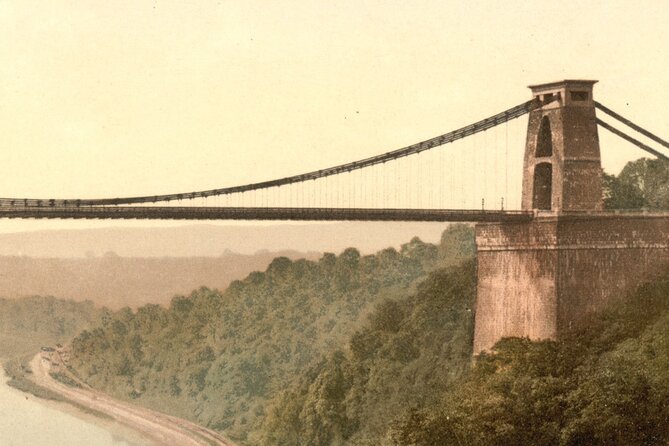
The tour ends with a view of the Clifton Suspension Bridge, then finishes at the Lookout Lectern, Sion Hill, Clifton, Bristol BS8 4BL. That end point is doing the most important job an audio tour can do: it cashes in the earlier effort with a clear destination payoff.
You’ll feel it most if you let yourself linger. The route builds toward this view, so the time you spend here helps the whole walk feel like one coherent experience, not just a string of stops.
Also, the ending spot is a good place to reset your phone for the walk back. You might still have audio loaded, but you can turn it off once you get your shots and enjoy the view without instructions bouncing in your ears.
Price, Timing, and Real Value at 8.99 USD
At $8.99 per person, this walk is priced for travelers who want guided storytelling without paying for a full guided group tour. The value comes from three things working together.
First, the duration is tight and reasonable, around 1 hour to 1 hour 15 minutes on average. That means you can fit it into a day of sightseeing without it swallowing half your plans.
Second, offline access reduces hidden costs. You are not spending your time worrying about roaming charges or finding Wi-Fi to keep the app running.
Third, lifetime access is unusually helpful. If you later want to revisit the bridges with fresh eyes, or you come back to Bristol and want a new angle, you still have the tour.
Timing-wise, the listed opening hours show 12:00 AM to 11:59 PM, every day. In other words, it’s built for flexibility, so you can choose a time that matches your energy level, especially since the final climb matters.
Route Comfort, Headphones, and the Little Things That Affect Your Day
This is a walking experience, and it comes with a few practical requirements. Smartphone and headphones are not included, so bring both. VoiceMap works on Android and iOS, and the tour is offered in English.
The route is near public transportation, which helps if you want to start close to transit or avoid a long walk before you begin. But the key comfort issue is the climb toward the end. If you know you struggle on steep grades, treat this tour as more work than a casual stroll.
Also, some segments may be affected by construction. That can make pavement width and crossing points feel less predictable. The best defense is simple: wear supportive shoes, keep your attention on the path, and do not assume every stretch will feel perfectly pedestrian-friendly.
Who Should Book This Brunel’s Bristol Walk
This is a great fit if you like engineering stories and you enjoy walking at your own pace. It is also a smart choice if you hate the pressure of group tours, because it’s private in the sense that only your group participates, and you are steering the timeline.
You’ll probably enjoy it most if:
- You want a structured route with enough guidance to stay confident.
- You like learning at each waypoint rather than reading a single brochure.
- You prefer audio navigation with offline maps.
You might want to look at other options if:
- You need step-free or very easy walking paths, since the tour includes a steep ending.
- You dislike situations where sidewalks might narrow, or where construction changes the route.
Should You Book Brunel’s Bristol from SS Great Britain to Clifton Bridge?
If you want a practical, self-guided way to connect Brunel’s engineering to real Bristol streets and waterfront views, this is a strong booking. The price is low for what you get, and the offline audio and maps make it easy to take it seriously as a real walking plan, not just a phone app.
I’d book it if you are comfortable with a steep finish and you are happy to use your own device with headphones. I would not book it if the idea of steep grades, narrow foot space, or construction-related detours sounds stressful.
If you do book, give yourself enough time at the lookout to actually see what you walked for. This tour is at its best when you treat the last viewpoint as the payoff, not just the end of instructions.
FAQ
How long is the Brunel’s Bristol self-guided tour?
The duration is about 1 hour to 1 hour 15 minutes.
What is the price per person?
The price is $8.99 per person.
Is the tour offered in English?
Yes, it is offered in English.
Does the tour work without mobile data?
Yes. Offline access is included for audio, maps, and geodata in the VoiceMap app.
Do I need tickets for stops along the route?
No. Tickets or entrance fees for museums or other attractions along the way are not included.
What should I bring with me?
Bring your smartphone and headphones. Transportation and food or drink are not included.
Where does the tour start and end?
It starts at Lloyds Amphitheatre, Explore Ln, Bristol BS1 5LL, UK. It ends at the Lookout Lectern, Sion Hill, Clifton, Bristol BS8 4BL, UK.
Is it near public transportation?
Yes, it is near public transportation.
Is there a fitness level recommendation?
Yes. Travelers should have a moderate physical fitness level, since there are strenuous sections, especially near the end.
Is this a private tour?
Yes. It is a private tour or activity, and only your group will participate.
Can I cancel and get a refund?
No. The experience is non-refundable and cannot be changed for any reason. If you cancel, you will not be refunded.
Other Departures With A Guide Attached






Routes You Can Walk Unaccompanied

West Country, Further Out



Fresh off the notebook in Bristol
- Afternoon Bath City Tour – Private tour from Bristol with a local guide
★ 5.0 · 7 reviews - Brunel’s Bristol: A Self-Guided Tour from SS Great Britain to Clifton Bridge
★ 4.5 · 11 reviews - Bristol Harbourside Self-Guided Walking Tour
★ 4.5 · 12 reviews - Wine & Cheese in the Somerset Valleys – with Michelin-star lunch!
★ 5.0 · 12 reviews - Cocktail Classes in Bristol, England
★ 4.5 · 15 reviews - Bristol Old City Food & drink Tour
★ 5.0 · 15 reviews
Bristol and the West Country, compared.
 ★ 5.0Blackbeard to Banksy – The Ultimate Walking Tour of BristolFrom $181,961 reviews
 ★ 5.0The House Magicians’ Comedy Magic Show at Smoke & Mirrors in Bristol (Sat 7pm)From $35296 reviews
 ★ 5.0Ghosts, Ghouls & Gallows :The Original Bristol Ghost WalkFrom $27262 reviews
 ★ 5.0Only Fools and Horses Tour of BristolFrom $48253 reviews
 ★ 5.0Guided Walking Tour of Bristol Old City and HarbourFrom $29166 reviews
 ★ 5.0Fully guided Bristol Ghost ToursFrom $23130 reviews
 ★ 5.0Fun, Flexible Treasure Hunt Around Bristol with Cryptic Clues & Hidden GemsFrom $20101 reviews
 ★ 5.0Guided Walking Tour Suspension Bridge Clifton Splendour & City.From $34100 reviews
Browse the lists this tour appears in