
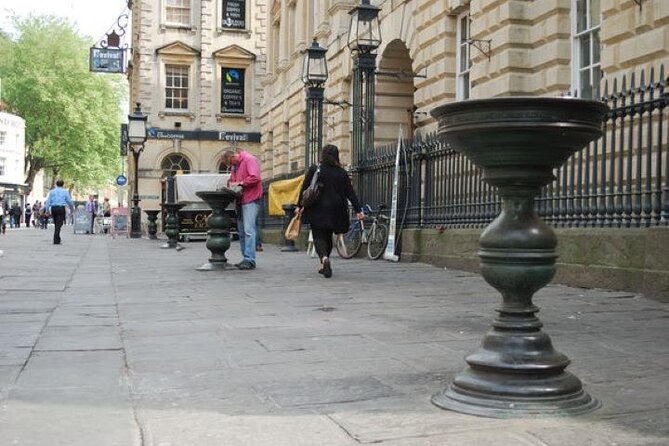
REVIEW · BRISTOL AND THE WEST COUNTRY
Guided Walking Tour of Bristol Old City and Harbour
Bristol changes fast when you walk it. This Guided Walking Tour of Bristol Old City and Harbour strings together the big sights in one smooth route, with clear audio so you do not miss the stories. I love how you get a small-group feel that stays personal, and I love that the guide setup makes the commentary easy to hear even in busy areas. A good heads up though, this is a walking tour with a steady pace, so comfortable shoes and a little stamina help.
The best part for me is the mix. You start in the cathedral area, then work your way toward the docks, bridges, and basins, and you finish deep in the old streets around Queen Square and the Old Vic. You also learn where Bristol’s street art fits into the city’s wider story, including guidance on Banksy murals.
One possible drawback is that you will be moving. The route is packed with stops, and the walking time adds up quickly, even though each listed stop is short. If you want long pauses for photos at every single corner, this format may feel a bit brisk.
In This Review
- Key highlights worth your time
- Start at the right place: Bristol Marriott Royal Hotel to the Cathedral zone
- Bristol Cathedral area: landmarks that explain the city’s shape
- Canon’s Marsh and the harbour edge: cranes, quays, and shipping history
- Bristol City Docks: medieval trench to Arnolfini
- Prince Street Bridge and the waterfront landmarks you can spot from afar
- Bathurst Basin: mills, houses, and a bit of jaw-dropping local design
- Queen Square and the old city networking points
- Bristol Old Vic and Welsh Back: theatre and riverside street life
- Baldwin Street and Castle Park: tracing Bristol back toward its start
- St John on the Wall: a surviving gate and street art details
- The Edward Colston statue area and a clean ending back at the Marriott
- Price and value: around 30 USD for a lot of sights
- Who this tour suits best
- Quick practical advice before you go
- Should you book this Bristol Old City and Harbour walking tour?
- FAQ
- How long is the Guided Walking Tour of Bristol Old City and Harbour?
- What is the meeting point for the tour?
- When does the tour start?
- Is the tour in English?
- How much does it cost?
- Are audio receivers included?
- Are there admission tickets required for the stops?
- How big is the group?
- Can I bring a service animal?
- What should I bring or wear?
- Is there free cancellation?
Key highlights worth your time
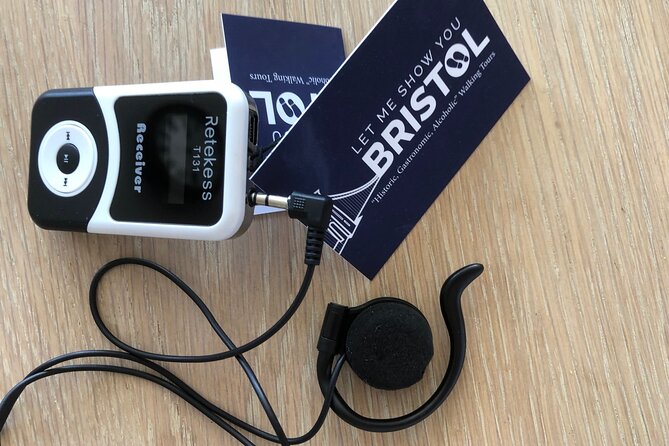
- Audio receivers: clear commentary when streets get noisy.
- Small group (up to 8): more back-and-forth and less crowding.
- Old City to harbour in one loop: cathedral, docks, bridges, and classic city squares.
- Street art with context: you do not just point at murals, you get why they matter here.
- Free entry for the stop locations: no extra admission tickets listed for the sights you visit.
- Guided by Mike: a guide who loves Bristol and connects the dots for first timers and repeat visitors.
More of the west: harbour, gorge and abbey
- Blackbeard to Banksy – The Ultimate Walking Tour of Bristol★ 5.0 · 1,961 reviews
- The House Magicians’ Comedy Magic Show at Smoke & Mirrors in Bristol (Sat 7pm)★ 5.0 · 296 reviews
- Ghosts, Ghouls & Gallows :The Original Bristol Ghost Walk★ 5.0 · 262 reviews
- Only Fools and Horses Tour of Bristol★ 5.0 · 253 reviews
Start at the right place: Bristol Marriott Royal Hotel to the Cathedral zone
The tour meets at the Bristol Marriott Royal Hotel on College Green, right in the heart of the action. That location matters because it puts you close to the oldest core of the city and the easiest routes toward the water.
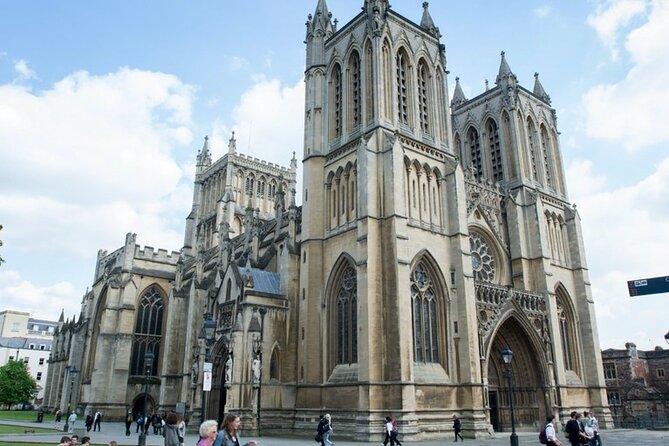
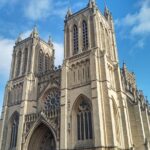
From there you head to Bristol Cathedral. This is not just a stop to look up at the building and move along. You get a guided walkthrough that points out specific landmarks and named features around the cathedral area, including the Well Hung Lover and St Mark’s. The Cathedral stop is also a quick way to anchor your visit, because it helps you understand Bristol as a living city, not a museum set.
Practical tip: plan to treat the first 20 minutes as orientation time. If you pay attention at the start, the rest of the walk makes more sense, especially once you start crossing into the dock and bridge sections.
Bristol Cathedral area: landmarks that explain the city’s shape
The tour uses the cathedral zone to show how Bristol’s center holds together. You also pass the Council House and Park Street and other nearby buildings, which is useful because it frames how the city grew around trade, governance, and religious sites.
What I like about this early set is that it gives you names to attach to what you see. When you return later on your own, you can look at a street or a façade and remember what the guide said, instead of doing the usual tourist scan.
If you are sensitive to crowds, this start can feel busy, but the audio receiver helps a lot. It is one of those small upgrades that turns a potentially stressful walk into a relaxing one.
Canon’s Marsh and the harbour edge: cranes, quays, and shipping history
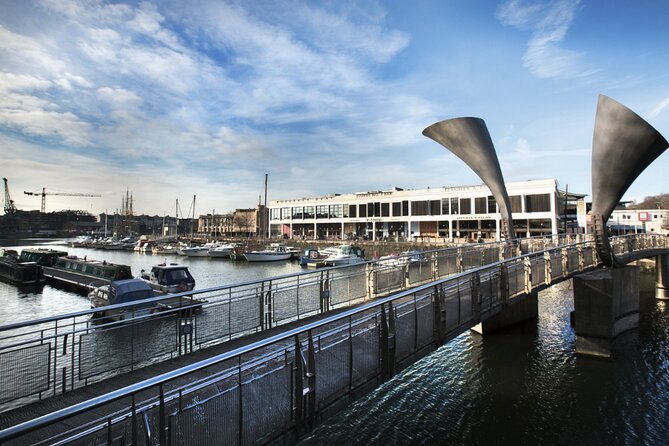
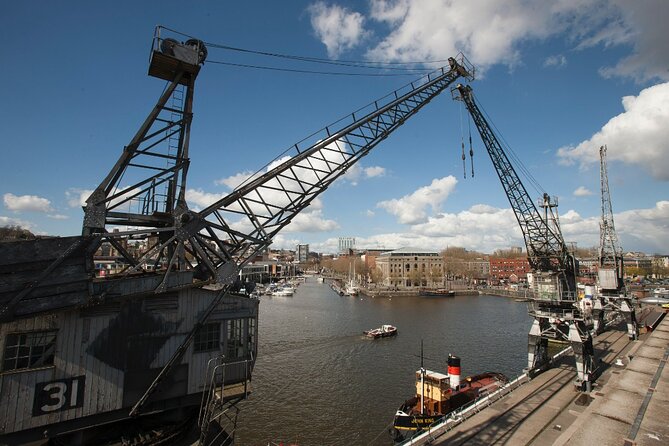
Next you go to Canon’s Marsh and the harbour edge, where the scenery changes from stone streets to a working-waterfront vibe. You look out over Oporto Quay and see the Limekiln Dock area, along with cranes and shipping views.
This section is great if you like the practical side of cities. It is not all romance. You see the geography that helped Bristol become a major port, and you get commentary that links the physical places to the people who used them.
Drawback to consider: this part is outdoors and can be windier than the cathedral streets. Bring layers and plan for weather.
Bristol City Docks: medieval trench to Arnolfini
Then the walk reaches Bristol City Docks. You cross into a more layered world here, with the tour guiding you through the medieval trench and over Pero’s Bridge to Arnolfini.
The medieval trench stop is a good example of what this tour does well. It points you toward an area that could look like background texture if you were on your own. With the explanation, it becomes a clue to how Bristol’s harbour operated across centuries.
Arnolfini also adds a modern arts and riverside touch, so the docks portion does not feel stuck in one era. You get a sense of continuity, how the waterfront keeps changing roles but stays central to the city.
Photo tip: if you like bridge and dock views, this is where you should slow down for a minute and frame wider shots. The route gives you the vantage points, but you need your own eye to capture them.
More on foot, at a pace you can hear the guide
Prince Street Bridge and the waterfront landmarks you can spot from afar
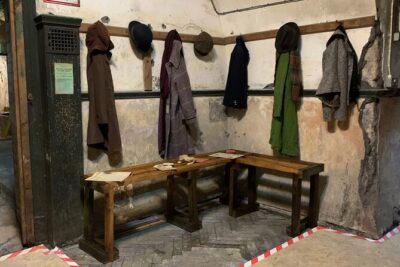
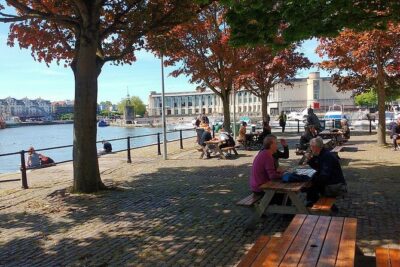
Crossing via Prince Street Bridge is one of those moments where Bristol feels very Bristol. You see M Shed and other big visual markers along the harbourfront, including the Matthew, Container Village, and Old Prison Ruins.
Why this stop works: it is a concentrated view of multiple eras and functions. You have museum-scale waterfront buildings, distinctive long-term installations, and reminders of the city’s institutional past.
One practical thing: bridges can be slippery if it’s wet. Wear shoes with grip, and do not rush. This is especially important because the tour keeps moving and you will not want to slip at the one place you actually wanted to stop and take it in.
Bathurst Basin: mills, houses, and a bit of jaw-dropping local design
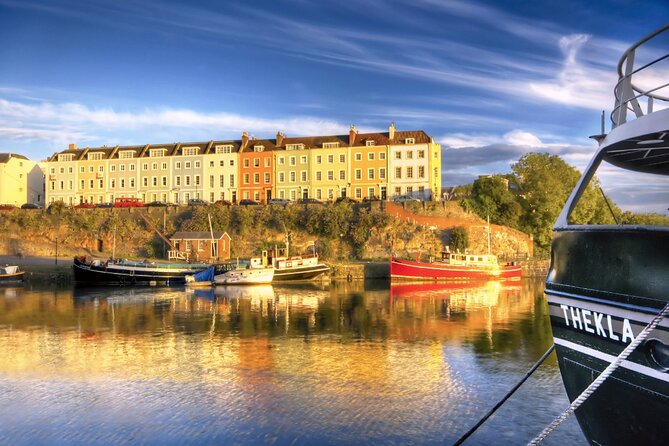
At Bathurst Basin, the walking tour turns into a mix of waterside scenery and specific named spots. You see the Old Mill Pond, Guinea Street, and A House Through Time. You also pass the Slave Captains Houses and view Redcliffe Church.
This is the portion where the tour’s balance shows. You are not only viewing pretty architecture. You are seeing Bristol’s story, including the parts that are uncomfortable. The commentary helps you connect the buildings you would otherwise walk past with the city’s wider social and economic history.
A good way to approach this: pick one or two of the named stops and use them as your anchor. For example, A House Through Time is the kind of place that stands out visually, and Slave Captains Houses is the kind of place where a little context makes the difference between a quick glance and a real understanding.
If you are traveling with teens, this section tends to work well because the named features feel like puzzles. Adults usually like it too because it turns architecture into story.
Queen Square and the old city networking points
The tour then moves to Queen Square, where you start seeing how the old city connects to the harbour routes you just walked. Here you work around the docks toward King William’s Statue and the American Consulate, and you also hear about the Spy Glass Inn from Treasure Island.
This is a fun stop for first timers because Queen Square feels like a stage. It gives you a sense of where people congregate and how the city’s identity shows up in signage, institutions, and references to popular culture.
If you like street-level storytelling, this section is a win. You see the points where Bristol’s past leaks into its modern identity.
Bristol Old Vic and Welsh Back: theatre and riverside street life
The next major landmark area is Bristol Old Vic. You also see King Street and Welsh Back as you head into this zone.
Why it matters: the Old Vic is one of those anchors that turns a walk into a lived-in city experience. Even if you do not attend a performance, hearing how it fits into the surrounding streets makes you see it differently.
This stop also helps you bridge the docks story with the old city story. You are no longer only looking at trade and infrastructure. You are seeing culture and everyday urban life connected to the same geography.
Baldwin Street and Castle Park: tracing Bristol back toward its start
Baldwin Street is where the tour takes you uphill into Bristol’s origins. You see the origination of Bristol as a Saxon settlement, plus Castle Park. From there you enter the old city and look at churches, law courts, merchants trading haunts, the Corn Exchange, and nails and guilds meeting places.
This is one of the most “identity-building” stretches of the whole walk. It tells you, in plain terms, how Bristol grew from an early settlement into a trading city with institutions that still show up in the streets.
You will feel the walking here. Baldwin Street is famous, and even if you treat it like a normal hill, it still demands attention. Take it slow, keep breathing steady, and use the audio receiver to stay locked into the story rather than focusing only on your legs.
St John on the Wall: a surviving gate and street art details
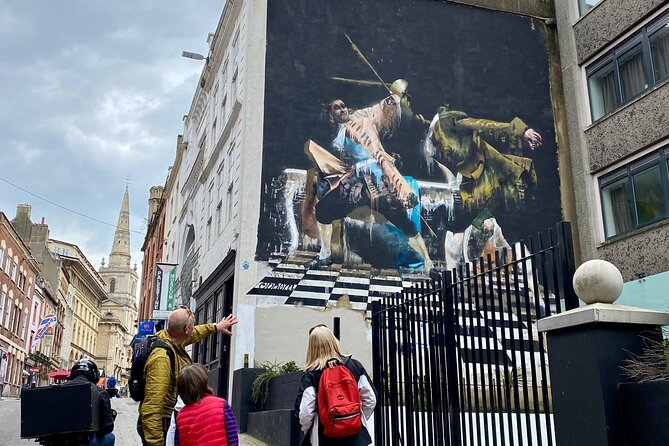
Then you reach St John on the Wall. This stop includes walking through one of the remaining old city gates, seeing the conduit, and getting guided attention on street art.
This is a great reminder that Bristol’s street art is not random decoration. The tour helps you understand it as part of the city’s ongoing conversation. If you care about Banksy murals, this is where the guide’s direction becomes especially useful, because you get specific pointers on what to look for and where.
Practical tip: street art can be easy to miss if you are staring only at the big monuments. This stop teaches you to look down and sideways, not just up.
The Edward Colston statue area and a clean ending back at the Marriott
The walk finishes at the Statue of Edward Colston area, then you see the Cenotaph. After that, the tour ends back at the Marriott Royal Hotel, where you started.
Even if you have strong feelings about Colston, it helps to see where the city places remembrance and how public space is used to shape memory. The ending also keeps things simple. No tricky last leg across town.
You also gain a practical benefit here: by the time you finish, you have a mental map of central Bristol that makes it much easier to plan your next day’s explorations.
Price and value: around 30 USD for a lot of sights
At $29.86 per person, this walking tour is priced like a smart intro, not a luxury attraction. The value comes from two things.
First, you are not just seeing one district. The route connects cathedral area Bristol, harbour docks, multiple bridges, basin stops, squares, theatre streets, old city lanes, and a final memorial area, all in roughly two hours and fifteen minutes.
Second, the tour gives you audio receivers. That is not a small add-on. It changes the experience because you can actually follow along when you are surrounded by other people or when the route gets noisy.
If you only have a short time in Bristol, this is the kind of activity that helps you get your bearings fast. If you already know Bristol deeply, it might still be worth it for the specific stop explanations and street art pointers, but you may finish thinking you learned just a few new angles rather than a full rewrite of the city.
Who this tour suits best
This tour is a great fit if you:
- want a fast, structured introduction to central Bristol
- like walking but still want a guided route that saves you decision fatigue
- care about street art and how it connects to the city’s history
- appreciate clear listening support via audio receivers
- enjoy having a guide who actually talks, not someone who just points
It may be less ideal if you:
- want a very slow pace with tons of personal time at each photo spot
- have limited ability to walk a route with a steady uphill stretch, including Baldwin Street
Quick practical advice before you go
Bring comfortable shoes. You will be walking enough that you feel it later.
Bring water, since the tour runs outdoors and you do not get coffee or tea included. The itinerary includes many stops, but each one is timed, so you are better off staying hydrated and snacking independently if you need a mid-walk break.
Dress for weather. The tour requires good weather, so if the skies turn ugly on your date, the operator may offer another date or a refund.
Should you book this Bristol Old City and Harbour walking tour?
If you are visiting Bristol for the first time, or you only have a day or two and you want the most useful orientation, I think you should book this. It is one of the better ways to connect cathedral Bristol to harbour Bristol without wasting your time figuring out routes.
I especially recommend it if you want both structure and story. The combination of named stops, clear audio receivers, and a small group size makes it easy to follow, ask questions, and actually remember what you saw.
Just go in expecting a walk with a steady pace. If you treat it like a guided sprint through the city’s highlights, you will come away with a real sense of where everything is, including where Bristol’s street art fits into the broader picture.
FAQ
How long is the Guided Walking Tour of Bristol Old City and Harbour?
The tour lasts about 2 hours and 15 minutes.
What is the meeting point for the tour?
It starts at the Bristol Marriott Royal Hotel, College Green, Bristol BS1 5TA, UK.
When does the tour start?
The start time is 2:00 pm.
Is the tour in English?
Yes, it is offered in English.
How much does it cost?
The price is $29.86 per person.
Are audio receivers included?
Yes. Audio receivers are provided, so you can hear the guide clearly.
Are there admission tickets required for the stops?
No admission tickets are listed as required for the stops on the route.
How big is the group?
The tour has a maximum of 8 travelers.
Can I bring a service animal?
Yes, service animals are allowed.
What should I bring or wear?
Wear comfortable shoes, bring water, and dress for the weather. This experience works best on good weather days.
Is there free cancellation?
Yes, you can cancel for a full refund up to 24 hours in advance of the experience start time. If it is canceled due to poor weather, you will be offered a different date or a full refund.
More City Runs In Bristol


More Of Bristol On Foot

West Country, Further Out


Fresh off the notebook in Bristol
- Afternoon Bath City Tour – Private tour from Bristol with a local guide
★ 5.0 · 7 reviews - Brunel’s Bristol: A Self-Guided Tour from SS Great Britain to Clifton Bridge
★ 4.5 · 11 reviews - Bristol Harbourside Self-Guided Walking Tour
★ 4.5 · 12 reviews - Wine & Cheese in the Somerset Valleys – with Michelin-star lunch!
★ 5.0 · 12 reviews - Cocktail Classes in Bristol, England
★ 4.5 · 15 reviews - Bristol Old City Food & drink Tour
★ 5.0 · 15 reviews
Bristol and the West Country, compared.
 ★ 5.0Blackbeard to Banksy – The Ultimate Walking Tour of BristolFrom $181,961 reviews
 ★ 5.0The House Magicians’ Comedy Magic Show at Smoke & Mirrors in Bristol (Sat 7pm)From $35296 reviews
 ★ 5.0Ghosts, Ghouls & Gallows :The Original Bristol Ghost WalkFrom $27262 reviews
 ★ 5.0Only Fools and Horses Tour of BristolFrom $48253 reviews
 ★ 5.0Fully guided Bristol Ghost ToursFrom $23130 reviews
 ★ 5.0Fun, Flexible Treasure Hunt Around Bristol with Cryptic Clues & Hidden GemsFrom $20101 reviews
 ★ 5.0Guided Walking Tour Suspension Bridge Clifton Splendour & City.From $34100 reviews
 ★ 4.5Small-Group Day Trip to Stonehenge, Glastonbury, and Avebury from LondonFrom $25999 reviews
Browse the lists this tour appears in