

REVIEW · BATH AND THE ROMAN BATHS
Exceptional Bath tour guide making your visit splendidly memorable.
Roman roots and Georgian elegance, explained on foot. This walk through Bath pairs big architecture moments with street-level stories, with guide Paul Elliott keeping the pace friendly and the facts easy to follow. I especially like how the tour links Bath’s layers, from Roman to Georgian, without drowning you in dates, and how it points out details you would miss if you just wandered.
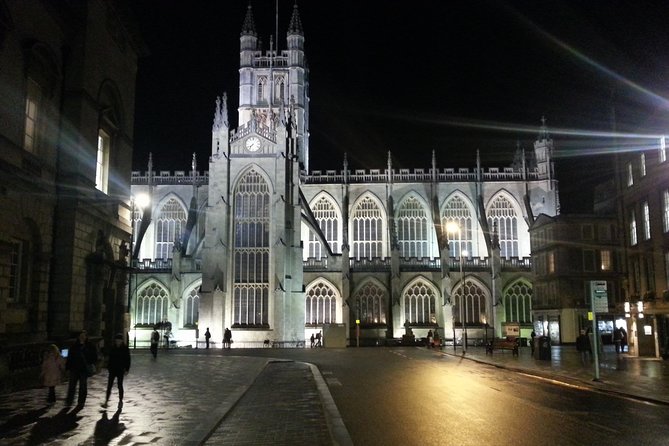
You’ll also get a solid pass by the city’s headline sights, including the Roman Baths area, Bath Abbey, Pulteney Bridge, Queen Square, The Circus, and the Royal Crescent, then finish near Bath Thermae. One possible drawback is that it is a stop-heavy walk, so you need comfortable shoes and a little patience for crowds around the most famous photo spots.
In This Review
- Key things that make this Bath tour worth it
- Meeting Paul Elliott at the Abbey Hotel and getting your bearings fast
- Roman Baths and Bath Abbey explained without buying tickets
- Pulteney Bridge, the Avon viewpoints, and why this area feels cinematic
- Medieval alleys and the old city wall area you can almost feel
- Queen Square and The Circus: Georgian Bath the way John Wood intended you to see it
- Royal Crescent and the No.1 stop that makes Bath feel like a movie set
- From Sally Lunn’s and Jane Austen Centre to Bath Thermae: finishing on Bath’s modern bathing story
- How much walking and timing you should plan for
- Price of $30.53: where the value really shows up
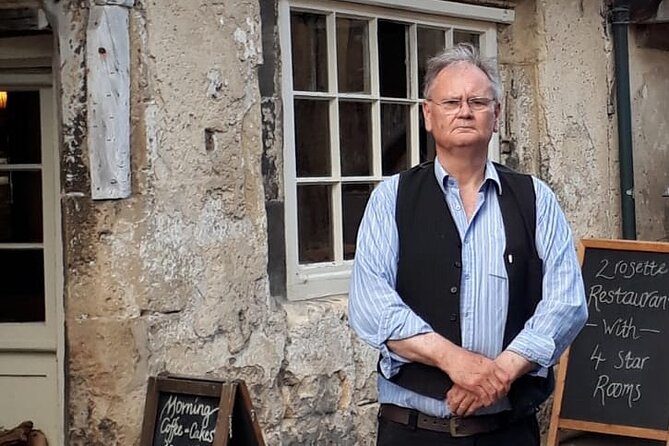
- The guide matters: why Paul Elliott’s style connects
- Who should book this Bath walking tour
- FAQ
- How long is the Bath walking tour?
- What is the price per person?
- Is admission included for the Roman Baths, Bath Abbey, or Bath Thermae?
- What stops will I see on the route?
- Where does the tour start?
- Where does the tour end?
- Will I understand the tour if I only speak English?
- How large is the group?
- Is the tour good for architecture and history?
- Is free cancellation available?
- Should you book this Bath walking tour?
Key things that make this Bath tour worth it
- Paul Elliott’s mix of history and humor keeps the tour lively, not lecture-like
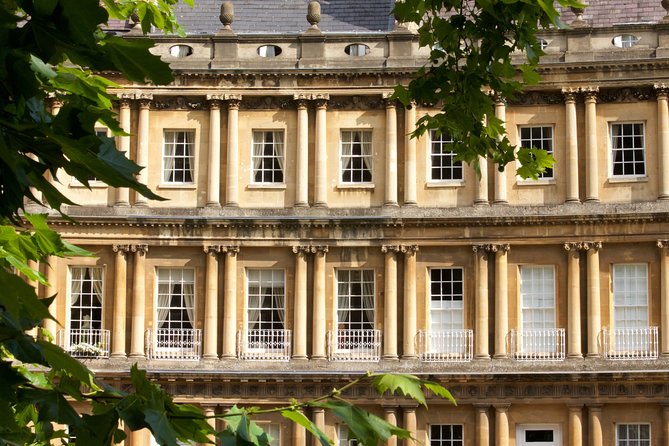
- Georgian Bath highlights in the right order, from Queen Square to The Circus to Royal Crescent
- Landmarks explained up close, with admission not included, so you still get context fast
- Photo opportunities are actively built into the route, especially around the Royal Crescent
- A small group cap of 20 helps the walk feel personal
- A route that stitches together Bath’s layers, including medieval lanes and the old city-wall area
Bath again, done a few different ways
- Walking Tour of Bath with Blue Badge Tourist Guide★ 5.0 · 1,877 reviews
- Stonehenge, Avebury & the Cotswolds from Bath (Small group)★ 5.0 · 798 reviews
- Roman Baths and Bath City Walking Tour★ 4.5 · 762 reviews
- Fully Guided Bath Ghost Tours★ 5.0 · 539 reviews
Meeting Paul Elliott at the Abbey Hotel and getting your bearings fast

The tour starts outside Abbey Hotel Bath near the old city wall, a convenient spot that makes the first minutes feel like you are already inside the story. You get a straightforward introduction to how Bath’s famous buildings fit together, not just a list of stops. With a mobile ticket and a group limited to 20, it’s set up to be easy to join and simple to follow.
From the beginning, Paul frames Bath as a place that kept changing hats. Roman Bath, Saxon and Norman foundations, Tudor-era shifts, then the big Georgian building boom. That mindset matters, because it helps you read what you see as one evolving city, not separate sightseeing checkboxes.
Roman Baths and Bath Abbey explained without buying tickets
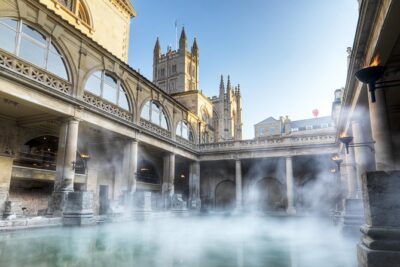
At the Roman Baths stop, you get a clear explanation of what you are looking at, without going inside as part of the tour. That is a big deal for value. You leave knowing what the site represents and what to notice later if you decide to enter on your own time.
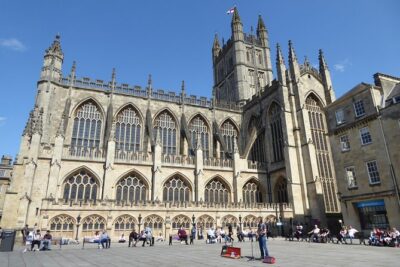
Next comes Bath Abbey, where Paul covers the story from Saxon to Norman roots and into the Tudor abbey you see today. You get the big picture quickly, and the stop is short enough that you do not feel stranded waiting for the next landmark. Even if you are not a church-history person, this kind of overview helps the architecture click.
A practical note: because admission is not included for these attractions, you have control. If you want the full interiors, you can buy tickets when you feel ready. If you just want the orientation and the best exteriors from a guide, you still get a satisfying experience.
Pulteney Bridge, the Avon viewpoints, and why this area feels cinematic
The walk then turns toward the river, with Pulteney Bridge a major photo moment. Paul connects it to the River Avon and even calls out where boat trip activity often lines up, so you understand the geography rather than just snapping a picture and moving on.
This section also includes a sense of film-set Bath. The bridge has shown up in productions, and the guide helps you notice why the location works on screen: the sightlines, the curvature of the setting, and the classic Bath stone look. If you are trying to understand why Bath feels so recognizable, this stop gives you a clue.
A quick detour through Guildhall Market also helps break up the rhythm of famous monuments. It adds a lived-in layer, something more than pure sightseeing stone. You start to see the city as both historic and active, which is exactly what you want on a walking tour.
Medieval alleys and the old city wall area you can almost feel
One of the smartest parts of the route is the way it moves from landmark zones into older medieval alleys. Paul uses these stretches to explain how Bath’s street pattern and city limits shaped the growth you see later. That matters because Georgian Bath did not appear on a blank canvas. It grew around older routes and constraints.
The old city wall area gives you a chance to visualize boundaries, then watch how later development leaned outward. If you like architecture and urban history, this is where the tour feels most “thoughtful” rather than just scenic.
Other guided options for the same sights

Queen Square and The Circus: Georgian Bath the way John Wood intended you to see it
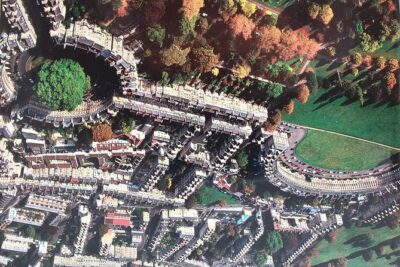
Once the tour settles into Georgian territory, it moves with purpose. Queen Square is where Paul explains the start of Bath’s Georgian sector, so you understand the design logic before you hit the showstoppers. This is a great setup stop, because it primes you to recognize symmetry, proportion, and planning.
Then comes The Circus, linked to John Wood’s design, with Assembly Rooms worked into the explanation. This is one of those places where the architecture looks almost playful in how it wraps around the space. Paul’s comments help you see it as a designed moment, not just a pretty street view.
If you are the type who likes to photograph in bursts, this is a prime stretch. The guide points out angles and moments along the way, so you are not stuck trying to invent composition while holding your camera up like a tourist gymnast.
Royal Crescent and the No.1 stop that makes Bath feel like a movie set

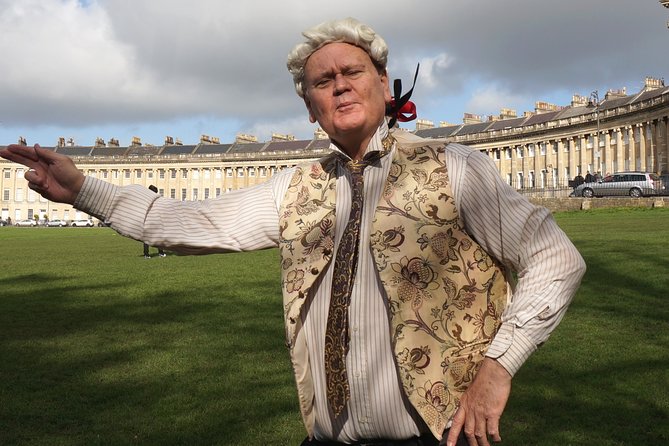
The Royal Crescent is the tour’s big visual payoff. The walk focuses on The Royal Crescent, No. 1, often treated as the top address in Bath for a reason: it gives you the cleanest sense of the Crescent’s grand scale and uniform facade.
Paul keeps this stop photo-friendly and context-heavy at the same time. You hear about what the Crescent represents and why it became such an enduring symbol of Georgian ambition. If you care about the “why,” this is where the walk converts into real understanding.
One more reason this stop lands well: it is not just about the building. Paul uses it to talk about who passed through Bath in the 1700s, connecting the city to famous figures from the United States, Canada, and Australia through their historical links. You come away with Bath feeling less like a sealed museum town and more like a hub in a wider world.
From Sally Lunn’s and Jane Austen Centre to Bath Thermae: finishing on Bath’s modern bathing story
On the way, you also pass Sally Lunn’s, which Paul references as Bath’s oldest house and tea shop. Even if you do not stop in, it acts like a reminder that Bath is not only Roman ruins and Georgian terraces. It’s also food, daily life, and old traditions that still survive.
As the walk heads downhill, you pass the Jane Austen Centre and finish up near Bath Thermae. The tour frames Thermae as Bath’s modern bathing chapter, connecting the city’s spa identity to what came before. This makes the ending feel satisfying, because you are not ending on a random monument. You are ending on Bath’s ongoing theme: water, health, and social life.
Keep expectations practical here. Bath Thermae admission is not included, so you can decide whether you want to pay for the baths and spa experience on your own time.
How much walking and timing you should plan for
This is an 1 hour 30 minutes to 2 hours kind of walk, but it can stretch a bit depending on how the group moves. The overall route includes over 15 stops and comes in at a walking distance that is roughly a mile or a bit more for most people, based on past pacing. That means you should wear comfortable shoes and plan to spend your energy on enjoying the city rather than surviving the sidewalk.
Small-group size also affects pacing. With a maximum of 20, you are not stuck waiting for a slow shuffle of dozens of people. At the same time, you still want to be flexible. It is a walking tour where the guide talks enough to make stops meaningful.
Price of $30.53: where the value really shows up
At $30.53 per person, the tour price is not about buying entry tickets. It is about buying context. You are paying for Paul Elliott’s ability to explain what you are seeing at each stop, with architecture and history tied into an actual route that makes sense.
Admission is not included for the major attractions explained during the walk. That sounds like a drawback until you think about how you travel. If you often dislike being rushed through timed entries, this format is a better fit. You get the essential story fast, then you choose later whether you want interiors and ticketed experiences.
Also, the humor and personality matter for value. One strong theme from the tour experience is that Paul keeps it engaging, sometimes with wit and satire. That approach helps you remember the city and not just the names of buildings.
The guide matters: why Paul Elliott’s style connects
The stand-out factor here is not just that Paul knows Bath. It is how he shares it. Reviews and the tour approach both point to an entertaining delivery: funny, quick, and still structured. Paul seems to balance serious architectural points with jokes that keep you from mentally checking out.
There’s also a clear local angle. Paul presents Bath as something he understands as a living place, not just a syllabus. That local feel shows up in how he frames historical visitors and explains how Bath’s role in the 1700s shaped connections across the English-speaking world.
One consideration: if you are very sensitive about humor or you like a very gentle tone, pay attention to your own preferences. In at least one case, a guest felt put off by the way questions were handled. If you bring curiosity and communicate politely, this is unlikely to be an issue. Still, the tour has an opinionated, British-wit vibe.
Who should book this Bath walking tour
This tour is ideal if you want:
- History and architecture with a clear walking route
- A fast way to get your bearings before you explore on your own
- A guide who points out photo angles and explains what you are looking at
It is also a strong fit for first-time Bath visitors, couples, and small families who want structure without spending time in ticket lines right away. If your trip includes other time-consuming entries, the tour can act like a high-quality primer that makes those later visits easier to enjoy.
If you hate walking, need full accessibility guarantees, or want long indoor time at specific attractions, this might not match your style. It is designed for outdoors, on-foot orientation, and explanation.
FAQ
How long is the Bath walking tour?
It runs about 1 hour 30 minutes to around 2 hours.
What is the price per person?
The price is $30.53 per person.
Is admission included for the Roman Baths, Bath Abbey, or Bath Thermae?
No. The tour explains these places from outside or without entering, and admission tickets are not included. Bath Thermae is also not included.
What stops will I see on the route?
You will see the Roman Baths area, Bath Abbey, Pulteney Bridge, Queen Square, The Circus, the Royal Crescent (No.1), and Bath Thermae, plus additional sights along the way.
Where does the tour start?
It starts outside Abbey Hotel Bath, a Tribute Portfolio Hotel, N Parade, Bath BA1 1LF, UK.
Where does the tour end?
It ends back at the meeting point.
Will I understand the tour if I only speak English?
Yes. The tour is offered in English.
How large is the group?
The maximum group size is 20 travelers.
Is the tour good for architecture and history?
Yes. The tour focuses on Bath’s history and architecture, including Roman, Saxon, Norman, Tudor, and Georgian periods.
Is free cancellation available?
Yes. You can cancel up to 24 hours in advance for a full refund.
Should you book this Bath walking tour?
I think this is a smart booking if you want a high-impact introduction to Bath in under two hours, especially if you like architecture, street-level history, and photo stops that actually make sense. With Paul Elliott running the show and a small group cap, the walk feels personal, not rushed.
Book it if you want to see the major landmarks in context and decide later what deserves your money for entry. Skip it if you need long indoor time at the sites or you prefer a very quiet, no-humor tour style.
Other Departures With A Guide Attached





Bath, Done Differently



Fresh off the notebook in Bath
- Private Guided Tour of Jane Austen’s Bath
★ 5.0 · 7 reviews - Bridgerton’s Filming Locations in Bath Audio Guide
★ 5.0 · 7 reviews - Private Day Tour from Bath to Stonehenge and Salisbury with Pickup
★ 5.0 · 9 reviews - Bath Private Guided Walking Tour
★ 5.0 · 10 reviews - The Beatles in Bath June 10th 1963
★ 4.5 · 10 reviews - Wells, Cheddar Cheese and Cheddar Gorge – Private Day Trip from Bath
★ 5.0 · 10 reviews
Bath and the Roman Baths, compared.
 ★ 4.5Stonehenge, Windsor Castle, and Bath from LondonFrom $11118,662 reviews
 ★ 4.5Stonehenge, Windsor Castle and Bath with Pub Lunch in LacockFrom $1237,402 reviews
 ★ 4.5Stonehenge, Windsor Castle and Bath Full Day Guided TourFrom $1235,346 reviews
 ★ 4.5Stonehenge and Bath Tour from LondonFrom $994,295 reviews
 ★ 5.0Windsor, Stonehenge and Bath Day Trip from London SpanishFrom $1232,656 reviews
 ★ 5.0Stonehenge and Bath Day Trip from London with Optional Roman Baths VisitFrom $1372,028 reviews
 ★ 5.0Stonehenge Inner Circle Private Tour from London with Bath VisitFrom $1881,909 reviews
 ★ 5.0Walking Tour of Bath with Blue Badge Tourist GuideFrom $301,877 reviews
Browse the lists this tour appears in