
REVIEW · OXFORD TOURS
History of Medicine Tour – by Uncomfortable Oxford™
Oxford has always been good at turning ideas into cures.
This guided history of medicine walk strings together medieval disease, university science, and public health in one smart route. I especially love how the tour pace stays brisk and how the guide keeps you thinking, not just listening, including time to talk. One thing to consider: it is a themed walk with stops that are mostly outdoors or brief interiors, so if you want long museum time, this is not that.
You start at the Bridge of Sighs and end near Radcliffe’s area, in about 1 hour 45 minutes. With a group size capped at 15, you get more personal attention than you would on a huge bus tour, and it runs in English with a mobile ticket. For the price, you are paying for a focused, guided storytelling route across major Oxford landmarks, not a full-day museum pass.
In This Review
- Key things to know before you go
- A 1 hour 45 minute walk where medicine meets Oxford landmarks
- From the Bridge of Sighs: medieval geography and why disease spread
- New College outside stop: plague and historical epidemics, explained simply
- Inside the Bodleian Library: anatomy, dissections, and medical learning
- Clarendon Building: prostitution and public health in the same conversation
- King’s Arms pub stop: inoculation, and why it happened in public
- Oxford University Museum of Natural History: 18th century science shaped by empire
- War Memorial Garden at St Giles: how world wars changed medicine
- St Luke’s Chapel finish: early penicillin trials and the NHS
- Price and value: is $95.98 worth it?
- How to plan your day around this tour
- Who this tour is best for
- Should you book Uncomfortable Oxford’s History of Medicine tour?
- FAQ
- Where does the tour start and end?
- How long is the History of Medicine tour in Oxford?
- How much does the tour cost?
- Is the tour offered in English?
- What is the maximum group size?
- What is included in the price?
- Are there admission tickets included at the stops?
- Do I need to print a ticket?
- Can I cancel for a full refund?
- Is it suitable for most travelers, and are service animals allowed?
Key things to know before you go
- Brisk 1 hour 45 minute route connecting medicine to streets, buildings, and social life
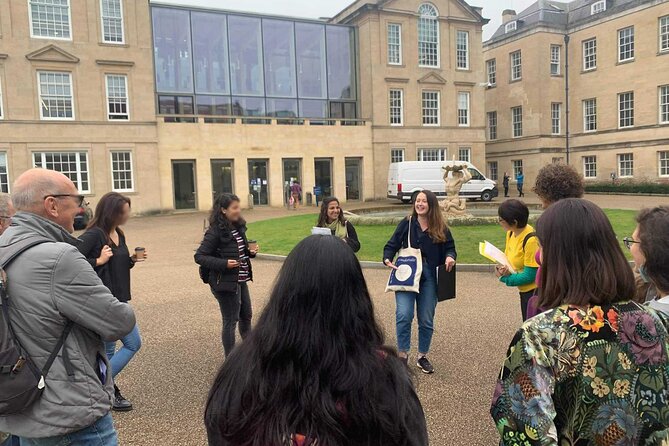
- Small groups (max 15) so you can ask questions and talk through ideas
- Major Oxford landmarks used as medicine evidence, from the Bridge of Sighs to St Luke’s Chapel
- Free admissions at scheduled stops, so you are not paying extra at each venue
- Public health themes include plague, anatomy, prostitution, inoculation, and war-era medicine
- End point near Radcliffe makes it easy to keep exploring after the tour
Other Oxford walks, colleges included
- Oxford University Walking Tour With University Alumni Guide★ 5.0 · 6,905 reviews
- 1.5-hour Oxford City and University Walking Tour★ 4.5 · 1,383 reviews
- Oxford Official University & City Tour★ 5.0 · 1,134 reviews
- City Sightseeing Oxford Hop-On Hop-Off Bus Tour★ 4.5 · 1,042 reviews
A 1 hour 45 minute walk where medicine meets Oxford landmarks
This is not a slow, lecture-style tour. It is a guided walk with a clear storyline: how illness shaped Oxford, and how Oxford shaped approaches to medicine. The time blocks are short at each stop, so you will get your bearings fast, then build a bigger picture as you move.
At $95.98 per person, the value comes from three things. First, you are getting a certified guide with a themed route that hits multiple famous sites. Second, several stops are marked with admission ticket free for your visit window, which helps avoid surprise costs. Third, the small group size (up to 15) makes it feel interactive. That matters when the subject is heavy, like epidemics and the early fight against disease.
From the Bridge of Sighs: medieval geography and why disease spread
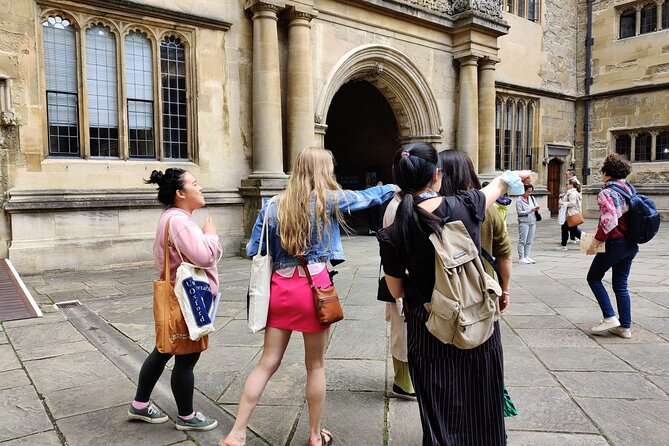
The tour kicks off under the Bridge of Sighs, a dramatic start that is perfect for a story about how cities and illness grew together. The guide uses the area to set up medieval geography, basically explaining how the physical layout of Oxford could affect where disease traveled and how people experienced outbreaks.
Even if you know Oxford is “old,” this stop helps you visualize the cause-and-effect. When you think about tight urban spaces, movement between colleges and neighborhoods, and limited public health options, the logic of epidemic spread starts to make sense. It is a smart opener because it turns a famous photo spot into context, not just scenery.
New College outside stop: plague and historical epidemics, explained simply
Next you are outside New College, where the focus shifts to plague and earlier epidemics. This is where the tour starts connecting “big events” to everyday life, using Oxford as the setting.
What I like here is that the theme is not just the disease itself. You are nudged to think about patterns: how outbreaks could overwhelm communities, what people noticed during illness waves, and how society responded when health systems were nowhere near what we have today. It is the kind of stop that helps you read history in practical terms.
Inside the Bodleian Library: anatomy, dissections, and medical learning
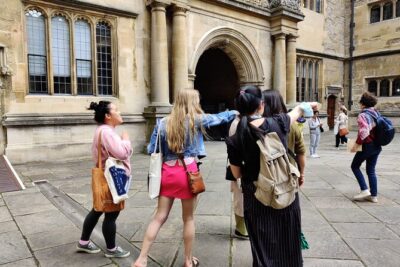
Then comes the most classic Oxford moment: stepping into the Bodleian Library. The tour uses this space to talk about anatomical dissections and how early medical study took shape within the university world.
You can think of this stop as the bridge between medieval medicine and more organized, research-based approaches. Libraries matter because they preserve the ideas people built on. And anatomical study matters because it pushed medicine toward observation and experimentation, even when it was controversial.
This is also a good stop if you enjoy the tension between ideas and ethics. The topic touches the human side of scientific progress, where learning and the moral cost of learning can collide.
More history led walks worth the hour
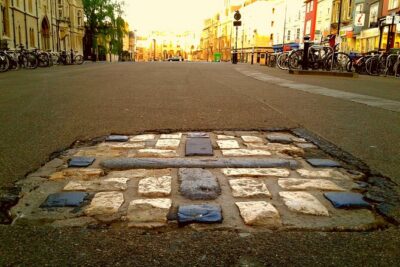
Clarendon Building: prostitution and public health in the same conversation
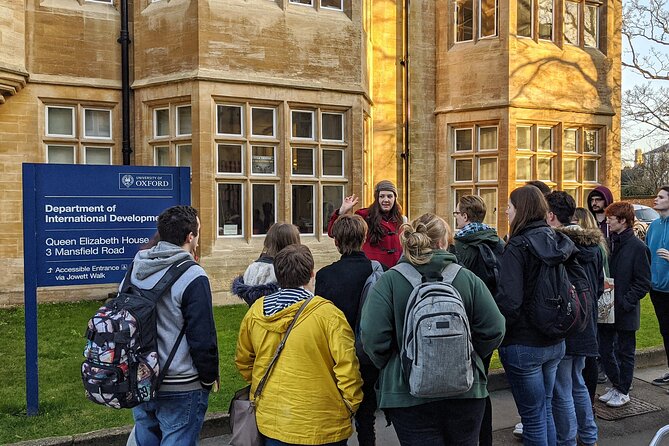
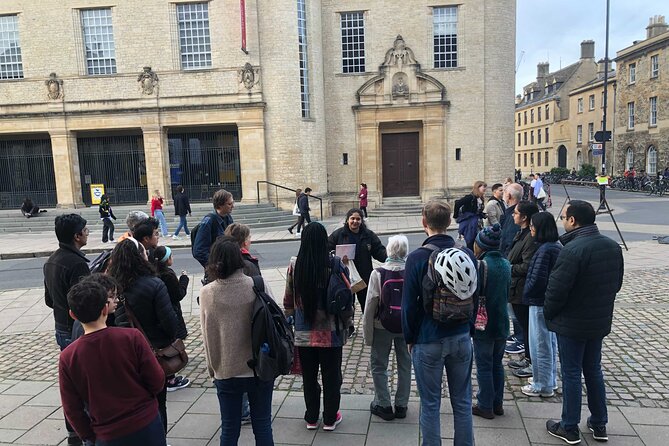
The tour continues at the Clarendon Building, today tied to leadership in the university, and it uses that setting to discuss prostitution and public health. It is an unusual angle for a “history of medicine” walk, but it fits the theme.
Public health is not only about germs and labs. It is also about behavior, regulation, social stigma, and the policy choices a city makes. This stop helps you see that medicine has always been mixed with law, morality, and risk management. It is one of the more thought-provoking parts because it reminds you that health decisions have always had a social backbone.
If that topic makes you uncomfortable, you will still get the discussion in a factual, guided way. This tour is called Uncomfortable Oxford for a reason, and the guide keeps it grounded.
King’s Arms pub stop: inoculation, and why it happened in public
At King’s Arms, Oxford, the story takes a turn that feels refreshingly practical. You learn that pubs served as original places for inoculation in the city.
That detail changes how you picture early medicine. Instead of a sterile clinic, you get community spaces where people gathered, talked, and took part in health practices. It makes the medical story more human, and it also shows how innovation often spreads through ordinary places, not just official institutions.
This stop is also a nice break in tone. You still get the historical thread, but the setting makes it easier to think about how people actually accessed care and information.
Oxford University Museum of Natural History: 18th century science shaped by empire
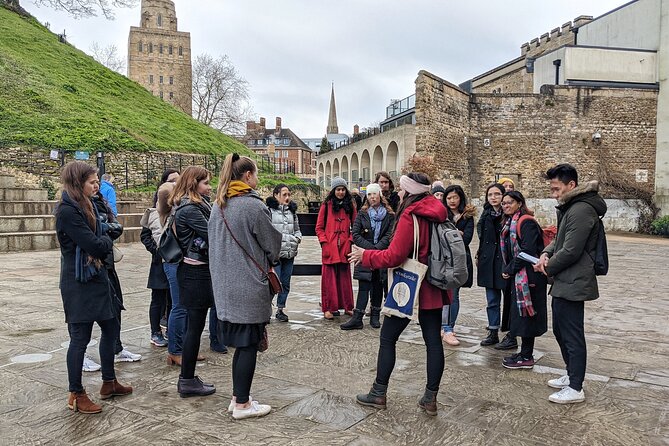
Outside the Oxford University Museum of Natural History, the theme moves to the 18th century, focusing on how science and medicine transformed through imperialism.
This is where the tour stretches your lens beyond Oxford streets. When knowledge depends on global contact, it comes with power dynamics, collection of specimens, and unequal exchanges. The guide’s job here is to connect those forces to medical progress, and you will come away with a more complicated picture of what counted as scientific advancement.
If you like history that asks uncomfortable questions, this is one of your stops. It turns “science progress” into something you can evaluate, not just celebrate.
War Memorial Garden at St Giles: how world wars changed medicine

At the St Giles Memorial Garden (the War Memorial Garden stop), the tour slows its emotional gear, shifting to major developments in medical practice connected to the First and Second World Wars.
World wars accelerated medicine, not because anyone enjoyed it, but because mass injury demands rapid solutions. This stop ties that reality to Oxford and to the broader evolution of medical practice in crisis moments.
I like that the discussion here does not stay abstract. It treats wartime medical change as real shifts in training, procedures, and the urgent need to improve outcomes.
St Luke’s Chapel finish: early penicillin trials and the NHS
The final stop is outside St Luke’s Chapel, at the former city hospital area, where the guide discusses early trials of penicillin in the city and also the founding of the NHS.
This is a satisfying ending because it gets you to the modern turning points. You start with medieval illness patterns, pass through university learning and public health debates, and then close with antibiotics and national healthcare.
Even with just this snapshot, the ending lands with a strong message: medicine changes because people test ideas, share knowledge, and build systems. The NHS part is especially important in a tour like this because it frames medicine as a public promise, not only an individual cure.
Price and value: is $95.98 worth it?
At $95.98 per person for about 1 hour 45 minutes, you are paying for a guided route that uses Oxford’s most recognizable landmarks as medicine storytelling anchors. The cost is not bargain-bin, but it does come with tangible value.
Here is where the value holds up:
- You get a certified Uncomfortable Oxford guide plus a souvenir postcard.
- Several stops are marked admission ticket free for the scheduled visit time.
- The group size cap of 15 makes it feel less like a lecture and more like a guided conversation.
If you already plan to spend your time mostly inside museums for long stretches, you may feel the price is high. If you like walking tours that connect themes across multiple sites, this is a strong fit.
How to plan your day around this tour
Because each stop is short, you want your energy level to be steady. Wear comfortable shoes, expect some outdoor walking, and give yourself time to arrive a few minutes early at the start point near the Bridge of Sighs.
If you are pairing this with other Oxford plans, it helps that the tour ends at Radcliffe Observatory Quarter, which is a natural springboard for more wandering nearby.
Also, bring a phone, not for selfies only. A mobile ticket is part of the experience, and having your booking ready prevents last-minute stress.
Who this tour is best for
This works especially well if you:
- enjoy history that connects to real life and public policy, not just dates
- like guided context for famous Oxford buildings
- want a manageable, high-impact route in a short time
- are curious about the social side of healthcare, including inoculation practices and public health debates
It may be less ideal if you:
- want long indoor time in major museums
- prefer purely scientific explanations with little social context
- need a fully accessible experience with minimal walking, since most stops are part of a walking route
Should you book Uncomfortable Oxford’s History of Medicine tour?
I would book it if you want a smart Oxford walk that links epidemics, anatomy, public health, and antibiotic breakthroughs using real places. The small group size, the guided discussion style, and the fact that stops include free admission windows make it feel efficient for the money.
Skip it if you want a long museum day or a purely medical lab focus with no social themes. But if you enjoy “why it happened,” and you like leaving each stop with a clearer picture than you had at the last one, this tour is a strong use of your time in Oxford.
FAQ
Where does the tour start and end?
It starts at Bridge of Sighs, New College Ln, Oxford OX1 3BL, UK, and ends at Radcliffe Humanities, Radcliffe Observatory Quarter, Woodstock Rd, Oxford OX2 6GG, UK.
How long is the History of Medicine tour in Oxford?
The duration is about 1 hour 45 minutes.
How much does the tour cost?
The price is $95.98 per person.
Is the tour offered in English?
Yes, it is offered in English.
What is the maximum group size?
The tour has a maximum of 15 travelers.
What is included in the price?
The tour includes a certified Uncomfortable Oxford guide and an Uncomfortable Oxford souvenir postcard.
Are there admission tickets included at the stops?
Each scheduled stop is marked as admission ticket free for the visit.
Do I need to print a ticket?
No, it uses a mobile ticket.
Can I cancel for a full refund?
Yes. You can cancel up to 24 hours in advance for a full refund.
Is it suitable for most travelers, and are service animals allowed?
Most travelers can participate, and service animals are allowed. The tour is also near public transportation.
More History Led Walks


More Oxford, College By College






Fresh off the notebook in Oxford
- Cotswolds One Day Guided Cycle Tour – Private Groups
★ 5.0 · 7 reviews - Follow the Money Tour – by Uncomfortable Oxford™
★ 5.0 · 7 reviews - History of Medicine Tour – by Uncomfortable Oxford™
★ 4.5 · 8 reviews - Oxford: to Cotswolds (Half Day)
★ 5.0 · 8 reviews - CS Lewis & Tolkien Tour with Magdalen Entry Public tour 13.45
★ 5.0 · 8 reviews - Oxford Private Guided Walking Tour
★ 4.5 · 8 reviews
Oxford Tours, compared.
 ★ 5.0Oxford University Walking Tour With University Alumni GuideFrom $416,905 reviews
 ★ 4.5Windsor Castle, Stonehenge, and Oxford Day Trip from LondonFrom $1235,292 reviews
 ★ 4.5Oxford, Stratford-upon-Avon, Cotswolds & Warwick Castle Day TripFrom $1092,943 reviews
★ 4.5Windsor Castle, Stonehenge, and Oxford Day Trip from LondonFrom $1232,474 reviews
★ 4.5Oxford, Stratford-upon-Avon, Cotswolds & Warwick Castle Day TripFrom $1092,943 reviews
★ 4.5Windsor Castle, Stonehenge, and Oxford Day Trip from LondonFrom $1232,474 reviews
 ★ 4.5Windsor Castle, Stonehenge and Oxford Day Guided Tour from LondonFrom $1111,486 reviews
 ★ 4.51.5-hour Oxford City and University Walking TourFrom $381,383 reviews
 ★ 4.5Oxford and Traditional Cotswolds Villages Small-Group Day Tour from LondonFrom $1001,196 reviews
 ★ 5.0Oxford Official University & City TourFrom $411,134 reviews
Browse the lists this tour appears in