

REVIEW · OXFORD TOURS
Oxford: 90 minute Architectural & Historical Highlights Tour
Oxford is a walking puzzle, and this tour helps you solve it fast. It strings together the city’s biggest architectural and historical clues in a tight route, including entry to a medieval college and a guided story that connects names, buildings, and ideas you will actually remember.
I especially like how the stops mix the university with the wider city, from St Michael at the North Gate to the libraries around Broad Street. I also love the practical extras: a complimentary map and guidebook, plus personal where-to-eat-and-drink suggestions that help you keep exploring after the walk. The only real drawback is that it’s weather-dependent, so if the sky is rough, the plan may shift.
In This Review
- Key Highlights You Should Know
- Why This 90 Minute Oxford Walk Feels Like a Shortcut
- Start at Weston Library, End at Golden Cross
- Martyrs’ Memorial and St Michael at the North Gate: The City Gate Story
- Exeter College and Lincoln College: Chapels, Cardinals, and Notable Names
- St Mary the Virgin: Stained Glass, Doomsday Book, and a Spire Option
- Oriel and Corpus Christi: Oriel Windows, Rowing, and the Tortoise Race Neighbor
- Merton and Examination Schools: The University’s Built Process for Learning
- Queen’s College and Oxford’s High Street Oddities
- New College, the Bridge of Sighs, and Sheldonian Theatre
- Broad Street Libraries: Duke Humphrey, the Bodleian, and Radcliffe Camera
- Balliol College Timing and What It Means for Undergraduates
- The Map, Food Tips, and How to Extend Your Oxford Day
- Who This Tour Fits Best, and Who Might Want Something Different
- Should You Book This Oxford Highlights Tour?
- FAQ
- How long is the Oxford Architectural and Historical Highlights Tour?
- Where does the tour start and end?
- Is pickup offered?
- What language is the tour in?
- What’s the group size?
- Is the tour free?
- Do I need a ticket on my phone?
- Is entry to colleges included?
- Is this tour weather dependent?
Key Highlights You Should Know
- A focused 90 minute route that fits a short visit without trying to cover everything
- Medieval college entry so you get at least one inside moment, not just street views
- A compact group size (max 15) that makes questions and recommendations feel personal
- A star-studded college loop featuring Exeter, Merton, the Bodleian area, and more
- Broad Street library power with stops connected to the Bodleian and Radcliffe Camera
- A guide-driven experience in English with past groups praising attentive, story-first guiding (including guides named Sophie)
Other Oxford walks, colleges included
- Oxford University Walking Tour With University Alumni Guide★ 5.0 · 6,905 reviews
- 1.5-hour Oxford City and University Walking Tour★ 4.5 · 1,383 reviews
- Oxford Official University & City Tour★ 5.0 · 1,134 reviews
- City Sightseeing Oxford Hop-On Hop-Off Bus Tour★ 4.5 · 1,042 reviews
Why This 90 Minute Oxford Walk Feels Like a Shortcut
Oxford can overwhelm you fast. The streets are pretty, sure, but the real challenge is figuring out what you are looking at and why it matters. This tour is built to answer that question quickly. In about 1 hour 30 minutes, you get a guided thread through the city’s religious roots, university growth, and the famous buildings people photograph most.
Value is also part of the pitch here. The price is listed as $0.00 per person, which is rare for a structured guided experience with multiple landmark stops and added materials like a map and guidebook. Even if you plan to spend only one afternoon in Oxford, a free guided route is one of the best ways to stop guessing.
One more thing: the tour is designed for real people on real days. It includes pickup offered, you get a mobile ticket, and it is offered in English. Most people can participate, and the pacing is short-stop, move-on, so you stay engaged instead of getting stuck waiting at any single spot.
Start at Weston Library, End at Golden Cross
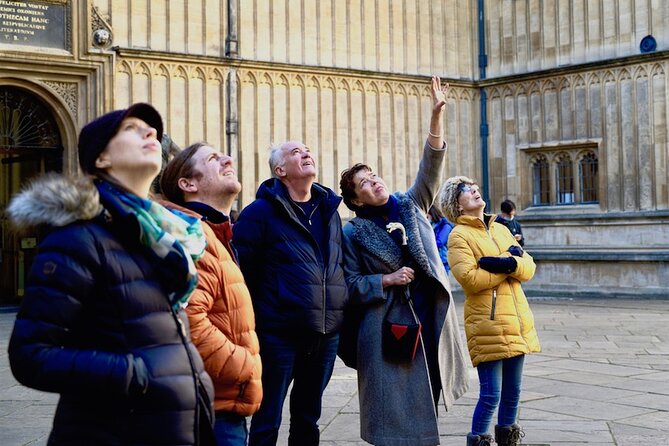
The walk begins at Weston Library, Broad Street, Oxford (OX1 3BG) and ends at Golden Cross, Oxford (OX1 3EU). That matters more than it sounds. Starting on Broad Street puts you near Oxford’s main university zone, where the libraries and theatres cluster. Ending near Golden Cross leaves you in a good position to continue on foot, hop into local shops, or grab a bite without backtracking.
Pickup is offered, which can reduce the stress if you are coming in from another part of Oxford or from a station. Also, because it is a mobile ticket setup, you should have an easier time showing up smoothly.
The tour is also typically booked about 12 days in advance, which suggests popular timing slots. If you know your Oxford day already, don’t wait too long.
Martyrs’ Memorial and St Michael at the North Gate: The City Gate Story
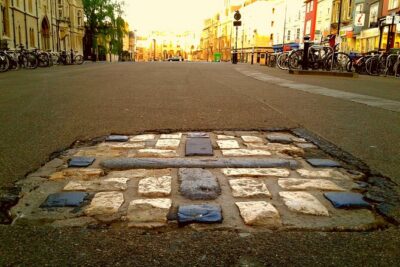
The route opens with Martyrs’ Memorial, a Victorian monument tied to the Protestant martyrs of the 16th century. This is a great first stop because it frames one of Oxford’s defining themes: religious change, debate, and the way politics spills into buildings.
Next comes St Michael at the North Gate, an Anglo-Saxon tower connected to the medieval city gate. It is described as probably the oldest surviving building in Oxford, and the real payoff is the time-span. One moment you are in the 16th century, then you are looking at something older that survived centuries of Oxford growth and redevelopment.
Drawback to keep in mind: these are brief stops, around a few minutes each. So treat them like orientation markers. If you want longer time for photos or close looking, use the complimentary map later. The tour gives you the “what to look for” first, and then you can return for the slower look.
Exeter College and Lincoln College: Chapels, Cardinals, and Notable Names
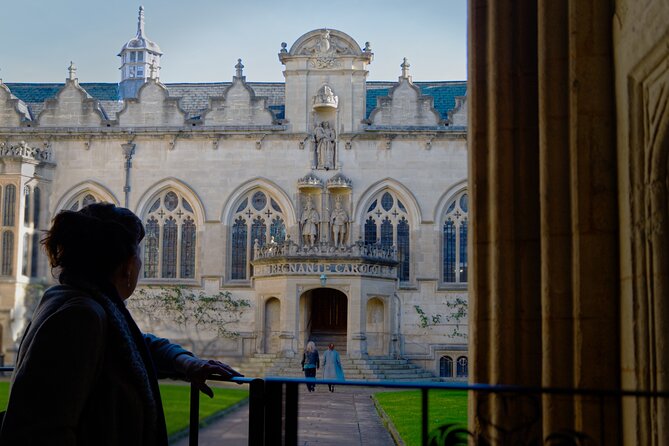
Exeter College is where the tour shifts toward the university’s religious architecture. The chapel is described as inspired by the Oxford Movement and modelled on Paris’ St Chapelle. That cross-channel connection is a fun clue for your own reading later because it shows how Oxford ideas did not develop in a bubble.
You will also hear the name roll that makes Oxford feel personal. Exeter is noted for alumni such as Philip Pullman, J. R. R. Tolkien, and Alan Bennett. Even if you are not a walking encyclopedia, it helps to connect a building to the kind of stories later writers built.
Then you move to Lincoln College. This stop is less about grand interior views and more about the college face onto Turn Street, which tells a story about the University’s origins and its relationship with the city. Lincoln is also singled out for notable current and past connections, including Rishi Sunak and the Wesley Brothers.
A practical consideration: college entrances and interiors can vary depending on opening times. The tour does include entry to a medieval college, but you should still be ready for a mix of exterior viewing and quick interior moments.
More history led walks worth the hour
St Mary the Virgin: Stained Glass, Doomsday Book, and a Spire Option
University Church of St Mary the Virgin is one of those Oxford stops that makes the whole place feel older than you expected. It is described as the university’s first building and as being listed in the Doomsday Book. Even if you only catch a few minutes here, you are looking at something tied to very deep time.
The tour also points you toward what to notice: the famous stained glass and the way it is said to have inspired C. S. Lewis. That kind of link is useful, because it changes your mindset from sightseeing to interpretation.
There’s also a possible bonus option: it is described as possible to climb its spire. If that is available on your day, you will get the most classic “Oxford at a glance” angle. If you skip it, no worries. You still leave with clear ideas about what the church represents and why it is such a reference point.
Oriel and Corpus Christi: Oriel Windows, Rowing, and the Tortoise Race Neighbor
Oriel College comes next. It is framed as one of the university’s oldest colleges and is noted today for rowing. The focus for visitors is its front quad and the Oriel windows, described as stunning. This is one of those places where a few minutes can make you want to linger, because the architecture is built for quiet admiration.
Then the tour heads to Corpus Christi College, where early 16th-century architecture includes moving animal figures, including a pious pelican. You also learn that Corpus Christi sits on a cobbled street that is listed as a national treasure. When you think “Oxford,” people often picture colleges, but this is a reminder that the street itself can be part of the heritage.
One more nearby mention is Christchurch, passed east of the college. The tour suggests returning to enjoy the Christchurch Picture gallery tucked behind the Eastern entry. That is smart guidance because the walk is short. You get a nudge toward a deeper stop later.
Merton and Examination Schools: The University’s Built Process for Learning
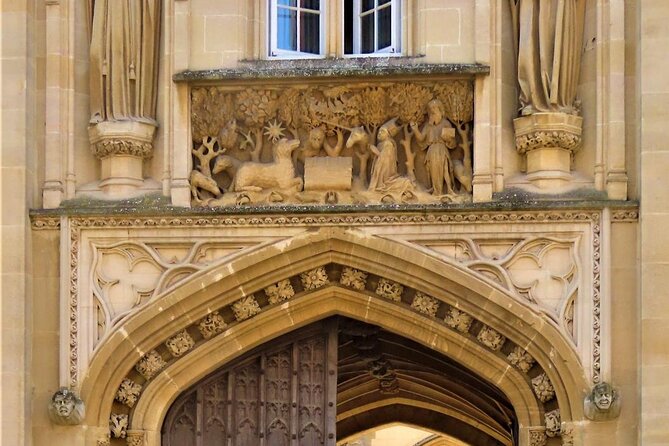
Merton College is described as Oxford’s third college, and the tour highlights a frieze over the gatehouse from the 15th century that tells the tale of the founding of colleges. It is framed as one of the favorite creations in the city. Even if you only see it briefly, look for how the story is carved into architecture, not just written in a sign.
Merton also adds more architectural detail with the chapel’s flying buttresses, described as richly decorated. Another anchor point: Thomas Bodley, founder of the Bodleian Library, is noted as a Merton graduate. That connection is valuable because you start seeing the university as a system of people, patrons, and buildings that build on each other.
The next stop is Examination Schools, tied to Oxford’s early written exams in the early 19th century. The building is described as a Victorian mix of Jacobean and Tudor styles, built in the 1870s. The tour ties that to a spirit of making education more widely available.
Even here, the tour stays practical. These kinds of buildings can look like just “old university walls” if you do not have the context. Once you hear the exam purpose, you notice details differently, like why the building needed to feel ceremonial and official.
Queen’s College and Oxford’s High Street Oddities
At Queen’s College, the tour spotlights a mix of modern fame and older foundations. It’s noted as the alma mater to Rowan Atkinson. The college was founded for poor scholars from the North of England, and later wealth helped fund an 18th-century rebuilding with design contributions linked to Christopher Wren and Nicholas Hawksmoor.
Then the tour pauses for a High Street moment, and it is worth paying attention because Oxford does not just feel academic here. The High Street is described as the road to London and how it has transformed over the years. You also learn about Frank Cooper’s Marmalade first made here, later becoming a worldwide fad. The stop adds another layer, mentioning England’s first coffee house connected to Jewish people being welcomed back into the UK after being banned in the 13th during the period associated with Oliver Cromwell’s Republic.
This is a good reminder: the university is not the whole city, it is part of it. If you want your Oxford day to feel lived-in, not like a history lecture, these High Street details are the glue.
New College, the Bridge of Sighs, and Sheldonian Theatre
New College is introduced through its gates, which tell the foundation story after the plagues of the 14th century. The tour also notes that the setting has been used in many film sets. If you have seen Oxford in movies, you may spot the look instantly.
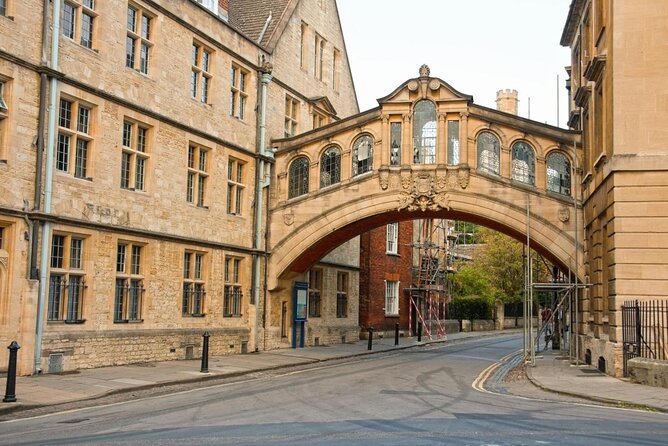
Then come two iconic Oxford visuals. First is the Bridge of Sighs, belonging to Hertford College. It looks like an old Venetian bridge, but the tour notes it was built in the 20th century. You also learn it is next to Edmund Halley’s house, tied to how the comet was named after him.
Finally, you reach Sheldonian Theatre, a 17th-century building where Oxford University ceremonies happen. It is described as the first building by Christopher Wren, and adds a quirky detail: Wren is connected with being an astronomer of photography at Oxford University. That kind of side note is exactly what makes the route fun. Oxford is serious, but the stories are not stiff.
Broad Street Libraries: Duke Humphrey, the Bodleian, and Radcliffe Camera
This part of the walk is the payoff for book lovers. You start at Oxford Central Library, built on top of the medieval perpendicular Divinity School. The tour connects it to the Duke Humphrey Library, built in the 15th century to house a gift of over 200 books from the king’s brother. It also notes that these rooms were selected by J. K. Rowling for Harry Potter scenes.
Next comes the Bodleian Library, where the numbers get big fast: over 13 million books. The tour frames this stop around the origins of the library and how it still works today. Even if you do not see every room, the building context helps you understand why the Bodleian matters beyond “a famous place to photograph.”
Then you finish this library cluster at Radcliffe Camera, described as Oxford’s first science library. You also learn about one of the benefactors, Royal Physician Sir John Radcliffe. This is a good counterpoint to the literary feel of the Bodleian. Oxford’s identity includes science and professional medicine too, not just writers and academics.
Balliol College Timing and What It Means for Undergraduates
The tour continues with Balliol College, and this stop is different. It is described as a point where undergraduates started to have access to the University and its colleges. It is also the only place where the entry is explicitly noted as not included.
There is also a longer time allocation here, about 15 minutes, compared with most other quick stops. If you want one “deeper breath” moment, it’s likely to be here, assuming access allows it on the day.
If you are short on time in Oxford, Balliol is the kind of stop that helps you understand how Oxford expanded from an institution serving a smaller group into something that became more broadly reachable.
The Map, Food Tips, and How to Extend Your Oxford Day
One of the best parts of this tour is what happens after. You receive a complimentary map and guidebook for further exploration. That is not just a souvenir. It helps you choose your next stops with less guesswork, especially since this walk is only 90 minutes.
You also get personal recommendations on where to eat and drink. That is gold when you are in Oxford for a limited time, because the most “touristy” menus are not always the best value. Even better, with a small group size (max 15), these recommendations can match what you actually want, quick bites or a sit-down meal.
If the spire climb at St Mary’s is available and you are up for it, take it. That small investment can turn the rest of your afternoon into an easy “compare what I saw from up there” kind of experience.
Who This Tour Fits Best, and Who Might Want Something Different
This tour is ideal if you want a first-time Oxford introduction with a clear structure. It is especially good for you if:
- You have only a few hours and want a route that hits major landmarks
- You like architecture, but you also want the stories behind it
- You need help turning Oxford’s college cluster into something understandable
It may be less ideal if:
- You want long, quiet time inside multiple colleges
- You hate walking and prefer fewer stops with longer stays
- You are visiting in bad weather, since the tour requires good weather to run smoothly
Should You Book This Oxford Highlights Tour?
Yes, if you want a guided, high-value hit list that makes Oxford feel coherent. A free 90 minute overview with medieval college entry, a strong set of landmark stops, and take-home tools like a map and guidebook is a smart way to spend limited time. The biggest risk is weather, so plan your Oxford day with a flexible mindset.
Also, take advantage of the guide. Oxford rewards listening. If you get a guide who can explain the city clearly, the whole walk clicks, and you leave with specific places to revisit and a better sense of what you are seeing.
FAQ
How long is the Oxford Architectural and Historical Highlights Tour?
It runs for about 1 hour 30 minutes.
Where does the tour start and end?
It starts at Weston Library, Broad Street, Oxford (OX1 3BG) and ends at Golden Cross, Oxford (OX1 3EU).
Is pickup offered?
Yes, pickup is offered.
What language is the tour in?
The tour is offered in English.
What’s the group size?
The tour has a maximum of 15 travelers.
Is the tour free?
The price is listed as $0.00 per person.
Do I need a ticket on my phone?
You get a mobile ticket.
Is entry to colleges included?
The tour includes entry to a medieval college, and it notes that Balliol College admission is not included.
Is this tour weather dependent?
Yes. It requires good weather. If it is canceled due to poor weather, you will be offered a different date or a full refund.
More History Led Walks


More Oxford, College By College




Fresh off the notebook in Oxford
- Cotswolds One Day Guided Cycle Tour – Private Groups
★ 5.0 · 7 reviews - Follow the Money Tour – by Uncomfortable Oxford™
★ 5.0 · 7 reviews - History of Medicine Tour – by Uncomfortable Oxford™
★ 4.5 · 8 reviews - Oxford: to Cotswolds (Half Day)
★ 5.0 · 8 reviews - CS Lewis & Tolkien Tour with Magdalen Entry Public tour 13.45
★ 5.0 · 8 reviews - Oxford Private Guided Walking Tour
★ 4.5 · 8 reviews
Oxford Tours, compared.
 ★ 5.0Oxford University Walking Tour With University Alumni GuideFrom $416,905 reviews
 ★ 4.5Windsor Castle, Stonehenge, and Oxford Day Trip from LondonFrom $1235,292 reviews
 ★ 4.5Oxford, Stratford-upon-Avon, Cotswolds & Warwick Castle Day TripFrom $1092,943 reviews
★ 4.5Windsor Castle, Stonehenge, and Oxford Day Trip from LondonFrom $1232,474 reviews
★ 4.5Oxford, Stratford-upon-Avon, Cotswolds & Warwick Castle Day TripFrom $1092,943 reviews
★ 4.5Windsor Castle, Stonehenge, and Oxford Day Trip from LondonFrom $1232,474 reviews
 ★ 4.5Windsor Castle, Stonehenge and Oxford Day Guided Tour from LondonFrom $1111,486 reviews
 ★ 4.51.5-hour Oxford City and University Walking TourFrom $381,383 reviews
 ★ 4.5Oxford and Traditional Cotswolds Villages Small-Group Day Tour from LondonFrom $1001,196 reviews
 ★ 5.0Oxford Official University & City TourFrom $411,134 reviews
Browse the lists this tour appears in