
REVIEW · LIVERPOOL TOURS
Liverpool Slavery Walking Tour – Commercial Side
Follow the money through Liverpool’s slave trade past.
This 2-hour LiverpoolGO walk keeps you focused on the commercial engine behind the trade, linking churches, docks, and banking landmarks to the decisions made in port-city finance. I like the small-group format (max 12) and the way guides such as Edward and Tommy Allen make the city readable, using spot-on details, including photos from earlier days, so the stories feel anchored to real streets.
The only real downside is the pace and terrain. You spend a lot of time outdoors, and parts of the route involve cobbles and dock areas, so wear shoes you trust, because this is not a sit-and-stare tour.
In This Review
- Key Highlights You Shouldn’t Miss
- Commercial Liverpool And The Slave Trade: The Big Idea
- Where The Walk Starts, Ends, And Why It Matters
- Stop-By-Stop: The Landmarks That Make The System Feel Real
- Ticket Value: What You Pay For in Practice
- Guides Like Edward and Tommy Allen: Why The Stories Land
- Practical Tips: Weather, Shoes, And How To Handle The Topic
- Should You Book This Commercial Side Walk?
- FAQ
- How long is the Liverpool Slavery Walking Tour – Commercial Side?
- How much does the tour cost?
- Where do I meet and where does the tour end?
- What language is the tour offered in?
- Is admission included for the stops?
- Is the tour dependent on weather?
- What is the cancellation policy?
Key Highlights You Shouldn’t Miss

- Max 12 people keeps it personal enough for real questions
- Our Lady and Saint Nicholas Church and Garden connects worship and burial to slave traders
- William Brown and the banking firms tied to the cotton trade power
- Rumford Place and the Confederate Embassy links to spying and supply networks
- Original graving docks and dock stones put you near where ships were repaired after Atlantic voyages
- Pass by the International Slavery Museum at Merseyside Maritime Museum for a free follow-up
Other Liverpool days, docks to derby ground
- Liverpool: “Blue Route” – City & Beatles Tour★ 5.0 · 8,562 reviews
- Liverpool City Sights Hop On Hop Off City Tour – 24hr Ticket★ 4.5 · 2,555 reviews
- Liverpool: 50-Minute Mersey River Cruise★ 4.0 · 1,232 reviews
- Private 3-Hour Guided Beatles Classic Tour of Liverpool★ 5.0 · 1,074 reviews
Commercial Liverpool And The Slave Trade: The Big Idea

This walk is called the Commercial Side for a reason. You are not starting with battlefields or household scandals. You are learning how Liverpool’s money people, shipping networks, and trading rules helped run a system that fed slavery in the American world.
One detail that makes this tour hit harder is the framing you will hear around Liverpool’s role. The story is not just about who held people in bondage. It is about the port-city professionals who helped arrange finance and shipping logistics tied to acquisition and transport. That is why the route is packed with banks, trading buildings, and dock infrastructure, not only monuments.
It is also why this tour can feel oddly practical. You begin to see how commerce creates habits, systems, paperwork, and physical routes. And once you notice that, you start spotting connections everywhere, even where you thought a building was only about trade and banking.
Where The Walk Starts, Ends, And Why It Matters
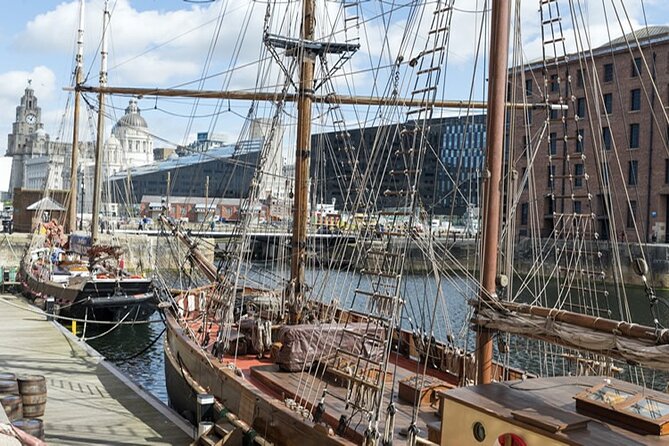
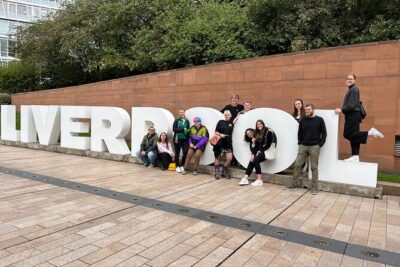
You meet at the Liver Building on Pier Head, Liverpool L3 1HU. That is a good starting point because you are right in the part of town people already associate with Liverpool’s maritime and business identity.
The tour ends near 2 Custom House Place, at the site of Liverpool’s Old Dock around Thomas Steers Way in the L1 shopping area. This matters because the walk finishes close to the Merseyside Maritime Museum, which houses the International Slavery Museum. Even if you do not want to go inside right away, you can.
The tour uses a mobile ticket and runs in English. It is also designed for most people to participate, and service animals are allowed. Plus, it is near public transportation, which helps if you are juggling other sights that day.
Stop-By-Stop: The Landmarks That Make The System Feel Real

Expect short stops, often around 5 to 10 minutes each, with key indoor moments where admissions are included.
Stop 1: Our Lady and Saint Nicholas Church and Garden
You start with a churchyard that is hard to forget. The focus here is how many slave traders worshipped at this church and were buried in the church yard. That contrast, sacred space next to the lives of people tied to slavery, is one of the tour’s most direct “see it where it happened” lessons. Admission is included.
Stop 2: Hargreaves Building (William Brown and banking power)
Next you land at a financial landmark tied to the cotton broker and banker William Brown. You will hear how he founded the Bank of Liverpool and the merchant banking firm Brown & Shipley. This is a quick, sharp stop, with admission free, and it sets up the broader theme that cotton trade and banking were tightly linked.
Stop 3: Tithebarn Street, Rumford Place, and the Confederate Embassy
This is where the story widens. You visit Rumford Place and the Confederate Embassy of the American Civil War, and you learn about Bulloch’s network of spies in Liverpool. The emphasis is on how Confederate armies were supplied with weapons and ships through systems connected to Liverpool. Admission is included, so you are getting more than street-level explanation here.
Stop 4: Cotton Exchange Building and the Liverpool Rules
You step into the world of trading systems. Liverpool’s role as a world leader in cotton trading is explained, and you will hear about how the “Liverpool Rules” still exist today. Translation for your brain: rules and contracts matter. They standardize how big money moves, and they helped produce the wealth that filled the city with merchant and banking power. Admission is free.
Stop 5: Exchange Flags and the original slave-selling exchange
At the Exchange Flags you see the original exchange area where traders conducted business, and where slaves were sold. It is a blunt historical point that few city walks confront so directly. You also hear about the Nelson Monument, including its history and meaning. Admission is included for this stop.
Stop 6: Memorial to Sir Alfred Lewis Jones
You move to a memorial that frames wealth and influence in a fuller way. You learn how Sir Alfred Lewis Jones obtained vast wealth and a monopoly connected to the Elder Dempster Shipping Line, then you also hear about his philanthropy, including funding the setting up of the School of Tropical Medicine. Admission is included here, and the point is not to excuse or soften anything, but to show how money circulated into institutions.
Stop 7: Liverpool Water Street banking district views (entry not included)
This section is about the 18th and 19th century business and banking sector. You are shown richly designed banking houses built from the wealth tied to American trade. You will get views of places like the Martins Bank Building and the old Bank of Liverpool Building, but admission is not included, so you will be relying on what you can see from outside.
Stop 8: Dale Street’s old streets and a 1726 public house moment
Dale Street is where you slow down just a little in your mind. You see 18th century streets that survived Victorian widening, plus narrow passages from Old Liverpool. The tour also includes a public house that existed and was likely visited by early slave traders in 1726, and the guide may even encourage a drink there. Admission is included for this stop, and it is one of the more human scale segments of the walk.
Stop 9: Castle Street and the Bank of England’s early presence
On Castle Street, the focus is on buildings connected to merchants and slavery and the way institutions grew into power. You also see the building that housed the first branch of the Bank of England outside London. Admission is free, so you get the lesson as you walk past and interpret what you are seeing.
Stop 10: Queen Victoria Monument and the former Liverpool Castle site
You visit the spot where Liverpool Castle once stood before being demolished in 1726. St George’s Church was built on the site and served as a place of worship for Liverpool mayors and town councillors. It is a short stop, free of charge, and it reinforces how civic power and everyday legitimacy overlapped with the city’s trading world.
Stop 11: Liverpool Town Hall (Mansion House of the Lord Mayor)
Here you learn how the building was funded and what it was used for. You also see the architecture and decoration, including depictions of African people on the frieze. Entry is not included for this stop, so you will take in what you can on the outside, and what the guide points out.
Stop 12: Graving Dock, where ships were refitted
This is a physical history lesson. The docks are explained as places where ships, after completing the painful journey from Liverpool to Africa and then to America and back, were refitted. The tour points you to the original graving docks from the mid 1700s that remain in Liverpool. Admission is included, and this is one of those stops that makes the story feel grounded in labor, repair work, and the harsh logistics of the trade.
Pass by Merseyside Maritime Museum and the International Slavery Museum
Mid-tour, you pass by the Merseyside Maritime Museum, which houses the International Slavery Museum. The good news is that you can visit it for free at the end of your tour, if you want to extend the experience without paying extra for entry.
Stop 13: Salthouse Dock and Canning Docks
You see the Salthouse and Canning Docks, built quickly to handle the rapidly increasing trade with America. You also learn that some dock parts were constructed using massive stones from Liverpool Castle. The tour notes you will tread on cobbles and stones that slave traders and merchants walked when attending to cargo. Admission is included for this stop.
Stop 14: Thomas Steers Way and the old dock footprint
Thomas Steers Way marks where Liverpool’s Old Dock was built in 1715. The tour explains that building this dock helped Liverpool exploit its map position and develop African and transatlantic trade that generated massive wealth. You can see part of the old dock through an observation window set in the ground, and by prior arrangement you might be able to get a guided tour of the actual dock. Admission is free.
Stop 15: James Street and the Goree Island evocation
James Street wraps the walk with Victorian back-street texture. You see classic architecture of old banking houses and visit a modern sculpture that evokes the slave house on Goree Island. Admission is free, and it works as a closing emotional beat, connecting the city’s past to the wider Atlantic story.
Ticket Value: What You Pay For in Practice

At $38.19 per person for around two hours, the value comes from the mix of paid and free access you would otherwise have to chase on your own. Some stops include admission tickets, including several key indoor or dock-area moments. Other stops are free, particularly points tied to major streets and exterior landmarks.
A couple stops specify that admission is not included, like certain banking district viewpoints and Town Hall. That means you should not expect every major building to be entered. Instead, plan to see and understand what you can from the outside, with the guide doing the heavy lifting in interpretation.
If you are the type who likes to squeeze the most learning per hour, the dock stops and the churchyard start are where this pricing starts to make sense. You get both the moral gravity and the business mechanics, not just one.
More on foot, at a pace you can hear the guide
Guides Like Edward and Tommy Allen: Why The Stories Land

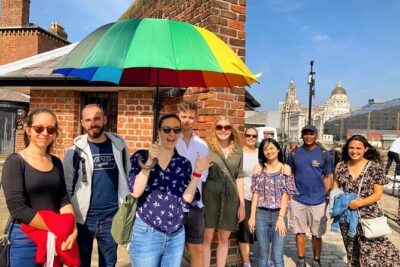
The most praised part of the experience is the guide quality. Names like Edward and Tommy Allen come up because they turn landmarks into a timeline you can follow. One strong detail: photos from earlier Liverpool are used to help bring stories to life. That matters because it keeps you from imagining everything as it used to be.
You will also likely get the kind of extra context that makes a city feel personal. In this walk, that can include pop-culture connections guides have pointed out, including where Paul McCartney’s dad worked and how Freddie Mercury was inspired to name his band Queen. It is not the main point of the tour, but it helps you remember what the guide wants you to notice.
Finally, a small group format helps. When there are only a limited number of people, questions come faster and explanations do not get rushed.
Practical Tips: Weather, Shoes, And How To Handle The Topic

This is an experience that requires good weather. If conditions are bad, the tour is canceled and you are offered a different date or a full refund.
On footwear, treat this like dock country, because some of the walking includes cobbles and stones. Even if you are used to European sidewalks, dock-area surfaces can be a bit rougher underfoot.
Also, keep your mindset ready. The tour addresses slavery and the people tied to it through finance, shipping, and trade. That can be emotionally heavy, even when the guide keeps things clear and factual. Bring water, take a breath when you need to, and remember the goal is understanding, not comfort.
Should You Book This Commercial Side Walk?

Book it if you want a city walk that explains how the system ran, not just what happened. The focus on banks, trading rules, dock infrastructure, and specific sites tied to finance gives you a strong mental model you can carry beyond Liverpool.
Skip it or consider pairing with something else if you want a lighter, purely scenic walk. This one is built around difficult subject matter and an active walking schedule.
If your schedule includes time for the free International Slavery Museum after the walk, you get a useful two-step arc, streetscape learning first, then museum-level context.
If you’re choosing between Liverpool’s many tours, this one has a clear identity. It tells the story through the commercial machinery still visible in the city.
FAQ

How long is the Liverpool Slavery Walking Tour – Commercial Side?
The tour lasts about 2 hours.
How much does the tour cost?
The price is $38.19 per person.
Where do I meet and where does the tour end?
You start at the Liver Building on Pier Head in Liverpool, and you end at the site of Liverpool’s Old Dock on Thomas Steers Way in the L1 shopping centre.
What language is the tour offered in?
The tour is offered in English.
Is admission included for the stops?
Admission is included for some stops, free for others, and not included for a few specific viewpoints. The tour description makes clear which stops include tickets and which do not.
Is the tour dependent on weather?
Yes. It requires good weather, and if it is canceled due to poor weather, you will be offered a different date or a full refund.
What is the cancellation policy?
You can cancel for free up to 24 hours in advance for a full refund.
More Of Liverpool On Foot


More Liverpool, Dock To Kop

Fresh off the notebook in Liverpool
- Welcome to Liverpool Tour – 2 Hour Private Walking Tour
★ 5.0 · 7 reviews - 3 Hours Private City Highlights Liverpool Walking Tour
★ 5.0 · 7 reviews - Football Experience With A Local Host In Liverpool
★ 4.5 · 8 reviews - Liverpool Football Club Museum Entry
★ 5.0 · 10 reviews - The Liverpool Pass®: All top attractions inc. Hop-On Hop-Off Bus Tour | 2-Days
★ 4.5 · 11 reviews - 2-Hour Private Liverpool Walking Tour
★ 5.0 · 12 reviews
Liverpool Tours, compared.
 ★ 5.0Liverpool: “Blue Route” – City & Beatles TourFrom $278,562 reviews
 ★ 4.5Liverpool City Sights Hop On Hop Off City Tour – 24hr TicketFrom $192,555 reviews
 ★ 4.0Liverpool: 50-Minute Mersey River CruiseFrom $171,232 reviews
 ★ 5.0Private 3-Hour Guided Beatles Classic Tour of LiverpoolFrom $2771,074 reviews
 ★ 5.0Mad Day Out Beatles Taxi Tours in Liverpool, EnglandFrom $2081,013 reviews
 ★ 5.0Ciy Explorer: Hop On Hop Off Liverpool Sightseeing Bus TourFrom $19915 reviews
 ★ 5.0A Walk Through Time: History of Liverpool Walking TourFrom $27911 reviews
 ★ 5.0Liverpool Ghost Walking TourFrom $27862 reviews
Browse the lists this tour appears in