
REVIEW · LIVERPOOL TOURS
A Walk Through Time: History of Liverpool Walking Tour
Liverpool history walks fast, and you feel it. This tour takes you from the Royal Liver Building waterfront landmarks to the medieval roots and dockside powerhouse moments that shaped Liverpool. Along the way, I love the way the guide turns street corners into a story you can follow, not a list of dates.
My second favorite part is the value. For $27.74, you get a historian-led overview that covers commerce, streets, and docks in one go, without needing to plan a whole day. The one possible drawback is the weather and the walking, because the route crosses open waterfront areas, so cold wind can be real, especially on a brisk day.
In This Review
- Key highlights you will feel right away
- Where the tour starts at the Royal Liver Building, then builds momentum
- Parish Church Gardens and the 1207 roots of Liverpool
- Old Hall Street and the Cotton Exchange story you can picture
- Liverpool Town Hall (1749) and why Georgian architecture mattered
- Castle Street, the 18th century “literal time walk” feeling
- Queen Victoria Monument and the city’s port apex by 1800
- Liverpool ONE as the modern pivot, with a real reason
- The Old Dock reveal: 1715’s wet dock and port efficiency
- Royal Albert Dock in the 1800s, plus First and Second World War context
- The Three Graces finale at the waterfront, plus a quick reset at the end point
- Price and value: what $27.74 buys you in real terms
- Group size, pace, and what to wear so you can enjoy every stop
- Who this walk suits best, and who might want a different plan
- Should you book A Walk Through Time in Liverpool?
- FAQ
- How long is the Liverpool walking tour?
- Where do I meet, and where does the tour end?
- Is the tour in English?
- Are admission tickets included?
- What if the weather is poor?
- Can I get a refund if I cancel?
Key highlights you will feel right away
- Start at the Three Graces and get a clear orientation of the waterfront story before you move inland
- Medieval Liverpool clues at the Parish Church Gardens, tied to the origins of the city
- Old Hall Street and the Cotton Trade framed as why Liverpool rose globally, including its late 18th century leap over London
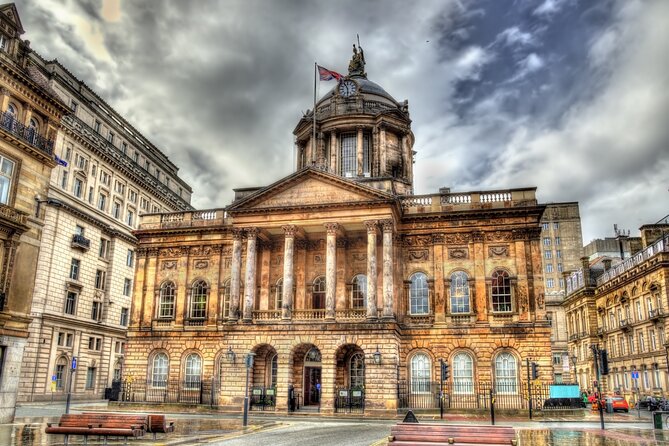
- Georgian Liverpool at Town Hall (1749), the finest surviving Georgian building in the UK
- Old Dock (1715) to Royal Albert Dock (1846), with port efficiency and major world events in the narrative
- A small group experience with a max of 40 people, which helps questions and keeps the walk lively
Other Liverpool days, docks to derby ground
- Liverpool: “Blue Route” – City & Beatles Tour★ 5.0 · 8,562 reviews
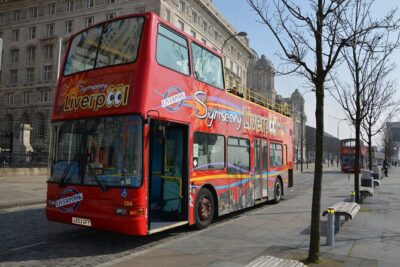
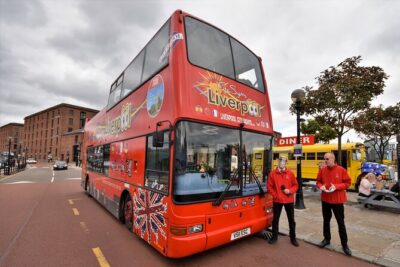
- Liverpool City Sights Hop On Hop Off City Tour – 24hr Ticket★ 4.5 · 2,555 reviews
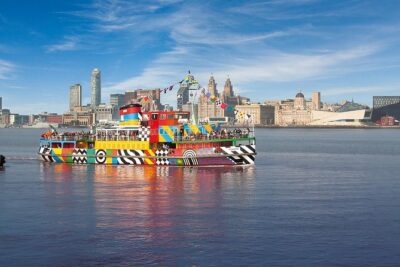
- Liverpool: 50-Minute Mersey River Cruise★ 4.0 · 1,232 reviews
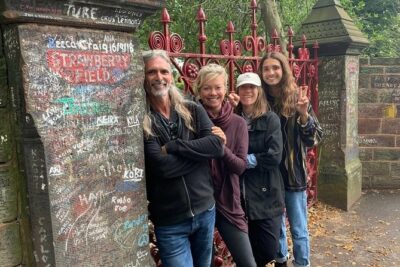
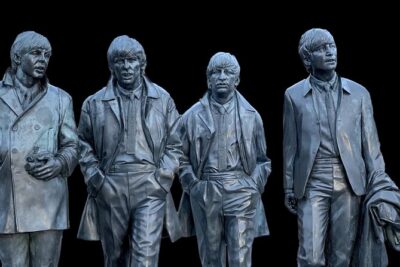
- Private 3-Hour Guided Beatles Classic Tour of Liverpool★ 5.0 · 1,074 reviews
Where the tour starts at the Royal Liver Building, then builds momentum
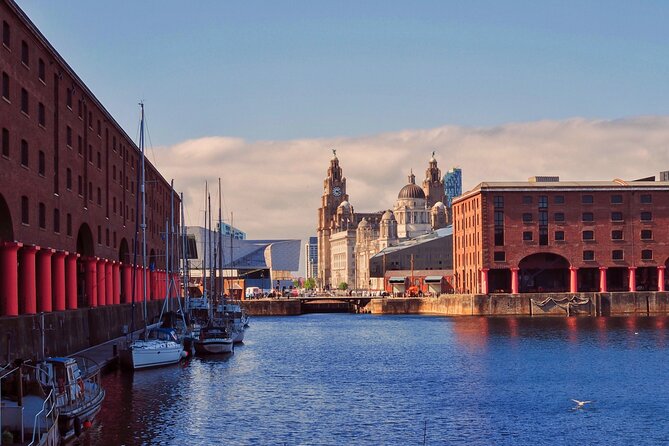
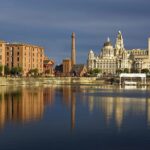
You meet at the Liver Building at Pier Head, Liverpool L3 1HU, the classic waterfront zone most people only skim through. The start matters because you get an introduction right at the Three Graces area, so everything you see later has context. Even if you have only a day or two in Liverpool, this opening gives you a mental map you can keep.
From there, the tour does something smart. It does not just point at landmarks. It links them to Liverpool’s rise from local beginnings into a global port city tied to Atlantic trade. It is a history walk, but it also functions like a practical orientation for your next stops around town.
Parish Church Gardens and the 1207 roots of Liverpool
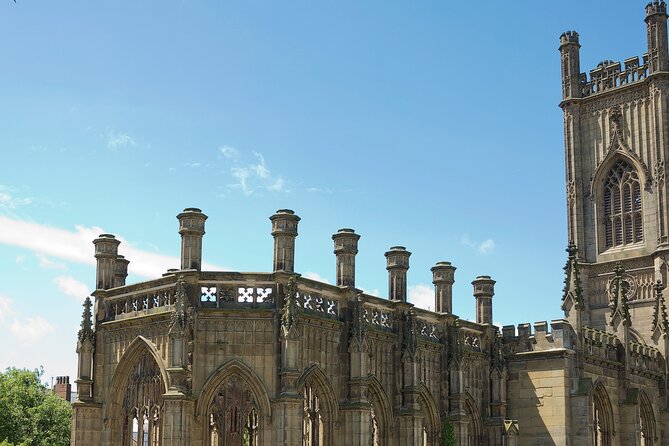
One of the most interesting stretches is the walk to the Liverpool Parish Church Gardens, where you learn about the oldest building in the city centre area, once known as St Nicholas’ Church. The guide frames the name around Liverpool’s sea connection, which is a nice detail because it explains why even early religious sites were never isolated from trade.
You also get medieval origins tied to 1207 and the idea of primary evidence located at the site of Liverpool’s creation in the 13th century. That combination, story plus place, is what makes the time travel feel real. You are not reading about history. You are standing where the city’s early identity took shape.
Practical note: this stop is about 15 minutes, so you will get the main points without being dragged to the end of the group’s attention span.
Old Hall Street and the Cotton Exchange story you can picture
Next up is Old Hall Street, built in the 13th century and tied to the old town hall after Liverpool received its town charter. This part is especially good if you care about how cities grow, because the guide explains the shift from local government to commerce in a way that makes sense while you walk.
You then pass Grade I listed buildings and get pointed toward the Cotton Exchange area, described as where trade from across the world took place. Here is the big takeaway: Liverpool’s global port growth is positioned as surpassing London in the cotton trade by the late 18th century. That is a huge claim, and the guide gives enough framing that it does not feel like a random fact dropped into the conversation.
If you like economic history, you will probably enjoy this stretch the most. It is not only what happened, it is how the city organized itself to profit from Atlantic trade. It also sets up why the docks you see later were so important.
Liverpool Town Hall (1749) and why Georgian architecture mattered
The walk continues to Liverpool Town Hall, built in 1749 and noted as the finest surviving Georgian building in the UK. This stop is shorter, about 10 minutes, but it carries weight because Town Hall represents civic power, not just buildings that look pretty.
You will hear an academic style explanation of the structure and what it signaled as Liverpool became a global port and a centre of commerce. I like that the guide does not treat architecture as decoration only. You learn how the city expressed wealth and authority through brick, form, and planning.
One practical consideration: the stop notes that an admission ticket is not included. So if you want to go inside, plan for separate entry. If you just want the exterior and the guided story, you will still get plenty.
More on foot, at a pace you can hear the guide
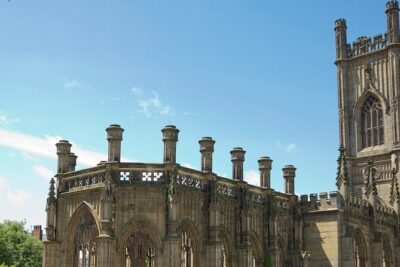
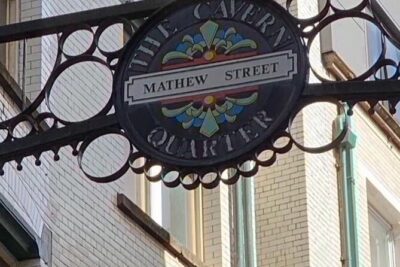
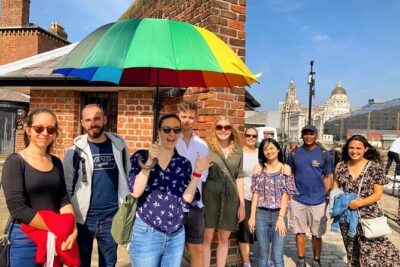
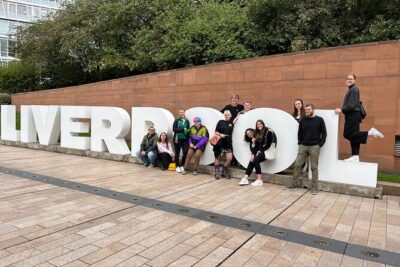
Castle Street, the 18th century “literal time walk” feeling
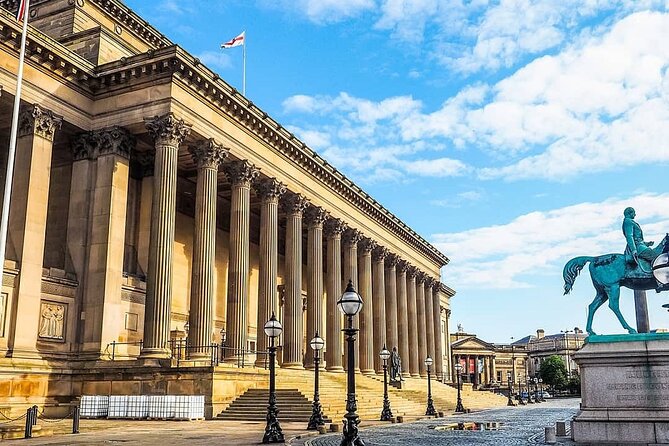
Then comes Castle Street, which is described as a literal time walk thanks to the architecture and changing buildings that show Liverpool’s evolving past. This is where the tour starts to feel like a walk through layers. The street is treated like a timeline you can read while moving.
The guide focuses on Liverpool Castle’s importance and how Castle Street fits into that story. Even if you have not studied medieval Britain, the way the guide connects street layout to power and trade makes the scene easier to understand.
This stop is about 15 minutes, long enough for you to absorb details and ask questions if you are the type who likes to keep the thread going.
Queen Victoria Monument and the city’s port apex by 1800
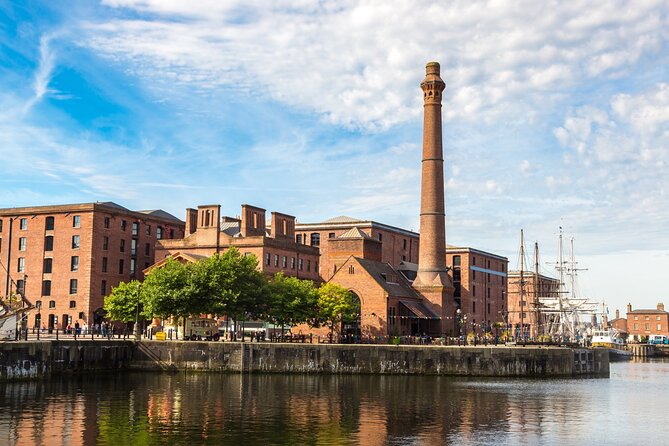
From Castle Street you reach the Queen Victoria Monument, the tour’s 10 minute stop that shifts toward the larger, high stakes picture. This segment is tied to history of Liverpool Castle and, crucially, Liverpool’s development toward becoming the largest port on the planet for global trade by 1800.
This part works because it is not only about the past. You get perspective on why certain monument locations matter. The guide uses the area to show that Liverpool’s “up” story was built on shipping systems, trade routes, and port expansion.
I also appreciated that the tour does not pretend the story was all neat and shiny. One of the strongest review takeaways is that the guide brings up Liverpool’s role in the transatlantic slave trade. Even when the mood is heavier, it keeps the history honest and helps you understand why the city’s commercial story is complicated.
Liverpool ONE as the modern pivot, with a real reason
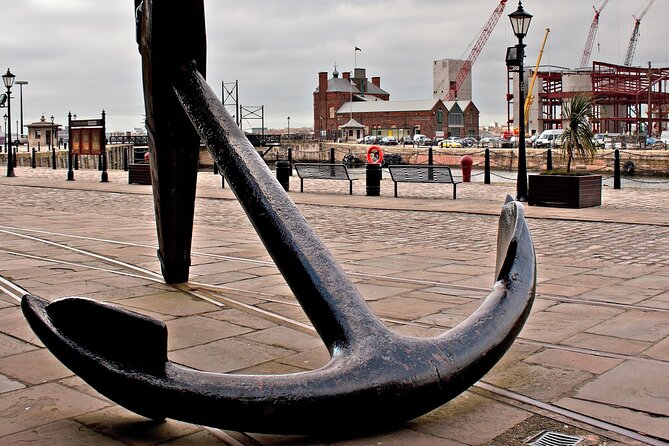
The walk then transitions to Liverpool ONE, described as modern Liverpool with shops and attractions. This is not random modern sightseeing. The tour uses it as the pivot point from shipping and civic power to how the city uses space today.
The guide provides a guided tour of the shopping area and what is there, again about 10 minutes. For me, this felt like a pause in the time stream, a chance to connect “then” and “now” without turning it into a shopping trip that takes over the day.
If you are short on time and want a quick sweep of what to check out after the tour, this stop helps.
The Old Dock reveal: 1715’s wet dock and port efficiency
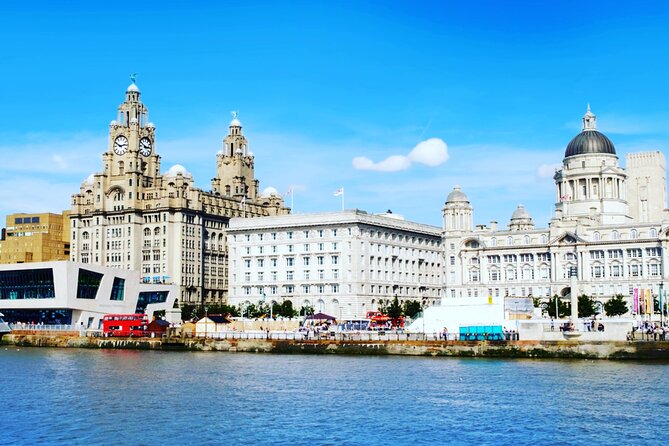
Next you head to the Old Dock tour segment, a highlight focused on the first commercial wet dock on the planet built in 1715. This part is where Liverpool’s rise gets concrete and mechanical, like how goods actually moved and why the system gave Liverpool an edge.
The guide explains how the dock helped catapult Liverpool to become an efficient port and a first of its kind. If you like practical history, you will probably enjoy this because the story is tied to infrastructure. It is not only cultural vibes and famous names.
This stop is also about 10 minutes, and it stays focused. You are meant to walk away seeing the docks differently than you would if you were just doing casual sightseeing.
Royal Albert Dock in the 1800s, plus First and Second World War context
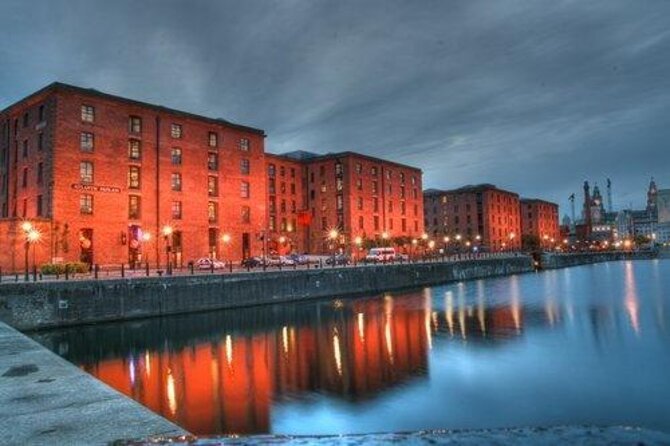
Finally, you reach Royal Albert Dock Liverpool, built in 1846. The tour frames it as the centre of Liverpool’s commerce in the 19th century, and it also touches Liverpool’s involvement in both First and Second World Wars.
This is another spot where the tour gives you a fuller city picture. Docks are usually presented as trade, but the guide brings in the idea that ports mattered during major conflicts too. It gives the waterfront a heavier significance, which changes how you look at the buildings and spaces.
Again, admission is listed as free for this stop, so you get the guided story without needing extra entry plans.
The Three Graces finale at the waterfront, plus a quick reset at the end point
The tour ends back at the Royal Liver Building at the Three Graces waterfront area for a final wrap-up. It is about 5 minutes for the conclusion segment, which means the guide’s best themes are already in your head by this point.
From there, the tour finishes at the Queen Victoria Monument at One Derby Square, James St, Liverpool L2 1AB, a central location that is convenient for hopping to other sights or heading back toward your hotel. I like ending somewhere easy to navigate because it reduces the “what now?” stress after a tour.
Price and value: what $27.74 buys you in real terms
At $27.74 per person for about 1 hour 50 minutes, you are paying for a guided overview that covers medieval origins, Georgian civic power, commercial growth, and dockside development in one run. That is usually how you get the best value on a city visit, because you save time and you avoid piecing together history from scattered museum stops.
I also think value is strong here because the tour is historian-led, and the reviews consistently point to guides who enjoy teaching, answering questions, and keeping energy up even when the weather is tough. One review also praises clear audio and lots of interconnected details, which matters a lot on walking tours near busy streets.
If you are on a tight schedule, this is an efficient way to get bearings fast. If you are a super-dedicated history nerd, you might want extra time afterward for specific topics that catch your attention, like cotton trade, dock engineering, or Liverpool’s darker Atlantic chapters.
Group size, pace, and what to wear so you can enjoy every stop
The group has a max of 40 travelers, and that smaller size tends to make the tour more interactive. In the reviews, I saw praise for small-group feel and the guide’s ability to keep people engaged and heard, even with distractions.
The pace can be intense. One review mentions the guide spoke fast, so if you need slower delivery, you might want to sit closer to the front during stops and ask for repeats if you miss a point. You will walk between locations, and the time at each stop is fairly tight.
Wear comfortable shoes. If it is windy, dress warm, especially near the river and dock areas. One of the most practical bits I took from the feedback is simple, bring a warm layer so you do not feel punished for caring about history.
Who this walk suits best, and who might want a different plan
This tour suits you if:
- You want an overview of Liverpool’s growth tied to trade and docks
- You like guides who connect the dots between buildings and events
- You want a manageable walk length, about 1 hour 50 minutes, rather than an all-day project
- You are visiting for the first time and need context for the rest of your itinerary
You might prefer something else if:
- You dislike walking tours with multiple stops and short time at each location
- You need a slower, deeper museum-style experience for one single theme
Should you book A Walk Through Time in Liverpool?
I think you should book this if you want a clear “how Liverpool became Liverpool” story, with sights that are famous but explained in a way that feels real. The strongest reasons to go are the historian-led approach, the way the tour connects medieval origins to global trade, and the dock segments that show why Liverpool mattered beyond entertainment headlines.
If you are the kind of traveler who likes to understand what you are seeing before you move on, this one fits. Just plan for cold wind, bring good walking shoes, and go into it ready to learn, even when the history gets complicated.
FAQ
How long is the Liverpool walking tour?
The tour lasts about 1 hour 50 minutes.
Where do I meet, and where does the tour end?
You start at Liver Building, Pier Head, Liverpool L3 1HU, and you end at Queen Victoria Monument, One Derby Square, James St, Liverpool L2 1AB.
Is the tour in English?
Yes, the tour is offered in English.
Are admission tickets included?
Admission tickets are not included for the Royal Liver Building and Liverpool Town Hall stops. The other listed stops are free.
What if the weather is poor?
This experience requires good weather. If it is canceled due to poor weather, you will be offered a different date or a full refund.
Can I get a refund if I cancel?
Yes. You can cancel for free up to 24 hours in advance for a full refund. If you cancel less than 24 hours before the start time, the amount paid is not refunded.
More History Led Walks



More Of Liverpool On Foot


More Liverpool, Dock To Kop




Fresh off the notebook in Liverpool
- Welcome to Liverpool Tour – 2 Hour Private Walking Tour
★ 5.0 · 7 reviews - 3 Hours Private City Highlights Liverpool Walking Tour
★ 5.0 · 7 reviews - Football Experience With A Local Host In Liverpool
★ 4.5 · 8 reviews - Liverpool Football Club Museum Entry
★ 5.0 · 10 reviews - The Liverpool Pass®: All top attractions inc. Hop-On Hop-Off Bus Tour | 2-Days
★ 4.5 · 11 reviews - 2-Hour Private Liverpool Walking Tour
★ 5.0 · 12 reviews
Liverpool Tours, compared.
 ★ 5.0Liverpool: “Blue Route” – City & Beatles TourFrom $278,562 reviews
 ★ 4.5Liverpool City Sights Hop On Hop Off City Tour – 24hr TicketFrom $192,555 reviews
 ★ 4.0Liverpool: 50-Minute Mersey River CruiseFrom $171,232 reviews
 ★ 5.0Private 3-Hour Guided Beatles Classic Tour of LiverpoolFrom $2771,074 reviews
 ★ 5.0Mad Day Out Beatles Taxi Tours in Liverpool, EnglandFrom $2081,013 reviews
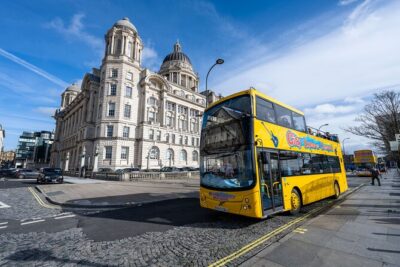 ★ 5.0Ciy Explorer: Hop On Hop Off Liverpool Sightseeing Bus TourFrom $19915 reviews
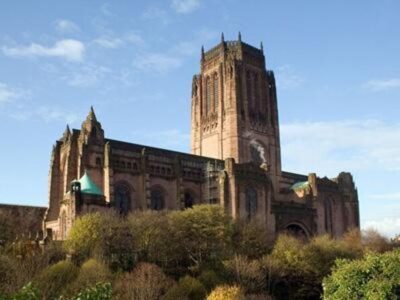 ★ 5.0Liverpool Ghost Walking TourFrom $27862 reviews
 ★ 4.5Liverpool: Beats ToursFrom $97799 reviews
Browse the lists this tour appears in