
REVIEW · LIVERPOOL TOURS
The Story of Liverpool 2-Hour Walking Tour
A great Liverpool intro starts with docks. This 2-hour walking tour strings together Titanic-era engineering and waterfront landmark photos with story you won’t pick up from a quick guidebook skim. I like the easy pace and short stop times that still fit a lot in, plus the fact it keeps you focused on what you are looking at, not just reciting dates. One thing to consider: the tour depends on good weather, and the subject matter includes the slave-trade era, so it can feel heavy in places.
I also really like the setting and flow. You begin right at the waterfront by the Memorial to the Marine Engine Room Heroes, then work your way past the Pier Head and the docks, finishing near Liverpool’s shopping area on Thomas Steers Way. The guide service is a big part of the value here, and the name Wendy comes up in feedback as accommodating and helpful. If you only have limited time in Liverpool, you get an overview that makes the rest of your trip click, instead of wandering randomly.
Here is the practical catch. This walk covers a lot of ground and a lot of eras in a short time, so if you want deep museum-style detail, you’ll need to plan follow-up visits. Also, bring layers. People mention rain, and since it is an outdoors-first route, you will want a rain shell and sensible shoes.
In This Review
- Key things you’ll get from this LiverpoolGO walking route
- Where this 2-hour tour starts, and why that location helps
- Step-by-step: the walk through Liverpool’s Titanic and dock history
- The memorial start: Engine Room Heroes, panic, and last minutes of power
- Our Lady and St Nicholas Church: old walls, Mersey tides, and buried histories
- Tithebarn Street: an unofficial Confederate connection
- Liverpool Town Hall: merchant wealth shown in stone
- Royal Liver Building: construction, the site before, and the city’s icon vibe
- Albion House: White Star Line headquarters and Titanic names on a balcony
- Pier Head: Mersey Tunnel engineering and the Three Graces close
- Albert Dock: design, WWII use, and museum planning at your own pace
- Salthouse Dock and Canning Dock: castle stones and refurbished docks
- Thomas Steers Way: seeing the old dock outline in the pavement
- Liverpool Water Street: the Bank of Liverpool and its own currency notes
- What I think makes this tour good value for $40.22
- Weather, pace, and comfort: the real-world considerations
- Who should book this Liverpool walking tour?
- Should you book this LiverpoolGO 2-hour walking tour?
- FAQ
- How long is the Liverpool 2-hour walking tour?
- What is the price per person?
- Where does the tour start and where does it end?
- Is the ticket mobile?
- What language is the tour offered in?
- How large are the groups?
- Is the tour dependent on the weather?
- Are service animals allowed?
Key things you’ll get from this LiverpoolGO walking route
- A fast orientation around the Pier Head and dock area, built for a first visit
- Titanic engineering context at the memorial, including what stayed powered and what failed
- Landmark-to-story links at places like the Royal Liver Building and the Town Hall
- Liverpool’s merchant power shown through buildings funded by trade tied to slavery
- A dock-physics finish at Thomas Steers Way, where old dock lines are visible in the pavement
Other Liverpool days, docks to derby ground
- Liverpool: “Blue Route” – City & Beatles Tour★ 5.0 · 8,562 reviews
- Liverpool City Sights Hop On Hop Off City Tour – 24hr Ticket★ 4.5 · 2,555 reviews
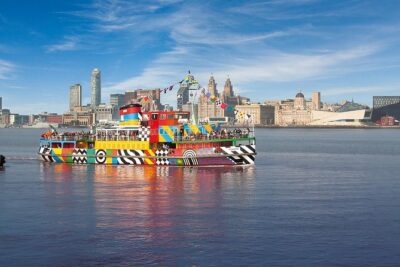
- Liverpool: 50-Minute Mersey River Cruise★ 4.0 · 1,232 reviews
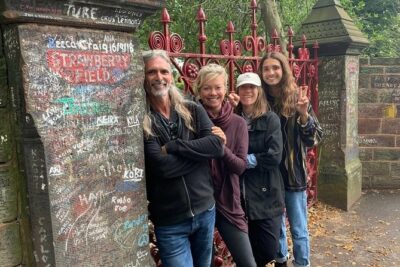
- Private 3-Hour Guided Beatles Classic Tour of Liverpool★ 5.0 · 1,074 reviews
Where this 2-hour tour starts, and why that location helps
The walk starts at the Memorial to the Marine Engine Room Heroes on St Nicholas Pl, Canada Blvd, Liverpool L3 1QW. That matters because you are beginning in the right emotional and architectural zone. From step one, you are near the waterfront and the dock buildings that shaped Liverpool’s fortunes, so the stories make sense immediately.
The tour ends at Thomas Steers Way in Liverpool L1, in the L1 shopping complex area with easy access to the city centre. In other words, you are not dumped far out of town at the end. You can finish the tour, then decide if you want to head into museums nearby or continue exploring.
Price is $40.22 per person for about 2 hours. For a guided walk, that is fairly solid value because the route is concentrated and the guide is doing the heavy lifting, turning landmarks into clues. The group size is capped at 12 travelers, which usually means you get a bit more attention and fewer people crowding the guide.
Step-by-step: the walk through Liverpool’s Titanic and dock history
This route is built like a sequence of “look here, then understand why it matters.” Most stops are around 5 to 15 minutes. That short format is actually helpful. You get enough time to read the key details and understand the angle, but you do not spend your whole day stuck in one place.
The memorial start: Engine Room Heroes, panic, and last minutes of power
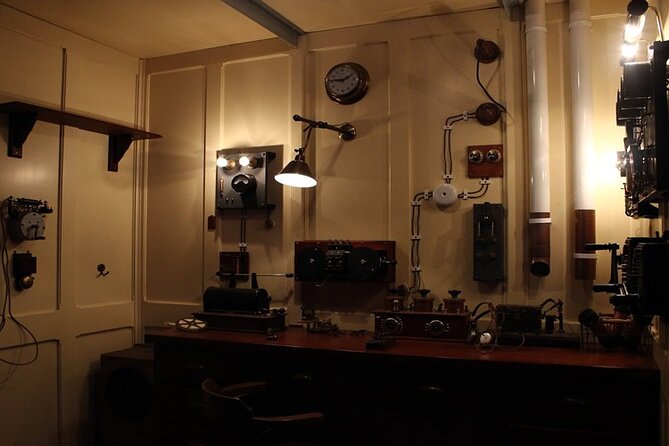
At the beginning, your guide brings you to the memorial tied to the Titanic story. When the ship sank, it was not just a matter of water taking over. Wireless and lighting failed at the worst possible time, which meant sending help or lowering lifeboats safely became nearly impossible.
You will hear the specific timing: power for the wireless set lasted until about ten minutes before she sank, and the lights failed just two minutes before. The memorial honors the engine room heroes, and the point is clear. Liverpool is not only famous for ships that left its docks. It is also tied to the engineering realities behind maritime disasters.
If you have been to the Titanic Museum type of experience before, this stop adds the engineering and survival logistics angle, not just the names and headlines. It also sets a tone for the rest of the walk: Liverpool’s identity is tied to ships, workers, and big systems.
Practical tip: this area is outdoors-facing. If rain is in the forecast, plan to keep moving. Stand close enough to hear the guide, but do not get stuck in one puddle.
Our Lady and St Nicholas Church: old walls, Mersey tides, and buried histories
Next up is Our Lady and St Nicholas Church and Garden at the Pier Head. It is described as one of the oldest buildings in Liverpool, and the big detail here is geography. In earlier times, the River Mersey lapped the steps at high tide before land reclamation for George’s Dock.
Then the church connects directly to the city’s darker commercial era. Slave traders worshiped here, and some were buried at the church, including Bryan Blundell. That name matters because it is the kind of detail that turns a building from a pretty photo into a real piece of recorded human history.
This stop is one I would recommend even if your interests run more architectural than historical. The church is old, but it is also a reminder that Liverpool’s trade systems reached into everyday life, including religion and burial sites.
More on foot, at a pace you can hear the guide
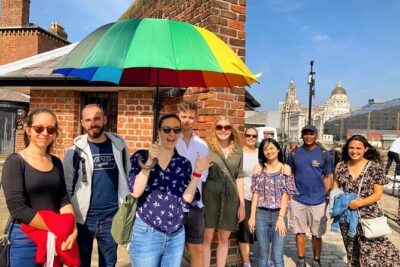
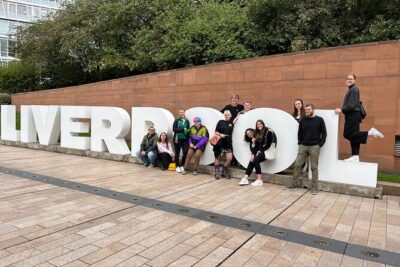
Tithebarn Street: an unofficial Confederate connection
On Tithebarn Street, the tour pivots to Liverpool’s role during the American Civil War. Britain remained neutral, but Liverpool merchants were tied strongly to the South, including the Confederacy. Your guide points out an unofficial Confederate Embassy, and you learn about the company that became unofficial bankers for Confederate states.
This is the kind of detail that makes a city tour feel worth it. You are not just learning that Liverpool was trading in the 1860s. You are learning how politics, money, and ships intersected, and why Liverpool merchants had influence well beyond the UK.
If you like history with specific names of places and institutions, this is one of your stops. If you prefer straightforward landmarks only, you might find this portion more challenging emotionally because it links profit to conflict and suffering.
Liverpool Town Hall: merchant wealth shown in stone
Liverpool Town Hall is one of the route’s standout architecture moments. The guide explains that merchants who funded its construction spared no expense, and you can look for the design and interior decoration choices that reflect that pride and power.
Then comes the detail most people miss if they are just snapping pictures. Around the frieze are carvings tied to the trades that made Liverpool wealthy. The list includes elephants, camels, African people, ivory, and other flora and fauna.
That carving theme matters. It is not generic decoration. It is a map of how commerce and empire were imagined and displayed. The tour does not just say Liverpool was important. It shows how power tried to look.
Royal Liver Building: construction, the site before, and the city’s icon vibe
At the Royal Liver Building, you get a classic Liverpool skyline moment, the kind locals and visitors both recognize. Your guide walks you through how the building was constructed and also what was on the land before.
This stop works well as a reset. After church and war-and-trade context, you switch back to a skyline-focused landmark. You are still learning, but it is less heavy. You get to appreciate scale and design while keeping the broader story of how the waterfront and its wealth shaped the city.
If you are the type who likes to understand what you are looking at, this is a good place to ask questions while the guide is right there.
Albion House: White Star Line headquarters and Titanic names on a balcony
As you head back toward the waterfront, you see Albion House, which served as the headquarters of the White Star Line. If you have seen the Titanic film, your guide likely ties in the company’s role and the broader Titanic connection.
You can also see the balcony where White Star Line staff read out the list of names of those who died in the 1912 sinking. That is a striking detail. It turns a corporate address into a human moment, with staff doing a grim task.
This stop is short, but it adds weight to the Titanic theme and keeps the walk from becoming only architectural sightseeing.
Pier Head: Mersey Tunnel engineering and the Three Graces close
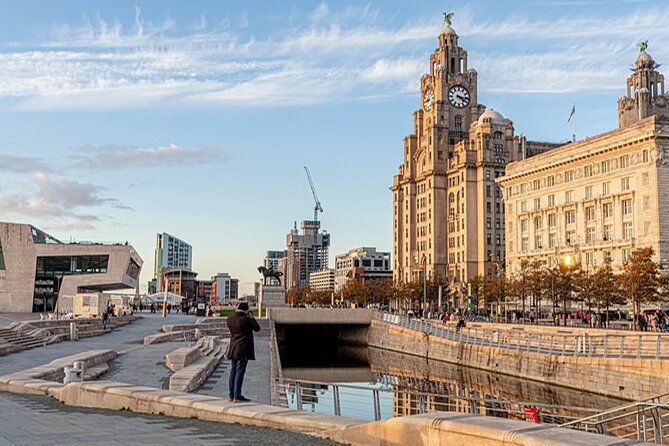
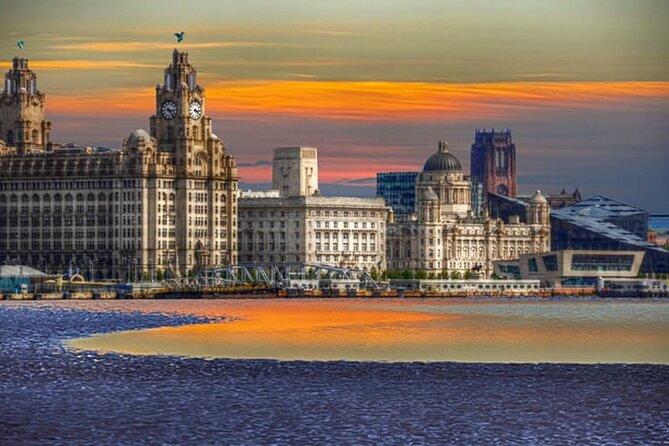
At the Pier Head, the tour returns to engineering and landmark groupings. Your guide explains the Mersey Tunnel and the feat of making it happen. Then you finish by seeing the final two buildings of the Three Graces, the Cunard Building and the Mersey Docks and Harbour Building.
This is a great payoff section because you get both story and skyline. If you like photos, this is where you will want a few shots, but do it without rushing past the guide’s points. The tunnel detail, in particular, helps you see the docks as more than a pretty waterfront. It is infrastructure that kept goods and people moving.
Weather note: with open views, wind can change your comfort level fast. Dress for cold that feels colder.
Albert Dock: design, WWII use, and museum planning at your own pace
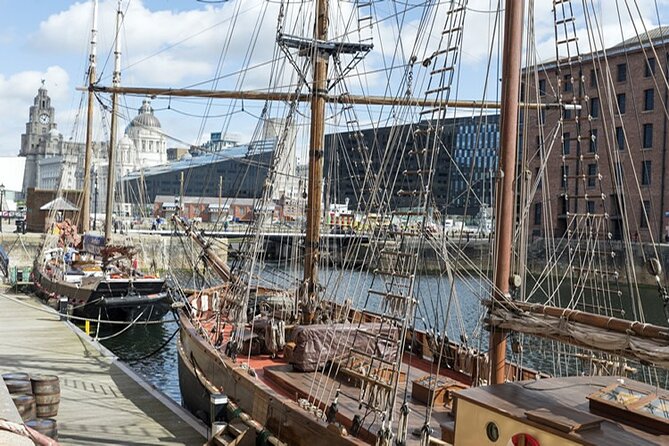
Albert Dock is one of the key transitions from shipping heritage into today’s museum zone. Your guide explains its history and how it was designed and built. Then the tour adds a key wartime layer, pointing to its role during the Second World War.
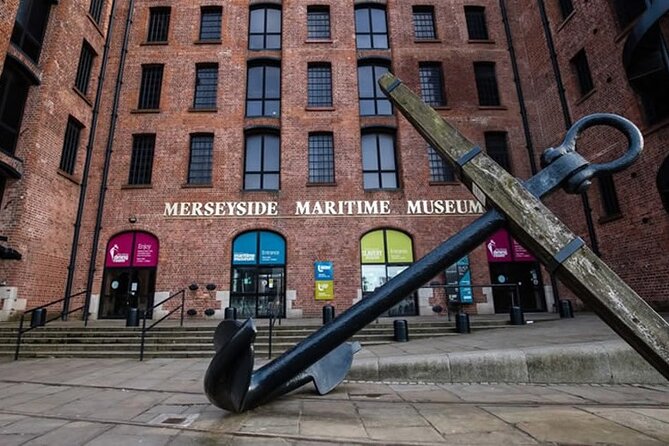
You also get guidance on nearby stops you might want after the walk. The guide points out the Tate Gallery and the Maritime Museum, plus the International Slavery Museum if you want to take your understanding further.
This is a smart way to plan your trip. You are not forced into ticket lines during the walk. You learn what is nearby, then decide based on your energy and interests.
If you are short on time, this stop helps you pick the right follow-up instead of guessing.
Salthouse Dock and Canning Dock: castle stones and refurbished docks
Next you pass Salthouse Dock and Canning Dock. The tour notes that massive stones from Liverpool Castle were used in construction. That kind of reuse detail gives the area texture, and it helps you imagine older Liverpool layers under the modern waterfront.
The walk also mentions the graving docks, where slave ships were refurbished after the transatlantic journey and before returning to Africa to begin the trading process again. That is hard to hear, but it is also one of the most honest pieces of context you can get on a dock route.
You are seeing how the same infrastructure that supported global trade also supported the brutal cycle of slavery and profit. If you want the “dock story” without soft focus, this is where the tour does not look away.
Thomas Steers Way: seeing the old dock outline in the pavement
The tour wraps at Thomas Steers Way, where you can see outlines of the old dock laid out in the pavement. There is also a glass viewing window in the ground that lets you view a section of the dock.
This is one of the most satisfying endings. You finish with a physical reminder that the Liverpool you see today was built over and shaped by the dock systems beneath it. Instead of just leaving with knowledge, you leave with a visual marker you can remember.
The guide typically helps with suggestions for the rest of your time in Liverpool, so if you have next steps in mind, you can use the final minutes to get practical direction.
Liverpool Water Street: the Bank of Liverpool and its own currency notes
On Liverpool Water Street, the tour points out that there was a Bank of Liverpool that even produced its own currency notes. The bank building still exists, and you will see it during the walk.
This stop is a nice match to Liverpool’s merchant identity theme. It is not only ships and docks. It is also finance, banking, and the practical systems that kept money moving.
Even if you do not care about economic history deeply, the currency-notes detail gives you a more complete picture of how the city operated.
What I think makes this tour good value for $40.22
At $40.22 for about 2 hours, you are paying for three things: a professional guide, a tight route, and story-based orientation around multiple landmark clusters.
Because the group is capped at 12 travelers, it is easier to keep attention and hear details. And because it is built around key waterfront sites, you do not need to figure out logistics for what to see in what order. If you are arriving for the first time, this saves you from the common mistake of picking landmarks that look good, then realizing you missed the context that gives them meaning.
You are also getting the practical benefit of future planning. The walk points out places like Albert Dock’s museum options and the International Slavery Museum, so you can decide if you want deeper follow-up after you understand the broader story arc.
Weather, pace, and comfort: the real-world considerations
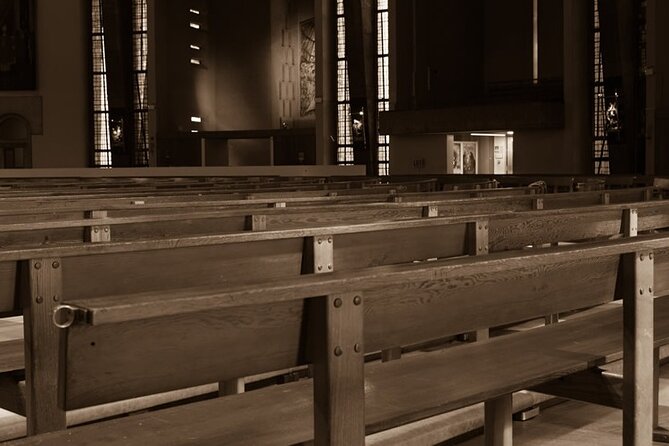
The tour specifically requires good weather. A rain shell and non-slip shoes are a smart call, because several stops are outdoors and the route is a walking loop.
Pace is described as easy, and stop times are short, which helps if you are not used to city walking. Most people can participate, and service animals are allowed. It also runs in English, with confirmation received at booking time.
One small caution: since it covers a lot of topics in a short window, you may want to take notes only if you can do it without losing the walking flow. Otherwise, just absorb and plan to revisit the places that hit hardest.
Who should book this Liverpool walking tour?
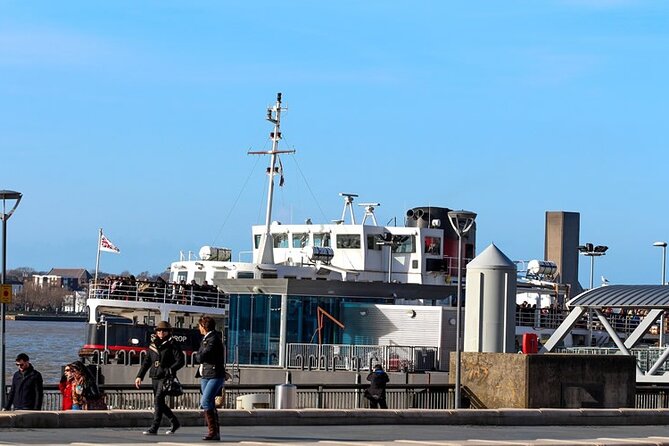
This is a strong fit if:
- You have limited time and want a guided overview of waterfront Liverpool
- You like tours that connect architecture to real stories, including commerce and engineering
- You want a manageable 2-hour walk instead of a full-day museum plan
- You are curious about Titanic-related landmarks and dockside infrastructure
It might be less ideal if:
- You want only cheerful or purely visual sightseeing
- You prefer museum-style detail over short stop explanations
- You are not comfortable with content connected to slavery and the economic systems behind it
Should you book this LiverpoolGO 2-hour walking tour?
If you are visiting Liverpool for the first time and want a fast orientation that actually makes the waterfront make sense, I would book it. The route is built around iconic landmarks like the Royal Liver Building and the Three Graces, but it also gives the dockside context that turns photos into understanding.
Go for it especially if you are planning follow-up at Albert Dock and nearby museums. If rain is likely, bring the gear and accept that weather can change the vibe of an outdoor walk. And if you know you want a lighter theme today, be aware that the stories here include the slave-trade era and its local connections, discussed directly through specific sites.
Bottom line: this is a smart, efficient first step into Liverpool, the kind that helps you explore the rest of the city with your eyes open.
FAQ
How long is the Liverpool 2-hour walking tour?
The tour lasts about 2 hours.
What is the price per person?
The price is $40.22 per person.
Where does the tour start and where does it end?
It starts at the Memorial to the Marine Engine Room Heroes at St Nicholas Pl, Canada Blvd, Liverpool L3 1QW, UK, and ends at Thomas Steers Way, Liverpool L1, UK.
Is the ticket mobile?
Yes, the tour uses a mobile ticket.
What language is the tour offered in?
The tour is offered in English.
How large are the groups?
The tour has a maximum of 12 travelers.
Is the tour dependent on the weather?
Yes, it requires good weather, and if it is canceled due to poor weather, you are offered a different date or a full refund.
Are service animals allowed?
Yes, service animals are allowed.
More Of Liverpool On Foot




More Liverpool, Dock To Kop




Fresh off the notebook in Liverpool
- The Story of Liverpool 2-Hour Walking Tour
★ 5.0 · 3 reviews - Liverpool Legends: A Cultural & Historic Journey
★ 5.0 · 3 reviews - Private Liverpool Dark Side Walking Tour
★ 5.0 · 4 reviews - Liverpool Cathedrals & Baltic Triangle – 2hr Private Walking Tour
★ 5.0 · 4 reviews - Shore Excursion: Lake District Adventure Sightseeing Day Trip from Liverpool
★ 4.0 · 5 reviews - Ultimate Ticket To Ride Beatles Half-Day Shore Excursion- Private
★ 5.0 · 6 reviews
Liverpool Tours, compared.
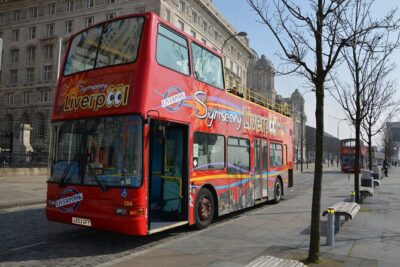 ★ 5.0Liverpool: “Blue Route” – City & Beatles TourFrom $278,562 reviews
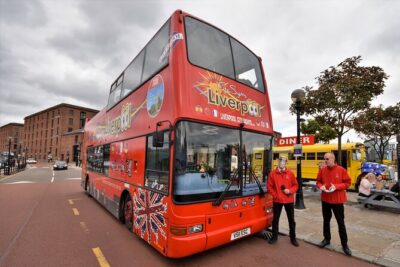 ★ 4.5Liverpool City Sights Hop On Hop Off City Tour – 24hr TicketFrom $192,555 reviews
 ★ 4.0Liverpool: 50-Minute Mersey River CruiseFrom $171,232 reviews
 ★ 5.0Private 3-Hour Guided Beatles Classic Tour of LiverpoolFrom $2771,074 reviews
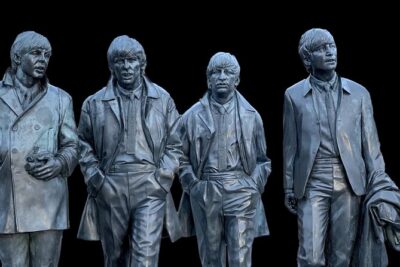 ★ 5.0Mad Day Out Beatles Taxi Tours in Liverpool, EnglandFrom $2081,013 reviews
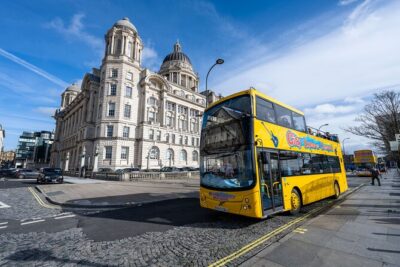 ★ 5.0Ciy Explorer: Hop On Hop Off Liverpool Sightseeing Bus TourFrom $19915 reviews
 ★ 5.0A Walk Through Time: History of Liverpool Walking TourFrom $27911 reviews
 ★ 5.0Liverpool Ghost Walking TourFrom $27862 reviews
Browse the lists this tour appears in