
REVIEW · LIVERPOOL TOURS
Best Of Liverpool Heritage, History & Culture Guided Walking Tour
Liverpool changes when you walk it. This tour is a strong on-foot overview of the city, and I like how it connects maritime Liverpool to the big landmarks you’ll keep seeing on future days. One thing to plan for, you’ll be walking for about 2 hours and 15 minutes on uneven cobbles, so bring comfortable no-slip shoes.
You start in the city center near Bluecoat, then the route gently works its way toward the waterfront before swinging back through the historic core to Mathew Street. It is also the kind of small-group tour where the guide can actually answer questions, and several people highlight that the pace stays friendly even when the day is rainy.
If you want zero flexibility, keep in mind the route can shift for operational reasons, and access to a particular Beatles statue can be restricted on some days. That said, the tour is set up to keep the experience meaningful even when plans change.
In This Review
- Key things that make this Liverpool walk worth it
- Price and time: how the $31.90 fits the value
- The walking flow from Bluecoat to Mathew Street
- Stop-by-stop: the landmarks that turn into a story
- Bluecoat (Stop 1): starting with Liverpool’s culture district
- Liverpool Sailors Home Gateway (Stop 2): a photo with the golden Liver bird
- Henry Street, Ropewalks (Stop 3): why ropes mattered
- Campbell Square and the Bridewell (Stop 4): a jail you might spot inside
- Thomas Steers Way (Stop 5): Liverpool’s first dry dock and the changing selfie sign
- Royal Albert Dock (Stop 6): Titanic in Liverpool, Bill Fury in bronze
- Beatles Statue (Stop 7): quick Fab Four moment, with possible access changes
- The Three Graces (Stop 8): Cunard, Port of Liverpool, and the Liver Building
- Castle Street (Stop 9): medieval connections in the urban layout
- Liverpool Town Hall (Stop 10): the Grade I civic landmark and what came before
- Exchange Flags (Stop 11): WWII role, Nelson Monument, and a courtyard feel
- Derby Square (Stop 12): Liverpool Castle legend and Queen Victoria’s monument
- End at Mathew Street (Stop 13): finish near the Cavern quarter
- Beatles sightings without turning your day into a detour
- Guides make the difference: humor, pace, and quick answers
- What to expect physically and logistically
- Who this tour is best for
- Should you book this Liverpool overview walk?
- FAQ
- How long is the walking tour?
- Where do I meet the guide?
- Where does the tour end?
- Is the tour in English?
- Are there tickets or admissions included?
- Is food or drink included?
- What kind of walking should I expect?
- Can kids, dogs, or service animals join?
- What if weather is bad or I need to cancel?
Key things that make this Liverpool walk worth it
- A local guide with real personality, including humor that people specifically mention
- City center to docks loop, so you understand how Liverpool grew
- Photo moments built in, from the golden Liver bird at the Sailors Home Gateway to the changing Liverpool selfie sign
- Beatles recognition without getting stuck, you pass key sights like the Fab Four statue and finish near Mathew Street
- Mostly flat walking, with no hills or stairs, but you still hit cobbles and uneven ground
- Small group cap (20 travelers), which helps the Q&A stay lively
Other Liverpool days, docks to derby ground
- Liverpool: “Blue Route” – City & Beatles Tour★ 5.0 · 8,562 reviews
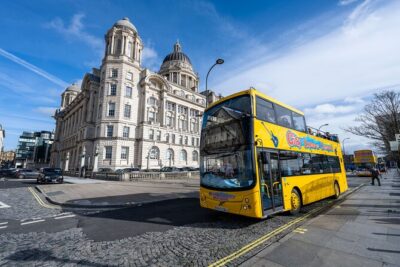
- Liverpool City Sights Hop On Hop Off City Tour – 24hr Ticket★ 4.5 · 2,555 reviews
- Liverpool: 50-Minute Mersey River Cruise★ 4.0 · 1,232 reviews
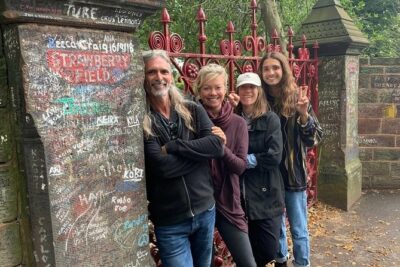
- Private 3-Hour Guided Beatles Classic Tour of Liverpool★ 5.0 · 1,074 reviews
Price and time: how the $31.90 fits the value
At about $31.90 per person for roughly 2 hours and 15 minutes, this feels like good value for a first pass through Liverpool. You are paying for an experienced local guide and a route that hits the “you have to see this” spots without wasting time in traffic.
You also avoid the most common beginner trap in any big city, doing landmarks one by one without the thread that ties them together. Here, the thread is Liverpool’s growth, especially the maritime story that links the waterfront, the docks, and the city’s civic buildings.
No food or drink is included, so treat this as a history and orientation sprint. Plan to grab a proper meal right after, not mid-walk.
The walking flow from Bluecoat to Mathew Street
Meet your guide at the Bluecoat on School Lane (Liverpool L1 3BX), right at the front gates. The tour ends at Mathew Street, a convenient finish point in the city center, where you can continue on your own toward the Cavern quarter.
This matters because it changes how you plan the rest of your day. You can use the tour as your “set the map” moment, then build the rest of your itinerary around what you found interesting most.
The walking format is designed to be manageable for a wide range of people: the tour runs over two hours, with no hills or stairs, but you still want comfortable no-slip shoes for uneven surfaces like cobbles.
Stop-by-stop: the landmarks that turn into a story
Below is what you can expect as you move through the city. Think of it as a highlight route, but with enough detail to help you connect the dots.
Bluecoat (Stop 1): starting with Liverpool’s culture district
You begin in front of the Bluecoat on School Lane. This is a fitting kickoff because it puts you near a place tied to Liverpool’s cultural identity, not just its famous visitors or pop-culture stops.
This first moment is also practical. You get oriented early, and the guide typically uses the start to set the tone: what kind of Liverpool you will be seeing and how the story is going to move through time.
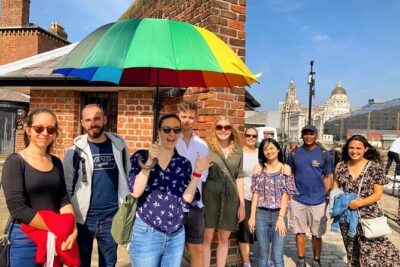
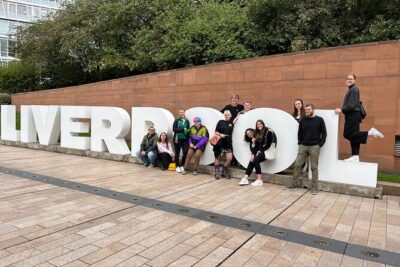
More on foot, at a pace you can hear the guide
Liverpool Sailors Home Gateway (Stop 2): a photo with the golden Liver bird
Next up is the Sailors Home Gateway, a monument honoring the maritime community. You also get a natural photo opportunity with the golden Liver bird.
For me, this stop is the kind of detail that makes Liverpool feel specific. It reminds you the city’s identity is not only built on shipping, but on the people who lived and worked around it.
Henry Street, Ropewalks (Stop 3): why ropes mattered
You then explore Henry Street in the Ropewalks area. The name comes from rope-making for sailing ships, and the guide uses this spot to explain how the maritime supply chain shaped daily life.
This is a great “small but smart” stop. You are not just looking at a street name. You are learning the job it once served.
Campbell Square and the Bridewell (Stop 4): a jail you might spot inside
Campbell Square sits near the Ropewalk district, and it is home to the Bridewell, a converted Victorian gaol. On some departures, you may even get a chance to see inside one of the original cells.
Even when you cannot go inside, this stop works as a reminder that ports bring hardship as well as wealth. The guide’s interpretation here is often where the tour gets more emotional, not just architectural.
Thomas Steers Way (Stop 5): Liverpool’s first dry dock and the changing selfie sign
At Thomas Steers Way, the focus is Liverpool’s first dry dock site. The story is anchored by a large water fountain, plus a quick look down through a port hole.
You also pass the oversized Liverpool selfie sign. The colors can change depending on the season or events, so your photo might look different from someone else’s taken in another month.
If you care about photos, this is one of the easiest places to get a quick shot without slowing the whole group down.
Royal Albert Dock (Stop 6): Titanic in Liverpool, Bill Fury in bronze
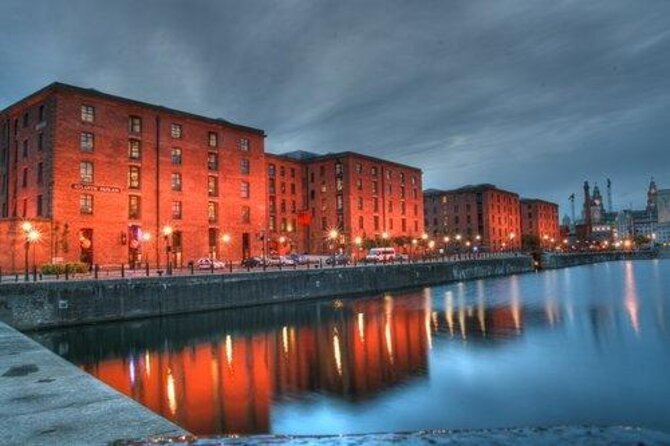
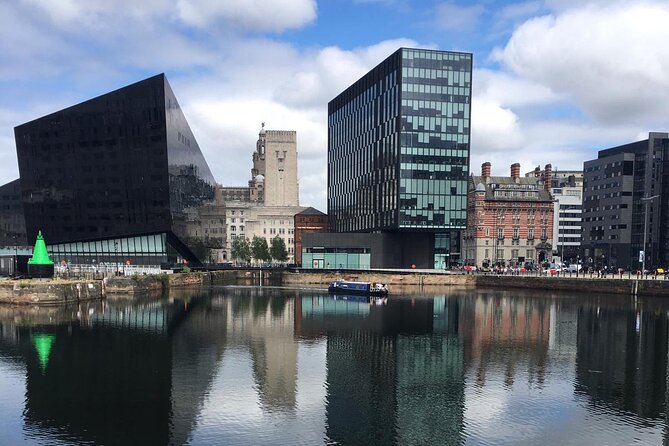
As you move around the waterfront to Royal Albert Dock, you’ll hear how the Titanic story became part of Liverpool’s maritime identity. You’ll also get a comparison of old dock structures and newer architecture nearby.
This stop also includes a bronze statue to Bill Fury, which fans treat like a shrine. The point is not just fame. It is how Liverpool’s music scene grew out of the same working-city energy as its maritime culture.
Beatles Statue (Stop 7): quick Fab Four moment, with possible access changes
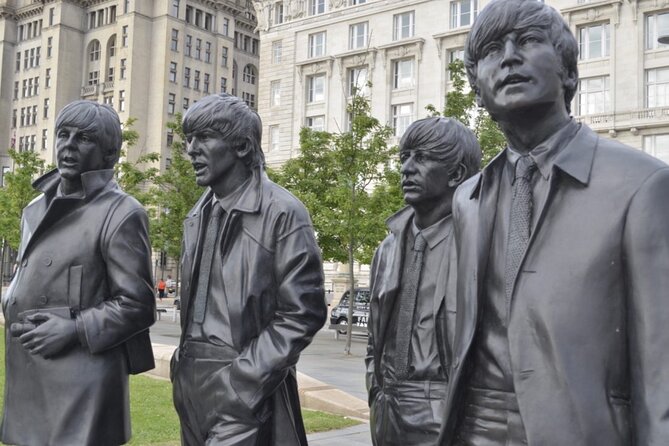
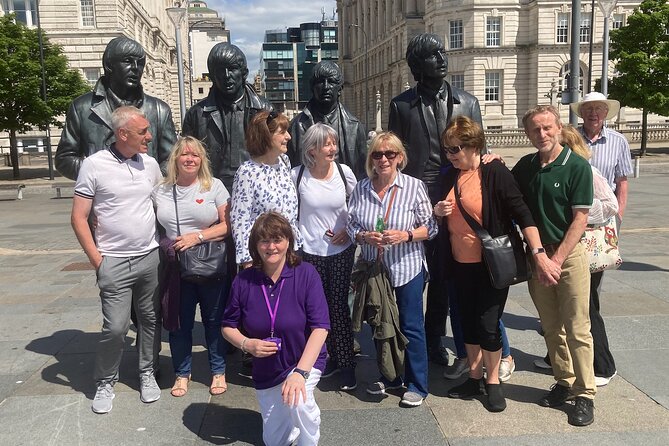
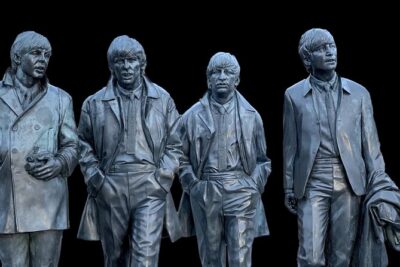
If you are a Beatles fan, this is your chance to grab a selfie with the iconic Beatles Statue. The tour keeps it brief so you do not lose the rest of the cultural loop.
One practical note: on occasion, access to the statue can be restricted, and the tour visits alternative statues instead. So if Beatles statues are the only reason you booked, I would still go. Just know the exact spot may vary.
The Three Graces (Stop 8): Cunard, Port of Liverpool, and the Liver Building
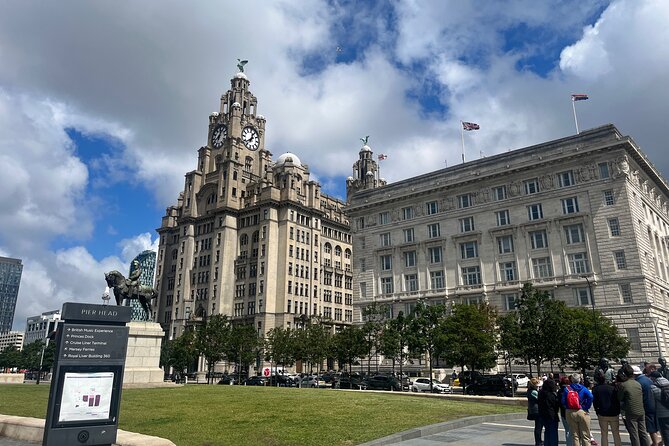
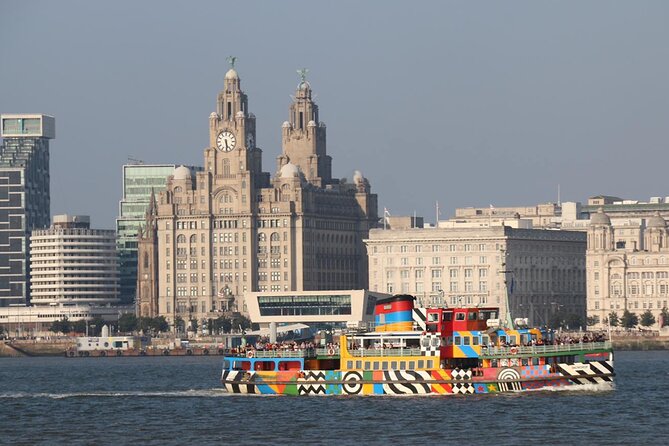
You then see the Three Graces: the Grade II listed Cunard Building, the Port of Liverpool Building, and the Liver Building. The guide connects these buildings to Liverpool’s status as a major port city.
This is where the city’s skyline lesson happens. You start seeing why these structures are used in so many postcards and why Liver Building details keep showing up in local pride.
Castle Street (Stop 9): medieval connections in the urban layout
Walking along Castle Street, you’ll learn how it connects back to medieval times. The street is framed by historic architecture, and it is the kind of area where the guide can explain how earlier centuries shaped modern streets.
A drawback here is simple: this is a walking tour, so if the crowd is heavy or you end up near the back, you might miss small architectural details. Stay closer to the guide if you like to see everything.
Liverpool Town Hall (Stop 10): the Grade I civic landmark and what came before
As you head toward the current Grade I listed Town Hall, you will hear about its predecessors going back to the 1500s. The point is how Liverpool’s civic identity grew alongside its economic power.
This stop helps balance the dock-heavy story. It says Liverpool was not just exporting goods. It was also building institutions.
Exchange Flags (Stop 11): WWII role, Nelson Monument, and a courtyard feel
Exchange Flags brings you into a Grade II listed courtyard area facing the Town Hall. The guide explains an important Second World War role, plus you’ll see the large bronze Nelson monument from the early 1800s.
This is also a good “slow down and look” stop, because the space feels designed for grandeur, not just movement.
Derby Square (Stop 12): Liverpool Castle legend and Queen Victoria’s monument
Passing through Derby Square, you’ll hear about the history of Liverpool Castle that once stood here. The area is now defined by an imposing monument to Queen Victoria.
One consideration: while Derby Square is normally part of the planned route, at least one past outing was reported as missing some itinerary stops. If Derby Square is a must for you, keep your expectations flexible.
End at Mathew Street (Stop 13): finish near the Cavern quarter
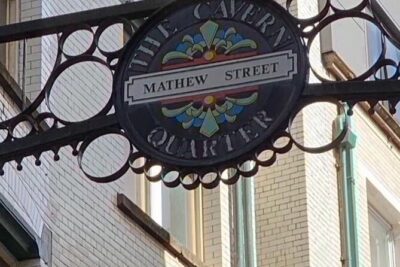
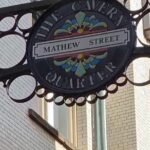
The tour ends at Mathew Street. After you finish, you can continue on your own, especially toward the Cavern Club area.
If you want to go deeper into Beatles history, you have the option to book a Beatles Walking Tour afterward, since this one functions as the bigger overview.
Beatles sightings without turning your day into a detour
This is not a Beatles-only tour, and that is a good thing if you are trying to learn Liverpool as a whole. You get a Beatles Statue photo moment, plus the tour finishes near Mathew Street so you can explore the Cavern quarter at your own pace.
But there are two practical truths to accept. First, the Beatles portion is time-boxed. Second, access to a particular statue can be restricted on some days, with alternatives used.
In exchange, you get more than just band trivia. You see how music culture and working-city life connect in a place like Liverpool, where the docks and the streets tell the same story in different voices.
Guides make the difference: humor, pace, and quick answers
This is the part that comes up again and again in how people describe the experience, and it is easy to see why. The guide is the show, especially on a walking tour where you are close to the person leading you.
Names people highlight include Mike, Carl, Roy, Pam, Allan, Chris, Colleen, Rob, Paul, Mathew, and Michael. Across those guides, the common theme is clear delivery plus an upbeat pace that still leaves room for questions.
I also like that the group size is capped at 20. In practice, that often means you can get quick answers instead of your question getting swallowed by the crowd.
If you are sensitive to hearing, plan to stand where you can hear the guide clearly. One comment I saw called out the lack of audio support, which is a reminder that in windy or busy conditions, positioning matters.
What to expect physically and logistically
This tour is listed for moderate physical fitness. The good news is there are no hills or stairs, and you can expect a manageable walk length.
The tradeoff is surface. Even without stairs, you still have cobbles and uneven ground in places. That is why comfy no-slip shoes are not a suggestion, they are part of making the tour enjoyable.
Also, bring water. The tour recommends you have a bottle with you, and that is smart for both warm days and rainy days when you still end up walking more than you think.
No food or drink is included, so decide where you want your post-tour meal. Mathew Street is a logical place to start looking, since the tour ends right there.
Weather matters too. The experience requires good weather, so if conditions are poor, you may be offered a different date or a full refund.
Who this tour is best for
This tour is ideal if you:
- Have limited time in Liverpool and want a city-center plus docks orientation
- Want a practical route with built-in photo moments
- Like local storytelling, not just reading plaques
- Want Beatles context but also want maritime history and architecture
It may be less ideal if you:
- Want a museum-style, sit-down experience (this is mostly on foot and outdoors)
- Need a perfectly predictable route with no chance of adjustments
- Have trouble with cobblestones, since uneven surfaces are part of the deal
Should you book this Liverpool overview walk?
If you want an easy first day that helps you understand Liverpool’s big themes fast, this is a strong booking. The price is reasonable for the time and local guiding, the route is built to connect docks, city landmarks, and Beatles-adjacent moments, and the guide energy is repeatedly called out as a highlight.
Book it if you like being outdoors, learning as you walk, and leaving with a mental map of how the city works. Skip it or choose a different option if cobblestones are a real issue for you or if you are looking for a full Beatles deep-dive, since this one is the overview play with a Beatles touch.
If you do book, I would arrive ready to listen, take photos quickly, and keep your day flexible in case the exact route or statue access changes. That mindset will make the tour feel smooth, not rushed.
FAQ
How long is the walking tour?
It runs for about 2 hours and 15 minutes.
Where do I meet the guide?
You meet in front of the front gates of the Bluecoat on School Lane, Liverpool L1 3BX.
Where does the tour end?
The tour ends at the entrance to Mathew Street in Liverpool.
Is the tour in English?
Yes, the tour is offered in English.
Are there tickets or admissions included?
Each listed stop is marked as admission ticket free.
Is food or drink included?
No. You will need to plan for food and drink on your own.
What kind of walking should I expect?
There are no hills or stairs, but you will pass through areas with uneven surfaces such as cobbles. Wear comfortable no-slip shoes and bring water.
Can kids, dogs, or service animals join?
Children under 16 must be accompanied by a responsible adult. Well behaved dogs are welcome. Service animals are allowed.
What if weather is bad or I need to cancel?
The experience requires good weather. If it is canceled due to poor weather, you will be offered a different date or a full refund. You can cancel up to 24 hours in advance for a full refund.
More History Led Walks




More Of Liverpool On Foot


More Liverpool, Dock To Kop




Fresh off the notebook in Liverpool
- Welcome to Liverpool Tour – 2 Hour Private Walking Tour
★ 5.0 · 7 reviews - 3 Hours Private City Highlights Liverpool Walking Tour
★ 5.0 · 7 reviews - Football Experience With A Local Host In Liverpool
★ 4.5 · 8 reviews - Liverpool Football Club Museum Entry
★ 5.0 · 10 reviews - The Liverpool Pass®: All top attractions inc. Hop-On Hop-Off Bus Tour | 2-Days
★ 4.5 · 11 reviews - 2-Hour Private Liverpool Walking Tour
★ 5.0 · 12 reviews
Liverpool Tours, compared.
 ★ 5.0Liverpool: “Blue Route” – City & Beatles TourFrom $278,562 reviews
 ★ 4.5Liverpool City Sights Hop On Hop Off City Tour – 24hr TicketFrom $192,555 reviews
 ★ 4.0Liverpool: 50-Minute Mersey River CruiseFrom $171,232 reviews
 ★ 5.0Private 3-Hour Guided Beatles Classic Tour of LiverpoolFrom $2771,074 reviews
 ★ 5.0Mad Day Out Beatles Taxi Tours in Liverpool, EnglandFrom $2081,013 reviews
 ★ 5.0Ciy Explorer: Hop On Hop Off Liverpool Sightseeing Bus TourFrom $19915 reviews
 ★ 5.0A Walk Through Time: History of Liverpool Walking TourFrom $27911 reviews
 ★ 5.0Liverpool Ghost Walking TourFrom $27862 reviews
Browse the lists this tour appears in