
REVIEW · CITY TOURS
Slave Trade Money Trail Tour in the City of London
A City of London walk hits different. This 3-hour Slave Trade Money Trail Tour connects famous landmarks to the money behind the transatlantic slave trade, without hiding how finance helped power an empire. I especially loved the way the guide, Darrel Blake, makes the story feel human, using artefacts and personal connections to keep it real.
I also liked the practical payoff: you get a tour booklet and a set of clear, stop-by-stop locations, so you leave with a mental map you can use later when you see banks and trading buildings again. The main drawback to think about is that this is an emotional, sensitive subject, so if you prefer light sightseeing only, this may feel heavy.
In This Review
- Key takeaways before you go
- A City of London walk that explains the money behind slavery
- Price, time, and what you actually get for $48.01
- Where you start, how the walk flows, and what to expect on timing
- Stop 1, City of London and the financial institutions behind the trade
- Stop 2, the Royal Exchange and why trade needed a venue
- Stop 3, 20 Fenchurch Street and the shipping heart of profit
- Stop 4, Lloyd’s of London and the business of underwriting risk
- Stop 5, Borough Market and everyday goods tied to enslaved labor
- Darrel Blake’s delivery, artefacts, and how he keeps it understandable
- Who should book this money trail tour
- Should you book the Slave Trade Money Trail Tour in the City of London?
- FAQ
- How long is the Slave Trade Money Trail Tour?
- What is the price per person?
- What language is the tour offered in?
- Where does the tour start and end?
- What time does the tour begin?
- What is included in the tour price?
- Is lunch or bottled water included?
- Is admission included for all stops?
- What if the weather is bad?
- Is there free cancellation?
Key takeaways before you go
- A money-first route through the City’s financial district, not just general history
- Small group size (up to 30) that supports questions and discussion
- Tour booklet included, so the walk keeps giving after the last stop
- Darrel Blake’s style combines clear explanations with artefacts and personal perspective
- Five stops in about 3 hours, moving through Bank, the Royal Exchange area, and Southwark
- One stop requires an extra bite out of your wallet (Borough Market admission is not included)
More city runs, half day and full
- City Sightseeing London Hop-On Hop-Off Bus Tour & Bookable Extras★ 4.0 · 1,224 reviews
- Eating London: The Heart of ‘The City’ Food Tour★ 5.0 · 206 reviews
- Go City London Explorer Pass: 2-7 Things To do including Shard★ 3.5 · 155 reviews
- London Best of the City Fully Customized Guided Private Tour★ 5.0 · 146 reviews
A City of London walk that explains the money behind slavery
The City of London can feel like a world of polished stone, big institutions, and efficient routines. This tour flips that vibe by asking a tough question: who made money, how did the money move, and what did it build? Instead of treating the slave trade as a faraway chapter, you trace how trading, finance, and shipping systems were tied to slavery from the 17th to the 19th centuries.
What makes the experience stand out is the framing. You are not just learning that slavery existed. You are learning how profits traveled through places that still look important today, like Bank-area institutions and famous exchange buildings. That shift, from distant history to recognizable infrastructure, is what makes the tour stick.
And yes, you should expect a sobering tone. This is social justice and human-rights territory, not a breezy museum outing. The upside is that you come away with clearer context for the modern city, especially when you start noticing how power and inequality grew alongside wealth.
Price, time, and what you actually get for $48.01
At about $48.01 per person for roughly 3 hours, this is priced like a “real guided experience,” not a casual street talk. For me, the value comes from the structure. You get five focused stops, a guide throughout, and a tour booklet to support what you hear on the sidewalk.
If you compare it to paying for tickets to museums and then still missing the story threads between locations, this kind of route can feel like a bargain. You are effectively getting a guided explanation of how major City sites connected to the transatlantic slave trade, plus the context to interpret what you are seeing in the moment.
What I’d watch is this: it is not a full day, and there is no lunch included. So you may want to plan food before or after, especially since the walk ends at Borough Market where it is easy to grab something on your own.
Where you start, how the walk flows, and what to expect on timing
You meet at The Royal Exchange at 12:00 pm, then the tour finishes at Borough Market. The schedule is designed for a steady walking pace with short on-site discussions at each stop. You should plan for about five stops total, with time allocated at each location rather than nonstop narration.
The tour uses a mobile ticket, and it is offered in English. It also runs with good weather required, so if the forecast looks miserable, check in so you are not caught off guard. You are also near public transportation, which helps if you want to make the rest of your day work smoothly.
Finally, the group max is 30 travelers. That matters more than it sounds. It usually means you can hear the guide, ask questions, and stay engaged rather than getting lost in a crowd.
Stop 1, City of London and the financial institutions behind the trade
Your first stop takes you into the Bank area of the City of London, where the story starts with finance. This is not generic “London got rich” talk. You focus on the financial institutions that were entangled in the transatlantic slave trade, and that changes the meaning of what you normally see around Bank and nearby streets.
Here’s why this first segment is smart: it sets the theme for the rest of the walk. When you later reach exchange buildings and shipping-connected areas, you already understand the role of money moving through systems, not just goods moving across oceans.
Practical note: the stop time is short, so listen for the guide’s key connections. This part is your foundation, and you’ll get more out of later stops if you track the “how” as you go.



Stop 2, the Royal Exchange and why trade needed a venue

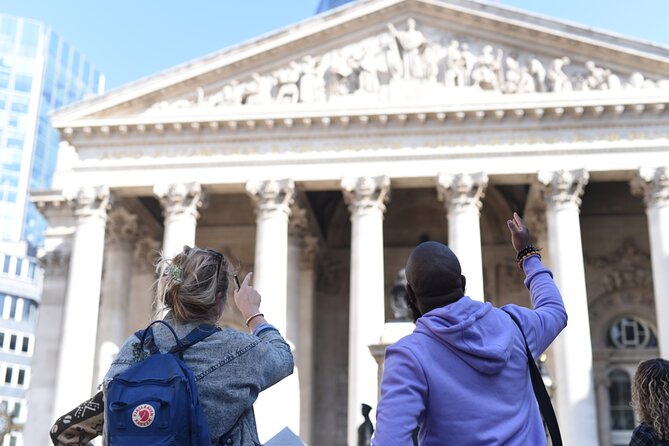
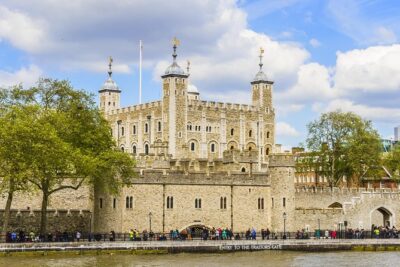
Next up is The Royal Exchange building, a landmark many people recognize from photos, events, or quick pass-throughs. Here, the emphasis is on how this grand center of commercial life helped facilitate the transatlantic slave trade.
What I like about using a place like the Royal Exchange is that it teaches you to read architecture like a historical document. The building is about business, agreements, and movement. In the tour’s framework, those same mechanics shaped the economic environment where slavery profits became part of mainstream commerce.
If you tend to enjoy history but get impatient when stories stay abstract, this stop helps. You are standing in a physical place while the guide connects it to a specific historical system. That combination makes the topic less like a lecture and more like interpretation.
Stop 3, 20 Fenchurch Street and the shipping heart of profit
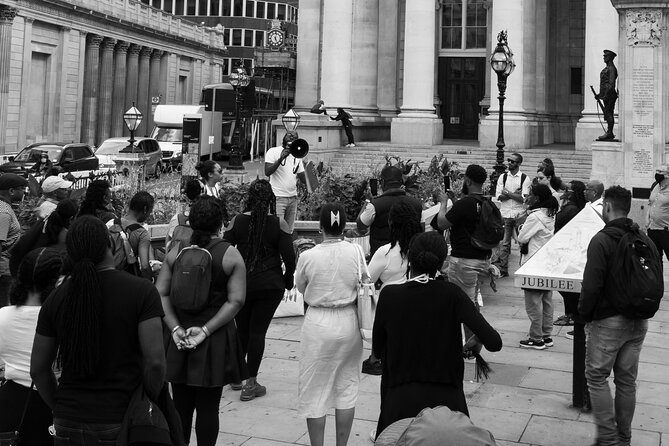
At 20 Fenchurch Street, you shift from the exchange world into the shipping and shipping-linked side of London’s economy. This stop focuses on the area’s deep historical ties to shipping, including the idea that major companies that profited from the trade were headquartered here.
This is a valuable pivot because it adds another layer: slavery was not only driven by forced labor and plantations. It also depended on the whole logistics chain that moved goods and enabled business to scale.
One reason this stop works well is that it connects the dots between visible City landmarks and the less obvious infrastructure behind them. Fenchurch Street may look like just another financial street to you at first. The tour asks you to see it as part of a network that made the trade profitable and repeatable.
Stop 4, Lloyd’s of London and the business of underwriting risk
Then you reach Lloyd’s of London, where the focus is on the role an iconic institution played in underwriting the transatlantic slave trade.
If you have ever wondered how high-risk ventures get financed, this is where your brain starts clicking. Insurance and underwriting might sound boring on paper, but historically they were the glue that helped large-scale trade happen. By treating underwriting as a tool, not just a policy function, the tour makes the connection between modern finance and older systems of exploitation feel direct.
This stop also tends to keep people engaged because it reframes a familiar brand. Even if you walk past Lloyd’s a dozen times, it helps to understand what kinds of commercial risk systems were tied to the slave trade.
Stop 5, Borough Market and everyday goods tied to enslaved labor
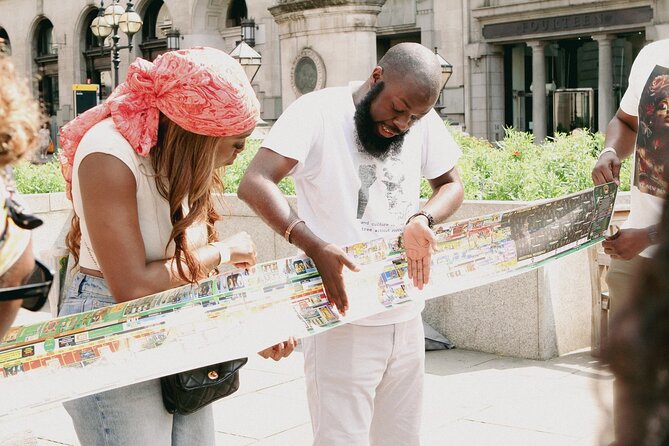
Your final stop is Borough Market in Southwark. Here, the story shifts again, from finance and shipping to the goods themselves. You explore how this historic trading hub connects to items produced by enslaved labor, including sugar and tobacco.
This stop is powerful because it reminds you that slave-produced goods were part of trade and everyday consumption patterns. The tour also emphasizes the contrast: Borough Market is a tourist attraction and a lively place to shop, yet it sits on a network of trading with a dark historical connection to African exploitation.
Important practical detail: admission to this stop is not included. So budget for that extra cost if you want the full Borough Market component.
Also plan for your end-of-tour moment. Since the tour ends here, it is a good place to decompress and grab food if you planned ahead, even if lunch is not included in the tour price.
Darrel Blake’s delivery, artefacts, and how he keeps it understandable
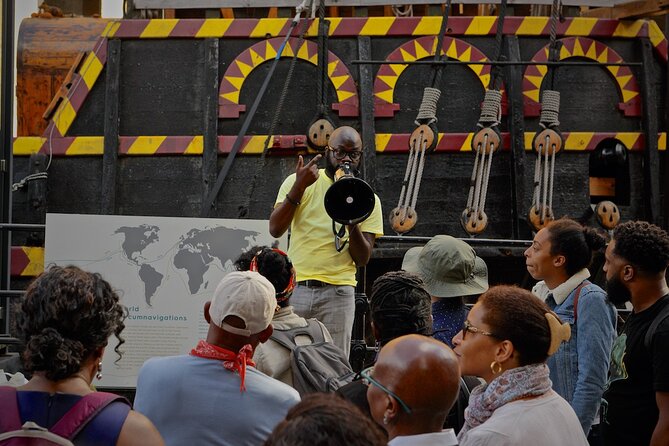
A huge part of this tour’s impact is the guide. Darrel Blake runs it with clear explanations and passion, and the way he handles a painful topic is a big reason people keep recommending the experience.
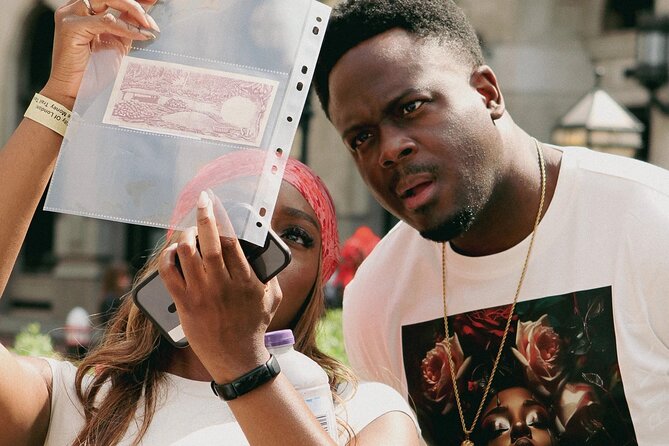
From what you can expect, Darrel does more than list dates. He uses personal perspective and may bring artefacts into the discussion, which helps the story move from concept to something you can picture. He also encourages participation, which can make you feel like you are in the learning process rather than being talked at.
One technique that seems to work well is how he checks understanding as you go. Instead of waiting until the end, he helps you track what you just learned and what it means. That keeps the walk from becoming background noise, especially if you are the type who tends to zone out during city tours.
And because the subject is sensitive, his tone matters. This is not a history-only exercise. It’s about understanding ongoing impact, and you will likely feel that in the questions people ask and the way the discussion lands at each stop.
Who should book this money trail tour
This tour fits best if you like history but want something more grounded than museum facts. I’d especially recommend it if you enjoy:
- seeing how systems of commerce worked, not just who fought or who ruled
- learning how major landmarks connect to bigger economic stories
- tours that leave you with a practical way to interpret the city after you go home
It also makes sense if you are interested in social justice and human rights, because the tour doesn’t treat slavery as a closed chapter. It ties the money trail to consequences that shaped London’s development and social power.
On the flip side, if you want a light, feel-good walk through iconic spots, this may not be your best match. You should come prepared for emotion and discomfort.
Should you book the Slave Trade Money Trail Tour in the City of London?
I think you should book it if you want a focused, guided way to understand how the City of London’s financial landmarks connect to the transatlantic slave trade. The combination of five concrete stops, a tour booklet, and Darrel Blake’s interactive, artefact-supported delivery makes the experience feel more than just a list of locations.
I’d skip it only if you strongly prefer entertainment-style sightseeing, because the topic is serious and can hit hard. Otherwise, it is a smart use of an afternoon. You’ll walk through familiar London streets and leave with a sharper, more honest mental map of what helped build the city you see today.
FAQ
How long is the Slave Trade Money Trail Tour?
The tour lasts about 3 hours.
What is the price per person?
The price is $48.01 per person.
What language is the tour offered in?
The tour is offered in English.
Where does the tour start and end?
It starts at The Royal Exchange, London EC3V 3LL, UK and ends at Borough Market, London SE1 9AL, UK.
What time does the tour begin?
The start time is 12:00 pm.
What is included in the tour price?
The tour includes a tour guide and you receive a tour booklet.
Is lunch or bottled water included?
No. Lunch and bottled water are not included.
Is admission included for all stops?
Admission is free for stops 1 through 4. Admission for Borough Market (stop 5) is not included.
What if the weather is bad?
The experience requires good weather. If it is canceled due to poor weather, you will be offered a different date or a full refund.
Is there free cancellation?
Yes, you can cancel for free up to 24 hours in advance for a full refund.
More City Runs In London






Fresh off the notebook in London
- Private Rock ‘n’ Roll Music Tour of Central London
★ 5.0 · 7 reviews - London Walking Tour: Camden Town Photography Walkabout
★ 5.0 · 7 reviews - Private Transfer from London accommodation to Cruise terminal
★ 5.0 · 7 reviews - Amazing Nightlife in London East Tour
★ 4.5 · 7 reviews - The British Museum: a highlights tour with a TV historian
★ 5.0 · 7 reviews - Heathrow Airport to Cambridge private taxi transfers
★ 5.0 · 7 reviews
City Tours, compared.
 ★ 5.0Liverpool: “Blue Route” – City & Beatles TourFrom $278,562 reviews
 ★ 5.0The Manchester City Stadium TourFrom $354,176 reviews
 ★ 4.5Liverpool City Sights Hop On Hop Off City Tour – 24hr TicketFrom $192,555 reviews
 ★ 4.51.5-hour Oxford City and University Walking TourFrom $381,383 reviews
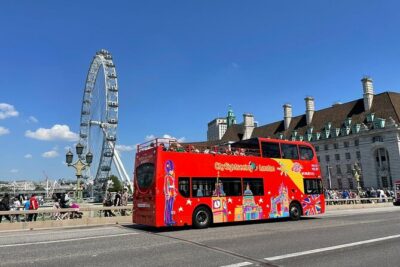 ★ 4.0City Sightseeing London Hop-On Hop-Off Bus Tour & Bookable ExtrasFrom $371,224 reviews
 ★ 5.0Oxford Official University & City TourFrom $411,134 reviews
 ★ 4.5City Sightseeing Oxford Hop-On Hop-Off Bus TourFrom $271,042 reviews
 ★ 4.5Roman Baths and Bath City Walking TourFrom $35762 reviews
Browse the lists this tour appears in