
REVIEW · CITY TOURS
The Roman City of St Albans Private Tour
Roman St Albans is a time machine. What makes this day plan so interesting is the mix of Roman remains and major St Albans Cathedral time, all led by a personal guide who can bring the stories to life, including guides like Kevin. The second big win for me is the comfort of hotel pickup and round-trip transport, so you are not wrestling London transit first thing. One drawback to consider: at $377.07 per person, it is best if you really want guided depth, not just a quick look around.
This is a private setup, and it moves with purpose. In about six hours you hop from the Holy Well and Roman walls to a top-tier Roman floor mosaic, then keep going into Anglo-Saxon and medieval sites, plus a WWI reminder and time to roam the town center.
Plan for a couple of practical extras. Food and drinks are not included, and while transport is built in, train fare is listed separately as about £15, so budget for that on the day. Also, smart casual matters for the cathedral area.
In This Review
- Key Things I’d Focus On Before You Go
- Roman St Albans, Close Enough for a Half-Day Reset
- Hotel Pickup to St Albans: How the Day Gets Easier
- Holy Well to Roman Walls: The Roman Story Starts Early
- Hypocaust and Roman Mosaic: When Roman Tech Meets Art
- St Michael’s Church and the Roman Theatre: From Saxon Roots to Roman Public Life
- St Albans Cathedral: The Big Religious Pivot in the Story
- Ye Olde Fighting Cocks and the Market Break: A Real Town Interlude
- WWI Memory and the Great Gateway: Two Quick Stops With Strong Meaning
- Price and Logistics: When $377.07 per Person Feels Worth It
- What to Wear, Bring, and Expect During the Six-Hour Run
- Is This Tour Right for Your Style of Travel?
- Should You Book the Roman City of St Albans Private Tour?
- FAQ
- What time does the tour start?
- How long is the St Albans private tour?
- Is hotel pickup and drop-off included?
- Are entry tickets included?
- Is food included?
- Is there a dress code for St Albans Cathedral?
- What is the cancellation policy?
Key Things I’d Focus On Before You Go
- Hotel pickup and drop-off saves time and stress on a half-day schedule.
- Kevin-style guiding tends to turn footnotes into real street-level stories.
- Roman mosaic plus hypocaust gives you both art and engineering in one run.
- St Albans Cathedral and abbey story connect Roman origins to later English history.
- Museum time means you can see what was found right there, not just what is left standing.
- Town breaks built in so you can reset with pubs and the market when you need a breather.
More city runs, half day and full
- City Sightseeing London Hop-On Hop-Off Bus Tour & Bookable Extras★ 4.0 · 1,224 reviews
- Eating London: The Heart of ‘The City’ Food Tour★ 5.0 · 206 reviews
- Go City London Explorer Pass: 2-7 Things To do including Shard★ 3.5 · 155 reviews
- London Best of the City Fully Customized Guided Private Tour★ 5.0 · 146 reviews
Roman St Albans, Close Enough for a Half-Day Reset
St Albans is one of those places that feels like it belongs in your London trip, not a separate ordeal. You get Roman-era bones, Saxon-era threads, and medieval landmarks, all within a compact area. The best part is that you are not doing this as a scavenger hunt. Your guide keeps the day coherent, so the ruins and church spaces make sense as you walk.
I like that the day is built around both the visible past and what the local sites preserved. You are not only seeing stones. You are also getting the interpretive layer through museum objects and guided explanations.
And yes, the schedule is full. That is a good thing if you like variety and hate wasting time. It can feel like a lot if you prefer long museum stays or slow, unstructured wandering.
Hotel Pickup to St Albans: How the Day Gets Easier
This tour is designed for ease from your London hotel. You start at 8:30 am, and the plan includes hotel pickup and drop-off, which matters because St Albans is close, but not close enough to treat lightly when you are juggling time.
The tour is listed as offered in English, and it includes a mobile ticket. That is one less thing to manage on the day. It also runs in all weather conditions, so bring a jacket you can stand up to, plus shoes that handle uneven ground around old sites.
One more comfort point: the experience is private, so it is just your group. That can help with pacing. If you need a short pause, your guide can usually work around it, rather than keeping a big bus group in sync.
Holy Well to Roman Walls: The Roman Story Starts Early
You kick off at Holy Well, where the legend mixes religion, healing water, and Arthurian myth. The Holy Well is described as being visited by the martyr himself, and the waters are linked to revitalizing an elderly Uther Pendragon before a battle, with the note that Arthur is Uther’s legendary son.
Even if you treat this as folklore, the site works because it anchors the Roman-to-Christian thread early. You get a sense that people kept returning to particular sacred spots over centuries. That theme keeps showing up in St Albans.
Next comes Verulamium Park, which sits right on top of the earlier Roman city. This is not just a pleasant green space. It is a practical reminder that the Roman city is not “somewhere else.” It is under your feet, and the later city grew on top of it.
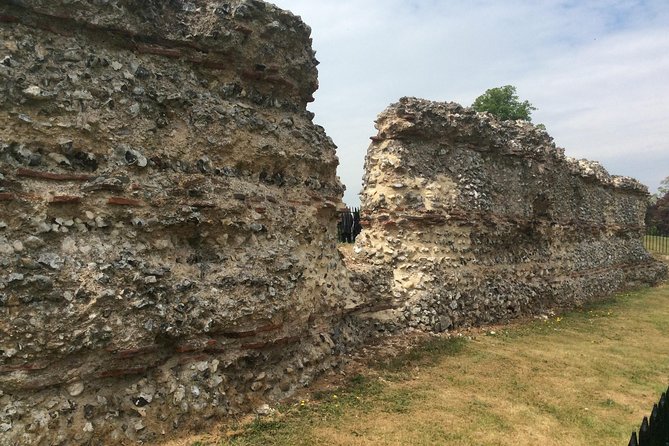
You then see Roman walls of St Albans. The time here is short, but the value is high. Roman city walls help you understand scale, defense, and how a real town functioned. A few surviving sections can do a lot of teaching when your guide explains what you are looking at.
Hypocaust and Roman Mosaic: When Roman Tech Meets Art
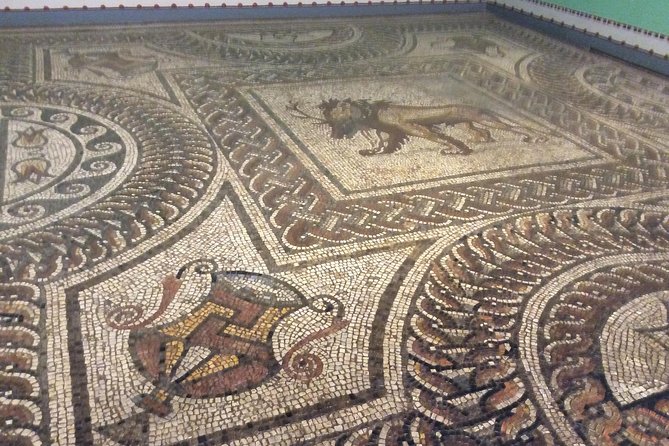
If you like Roman engineering, this stop sequence is built for you. You go to the Hypocaust & Roman Mosaic site, with a focus on the mosaic floor described as one of the finest Roman mosaic floors in Britain.
A hypocaust is the Roman way of heating buildings, and that matters because it is practical, not just decorative. Roman daily life depended on technology like this. Seeing the hypocaust material up close helps you picture comfort as a design goal, not a modern luxury.
Then you move onward, with the day continuing before the “wow factor” fades. That pacing is smart. Many people visit Roman sites, admire them, and then forget what they just saw once they hit the next stop. Here, your guide keeps the Roman theme running, so the technical detail and the artwork land together.
One consideration: time at each stop is tight. You do get meaningful access, but you will not have hours to linger at one floor or one wall. If you are the kind of visitor who loves slow reading, build in a mindset of quick hits, then save your questions for your guide.
More private departures, group size noted




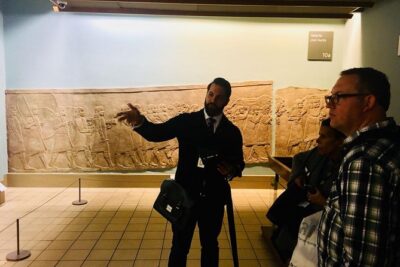
St Michael’s Church and the Roman Theatre: From Saxon Roots to Roman Public Life
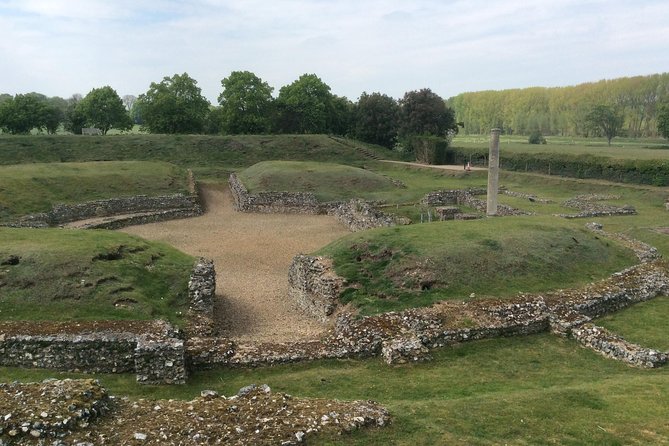
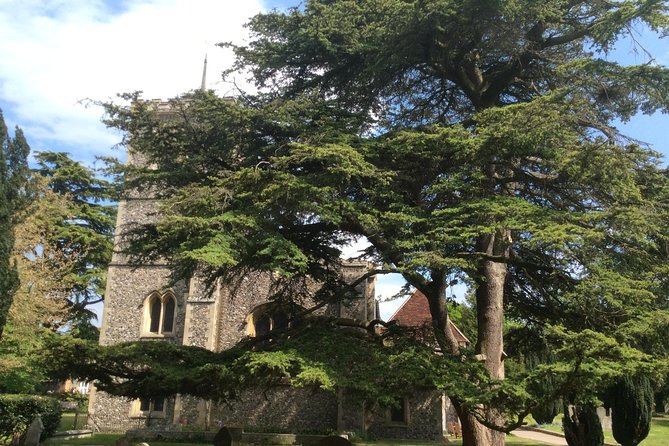
After the Roman core, you shift into the St Michael’s Church stop. It is described as about 1,000 years old, with Anglo-Saxon origin, and it is still used today. That “still used” part is important. You are not just walking through a historical set. You are stepping into a living place, which changes the tone of the whole day.
Next up is the Roman Theatre of Verulamium. You get the ruins plus old shops tied to the theatre setting. The teaching value here is that Roman towns were not only temples and roads. They included entertainment spaces and areas for commerce, all stitched into one urban fabric.
Then you get a longer block at the Verulamium Museum, where you can see Roman objects found in the park and city around St Albans. This museum time is the ideal counterbalance to walking outside. When you see fragments in the ground-level context, the museum helps you connect them to complete items and explained histories.
St Albans Cathedral: The Big Religious Pivot in the Story
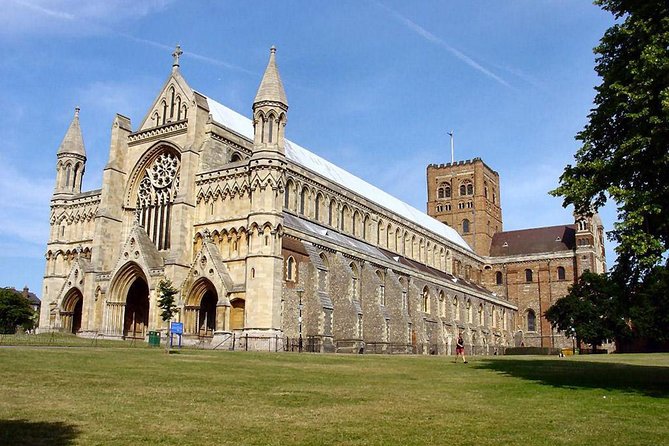
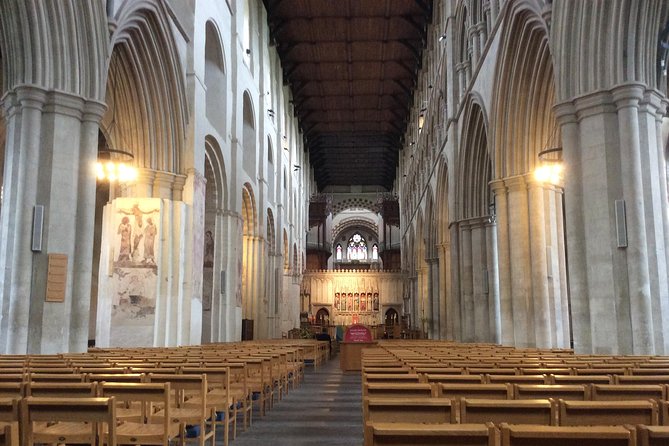
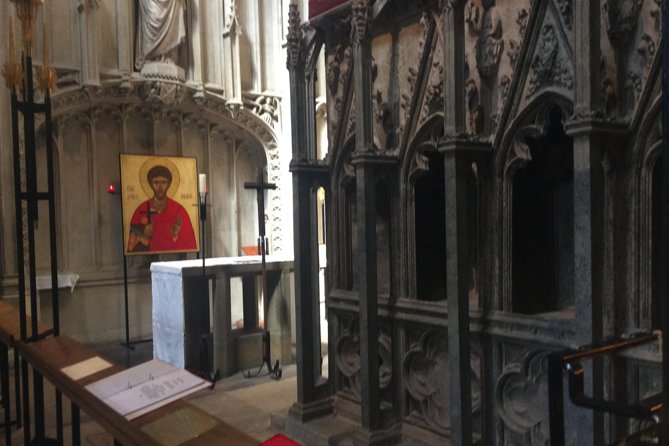
St Albans Cathedral is a major anchor of the day, and it gets the longest single cathedral block at 1 hour 20 minutes. It is included, and the focus is twofold: the story of the first Christian martyr from Roman times, and the cathedral itself as one of the finest in Europe, once an important abbey and pilgrimage site until the era of King Henry VIII.
If your interest runs to religious history, this is where the day clicks into a larger national narrative. You go from Roman civic remains and domestic tech to a major Christian center that shaped how people understood faith across centuries.
Practical note: there is a dress code for entrance into the abbey cathedral, listed as smart casual. You do not need formal wear, but you should dress like you mean to be inside a church, not like you are on a pub crawl.
Also, time here is ample enough to sit for a moment. Use it. Let your brain slow down after the walking and ruins.
Ye Olde Fighting Cocks and the Market Break: A Real Town Interlude
History days can become one long museum sprint. This plan adds a few breaks that help St Albans feel like a place, not a theme park.
You stop at Ye Olde Fighting Cocks, described as a contender for the oldest pub in Britain, serving patrons and pilgrims since not long after the Romans. That is the kind of claim that is hard to prove in a casual guidebook way, but as a vibe check it works. You are in the right neighborhood if you want to feel how locals have lived alongside old buildings.
You also have time for St Albans Market, though it may not run every day. Even when it is not in full swing, you still get the sense of the town center at street level, which is where the day turns from “tour” into “you are here.”
And you finish with St Albans city centre time, roughly 1 hour, which helps you either snack, browse, or just walk off the last leg of ruins fatigue.
WWI Memory and the Great Gateway: Two Quick Stops With Strong Meaning
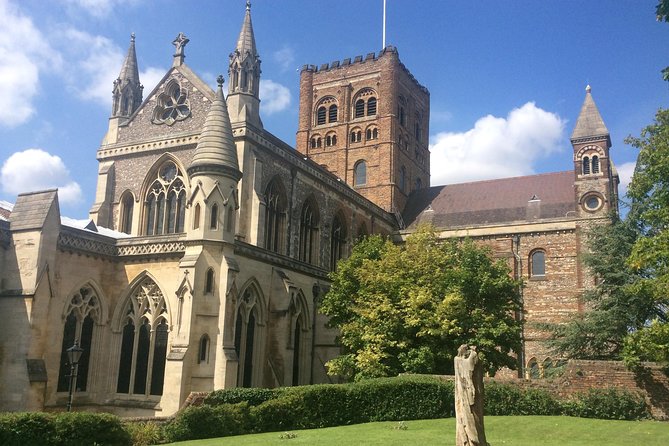
Two smaller stops add extra emotional variety to the day.
First is the Verdun Tree, a piece of living history from WWI. It is only a short stop, but it helps you remember that St Albans did not only trade in Roman and medieval stories. It also carries modern remembrance.
Then you see The Great Gateway of the Monastery, described as an impressive gatehouse with history and a hidden-gems feel. Even if you only stand for a few minutes, a gateway is a powerful type of structure. It tells you where entry mattered and where community boundaries were drawn.
Finally, you may pass by or briefly view the St Albans Clock Tower, built in 1403, and noted as the only free-standing belfry in Britain. Even with a short stop, it gives you a neat medieval punctuation point at the edge of the market area.
Price and Logistics: When $377.07 per Person Feels Worth It
Let’s talk value. At $377.07 per person, this is not a budget day trip. You pay for several things that add up:
- Private guiding: one group, one guide pace.
- Pickup and drop-off: you are saving time and likely money versus arranging transit yourself.
- Entry tickets included: several sites are explicitly included.
- A structured route: you are not figuring out what to see, in what order, and how long each place realistically takes.
Where the price can feel heavy is if you only want one or two major sights, or if you are traveling solo with low interest in guided storytelling. In that case, independent travel might be cheaper.
But if you like Roman engineering, want museum context, and also care about St Albans Cathedral as a historical anchor, the guided format can be a smart buy. The reviews tied to this tour also highlight how much a strong guide can change the day. If you get someone like Kevin, you get enthusiasm plus a lot of facts tied directly to what you are seeing.
One logistics item to keep in mind: return train fare is about £15 and food and drinks are not included. So your real total might be a bit higher than the headline price. Still, you are likely buying convenience here more than pure sightseeing time.
What to Wear, Bring, and Expect During the Six-Hour Run
This is an all-weather tour, and old sites tend to mean uneven ground. Wear walking shoes you can trust. Bring a light rain layer even if the forecast looks decent, because you will be outside for multiple stops.
Bring a small bag for water and snacks. Food and drinks are not included, and you will appreciate having something in your pocket, especially since the schedule includes multiple transitions between sites.
For the cathedral entrance, plan smart casual. If you are unsure, choose a conservative outfit that still feels comfortable enough to walk in for hours.
Timing also matters. With the tour starting at 8:30 am, it is not a late breakfast kind of outing. If you are the type who likes to ease into the day, set an alarm and make peace with early start energy.
Is This Tour Right for Your Style of Travel?
You will likely enjoy this tour most if you:
- want a guided day that links Roman, Saxon, and medieval layers in a single storyline
- enjoy Roman details like hypocaust systems and mosaic floors, not just big “ruins photos”
- care about seeing major landmarks like St Albans Cathedral with context
- prefer door-to-door comfort from your London hotel
You might skip it if you:
- only care about one or two sites and hate set schedules
- have little interest in churches and religious history
- want to spend long stretches at museums, because this day balances many stops rather than staying deep in one place
Should You Book the Roman City of St Albans Private Tour?
If you want a structured, guided day that covers Roman St Albans and then pushes into Cathedral and town life, this private tour makes sense. The combination of Roman engineering and mosaic time, a museum that connects objects to the site, and a cathedral visit long enough to absorb it, is a strong package.
At $377.07 per person, I would book it when you value convenience, guided interpretation, and you are ready for a full but satisfying walking route. If you want a cheaper DIY day, or you only want a single highlight, you might compare options. But for a “near London, really ancient” day with expert explanation, this is the kind of half-day plan that pays off.
FAQ
What time does the tour start?
The tour starts at 8:30 am.
How long is the St Albans private tour?
The duration is about 6 hours.
Is hotel pickup and drop-off included?
Yes, hotel pickup and drop-off are included.
Are entry tickets included?
Yes, entry tickets are included for the stops marked as included in the tour.
Is food included?
No, food and drinks are not included.
Is there a dress code for St Albans Cathedral?
Yes. For entrance into the abbey cathedral, the dress code is smart casual.
What is the cancellation policy?
You can cancel for free up to 24 hours in advance for a full refund.
More Private Departures






More City Runs In London






Fresh off the notebook in London
- Private Rock ‘n’ Roll Music Tour of Central London
★ 5.0 · 7 reviews - London Walking Tour: Camden Town Photography Walkabout
★ 5.0 · 7 reviews - Private Transfer from London accommodation to Cruise terminal
★ 5.0 · 7 reviews - Amazing Nightlife in London East Tour
★ 4.5 · 7 reviews - The British Museum: a highlights tour with a TV historian
★ 5.0 · 7 reviews - Heathrow Airport to Cambridge private taxi transfers
★ 5.0 · 7 reviews
City Tours, compared.
 ★ 5.0Liverpool: “Blue Route” – City & Beatles TourFrom $278,562 reviews
 ★ 5.0The Manchester City Stadium TourFrom $354,176 reviews
 ★ 4.5Liverpool City Sights Hop On Hop Off City Tour – 24hr TicketFrom $192,555 reviews
 ★ 4.51.5-hour Oxford City and University Walking TourFrom $381,383 reviews
 ★ 4.0City Sightseeing London Hop-On Hop-Off Bus Tour & Bookable ExtrasFrom $371,224 reviews
 ★ 5.0Oxford Official University & City TourFrom $411,134 reviews
 ★ 4.5City Sightseeing Oxford Hop-On Hop-Off Bus TourFrom $271,042 reviews
 ★ 4.5Roman Baths and Bath City Walking TourFrom $35762 reviews
Browse the lists this tour appears in