
REVIEW · BIRMINGHAM AND THE MIDLANDS
Birmingham City Centre Daily Walking Tour (10:30am & 2pm)
Birmingham history is easier to read on foot. I like how this walk strings together major city landmarks with clear context, and I love the storytelling tone that makes famous names feel connected to real streets. One possible drawback: most stops are quick exterior looks, so if you want lots of inside time, you will need to add those separately.
You get a tight route in about 1 hour 30 minutes, paced for an easy city-centre stroll with a small group size (up to 20). Guides you may hear about include Phil, Dee, Peter, Richard, and Carlos, and the common thread is local color plus humor. In my view, it is one of the best ways to get your bearings fast before you start choosing where to spend extra time.
In This Review
- Key highlights and practical takeaways
- Birmingham City Centre in 90 Minutes, with a Small-Group Guide
- Where the Walk Starts (Cathedral Square) and How It Ends (Ikon Gallery)
- Cathedral Square to St Philip’s Cathedral Garden: The Story Starts with Stone
- Victoria Square and Town Hall: Victorian Ambition and Big Doors
- Birmingham Museum & Art Gallery: Learning to Spot Birmingham Artists
- Chamberlain Square and Centenary Square: World Wars, Then Modern Birmingham
- Hall of Memory, Baskerville House, and Broad Street’s Walk of Fame
- Symphony Hall Canals and Ikon Gallery’s Neo Gothic Finish
- Value for Money: What $19.41 Buys You (and What It Does Not)
- Timing, English Pacing, and Weather Reality
- Who Should Book This Birmingham Walking Tour?
- Should You Book This Walking Tour of Birmingham?
- FAQ
- How long is the Birmingham City Centre Daily Walking Tour?
- Where does the tour start and where does it end?
- What language is the tour offered in?
- Are tickets for the stops included?
- What group size should I expect?
- What is the cancellation policy?
Key highlights and practical takeaways
- Small-group feel, fast city orientation so you understand where you are before you go wandering.
- A timeline of Birmingham from cathedral squares through Victorian streets into modern squares and memorials.
- Landmarks vehicles cannot reach meaning you get a more walkable, street-level view of the center.
- Iconic stops with mixed eras including Birmingham Town Hall, Broad Street, and Ikon Gallery.
- Some sights need extra tickets while others are free to enjoy from the outside.
- Guide energy matters and pace can feel quick on an especially cold, windy day.
More Midlands walks, canals and all
- Birmingham Walking Tour: Canals, Victorians & Today (1:30pm)★ 5.0 · 346 reviews
- Discovering Birmingham 2 hour Walking Tour to the Jewellery Quarter★ 5.0 · 333 reviews
- Birmingham Slogging Gangs Walking Tour with Edward Shelby★ 4.5 · 306 reviews
- Birmingham City Centre Daily Walking Tour (10:30am & 2pm)★ 5.0 · 265 reviews
Birmingham City Centre in 90 Minutes, with a Small-Group Guide
This tour is designed as a starter course. It lasts about 1 hour 30 minutes, so you can fit it on a travel day without sacrificing your whole schedule. The group is capped at 20 people, which usually helps keep the walk interactive instead of turning into a long lecture.
I like the practical rhythm: you move between landmarks every few minutes, then get a focused explanation while you are standing in the right place. That matters in Birmingham, where the city has layers, and details in the architecture can change the story completely. The pace is also a plus if you are balancing older legs, kids in tow, or simply jet lag.
The main tradeoff is that it is not a museum sprint with long interior visits. You will learn a lot in a short amount of time, but you are not meant to read every plaque or sit through every exhibit. Think of it as the map you want in your head before you decide what to explore in depth.
Where the Walk Starts (Cathedral Square) and How It Ends (Ikon Gallery)
The walk begins at Birmingham Cathedral, Cathedral Square, Colmore Row, Birmingham B3 2QB, and ends at Ikon Gallery, 1 Brindley Pl, Oozells Sq, Birmingham B1 2HS. The finish is a smart move. It is not a random return point, it is a change of scenery, with a modern stop that still nods to older styling.
Finding the start can be slightly annoying, because the meeting spot markings can change. One helpful tip from the field is to look for a Ferris wheel in Cathedral Square rather than relying on a flagpole that may not be there anymore. If you arrive early, take a minute to check the exact guide location on the mobile ticket.
Transportation is an easy win. The tour is described as being near public transit, and for walking around the centre it is simply less stressful when you start and end in major hubs.
Cathedral Square to St Philip’s Cathedral Garden: The Story Starts with Stone
The first stop, Cathedral Square, is your launchpad. You get an introduction to Birmingham’s history right in the shadow of Birmingham Cathedral. This works well because it sets the tone for the rest of the walk. Instead of hopping randomly between buildings, you understand why certain places became important.
Next comes St Philip’s Cathedral Garden. The interesting angle here is the connection to the industrial revolution period and the fact that St Philip’s Cathedral is one of the smaller cathedrals in Britain. Small cathedrals can be easy to overlook if you are only chasing big-ticket sights. Here, that detail becomes part of the point, and the stop feels like a reminder that Birmingham’s identity is built from many sizes and styles, not just a few monuments.
Admission is free at these early stops, so you do not need to plan around paid entry. You are mainly absorbing the setting, listening to the guide’s context, and noticing how the streets frame the buildings.
Victoria Square and Town Hall: Victorian Ambition and Big Doors
Then you step into Victoria Square, a classic stop for understanding Victorian Birmingham. This is one of those places where the architecture does a lot of talking, and the guide helps you read it without needing a textbook.
After that, the walk moves to Birmingham Town Hall. The standout detail is the roll call of famous visitors said to have walked through these doors, including Charles Dickens, Emmeline Pankhurst, Bob Dylan, The Rolling Stones, and The Beatles. Even if you are not a history buff, that list does something useful: it links civic life to cultural life. Town Hall is not just a pretty facade, it is a stage that helped shape what Birmingham was and wanted to be.
One practical consideration: Town Hall admission is not included. In many cases, that means you will enjoy the exterior and the storytelling, then decide on your own whether you want to pay for inside time later. If inside access is a priority, I suggest planning extra time after the walk for any ticketed stops that call to you.
More on foot, at a pace you can hear the guide

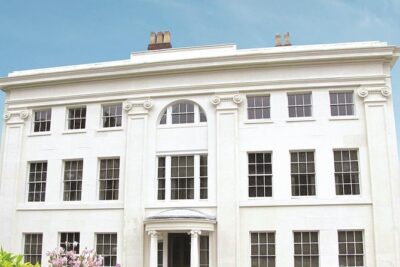
Birmingham Museum & Art Gallery: Learning to Spot Birmingham Artists
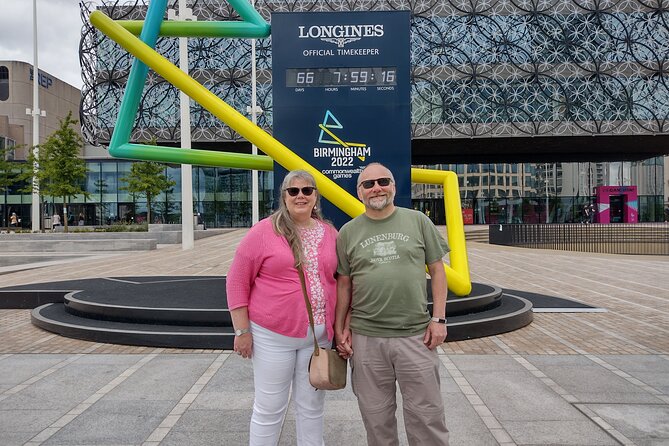
You will also spend a short stop at the Birmingham Museum and Art Gallery area. The key point here is not deep exhibit time. It is the chance to see the building and learn about the artists connected to Birmingham and how creative careers grew from the city.
The helpful value of this stop is perspective. A lot of visitors assume Birmingham is only industry. This is a reminder that the city has always produced artists too, and you can see it not only in what is inside museums, but in how the city invests in cultural spaces.
As with Town Hall, admission is not included here. That is not a dealbreaker. For a 90-minute orientation walk, you can still get a strong sense of where the art-and-identity side of Birmingham lives. If you leave wanting more, you now know exactly where to go.
Chamberlain Square and Centenary Square: World Wars, Then Modern Birmingham
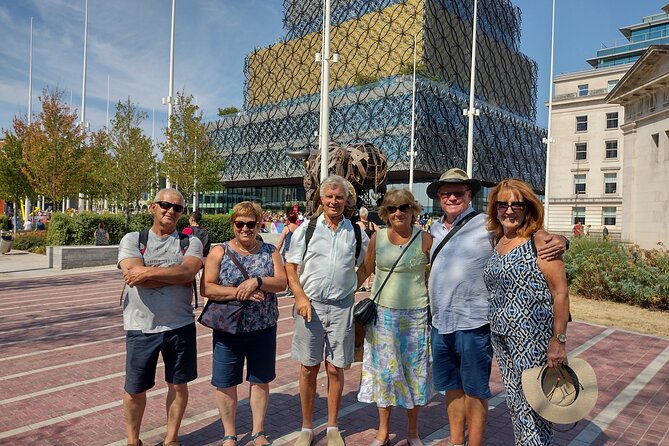
Chamberlain Square is where the tone shifts into commemoration. You learn about Birmingham’s crucial role in both World Wars and the sacrifices made by its people. The stop is short, but it is designed to give you context before you step into the city’s memorial spaces later.
Then you move to Centenary Square, which shifts the conversation from old to new. This stop is about modern city architecture and daily life in Birmingham today. Centenary Square helps you avoid the common mistake of treating Birmingham like a place stuck in the past. It makes the city feel like a living place, not a museum set.
These two stops also work because they bracket your understanding of the city. You get the gravity first, then the rhythm of the present. That balance is exactly what you want on an intro walk.
Hall of Memory, Baskerville House, and Broad Street’s Walk of Fame
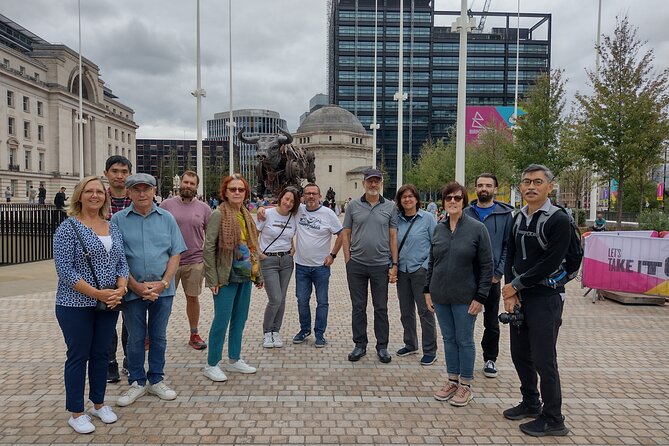
The walk continues to Hall of Memory, a memorialising stop for those who gave their lives for Birmingham and Britain. Like Chamberlain Square, it is a quick stop, but it adds a layer that you will carry with you when you see other memorials across the city.
After that, you pass Baskerville House, where you learn about John Baskerville. The name matters in printing and letters, but on this tour the emphasis is more about connecting the person to Birmingham and understanding why a building like this shows up in the story of the city. If you like quirky place-based history, this stop is a satisfying little puzzle piece.
Then you hit Broad Street, described as Birmingham’s own walk of fame. This is one of the more fun, lighter moments. Broad Street also gives you a sense of Birmingham’s celebrity culture and public energy without needing to enter anywhere.
A note on logistics: multiple stops like Hall of Memory and Baskerville House list admission not included, which signals that you should expect mainly exterior viewing and guided context. If you are hoping for lots of entry time, treat Broad Street and these adjacent stops as your inspiration points, not your full experience.
Symphony Hall Canals and Ikon Gallery’s Neo Gothic Finish
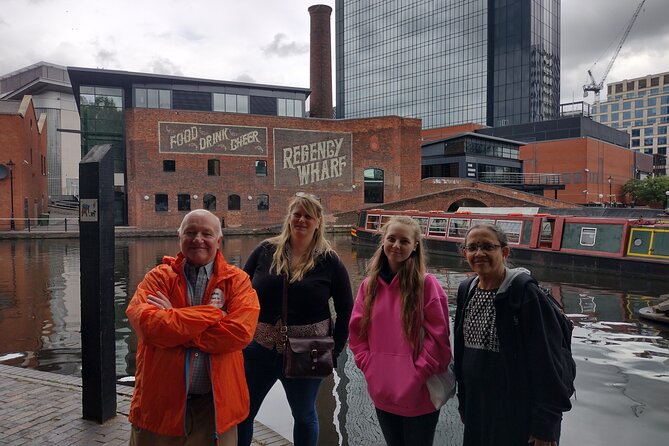
Next up is Symphony Hall, where the walk takes you alongside iconic industrial canals. This is a good change of pace. Canal-side walking tends to make the city feel more human-scale, and you get a different view of Birmingham’s industrial roots without needing to hunt for it.
If you have heard people talk about Birmingham’s canal quarter, this is where you often understand why. The route style here is not about throwing you into a single landmark, it is about letting the setting explain itself.
Finally, you end at Ikon Gallery, and the finish is built for contrast: old styling plus modern function, with a Neo Gothic exterior on a contemporary art gallery. For me, this ending is the perfect closer because it pulls together themes from earlier stops. You have seen civic spaces, memorials, and then a contemporary cultural institution, all connected by the same idea: Birmingham keeps changing, but the streets keep a record of what shaped the change.
Ikon Gallery is also one of the stops marked with admission not included, so you may choose whether to pay for entry depending on what you care about.
Value for Money: What $19.41 Buys You (and What It Does Not)
At about $19.41 per person, this tour is priced as an affordable orientation experience. The key value is that you are paying for interpretation, not entry tickets. In roughly 90 minutes, you see major points across different eras and get guided context to help you understand what you are looking at.
Many stops are free to view, including Cathedral Square, St Philip’s Cathedral Garden, Victoria Square, Chamberlain Square, Centenary Square, and Broad Street. That means you can enjoy the core of the walk without needing to pay more along the way.
A few stops are marked with admission not included, including Birmingham Town Hall, Birmingham Museum and Art Gallery, Hall of Memory, Baskerville House, Symphony Hall, and Ikon Gallery. So your money is covering the guide and the route. It is not buying you full entry to every major building.
If you are the type who hates planning and just wants someone to point you in the right direction, this is strong value. If you want a ticketed highlights tour where you go inside every major attraction, budget extra time and possibly extra fees after the walk.
Timing, English Pacing, and Weather Reality
The tour runs daily at 10:30am and 2pm, and it is usually booked about 11 days in advance. Booking ahead is smart. Not every time slot will have the same number of spots, and the guide experience tends to be best when the group size matches the tour model.
The tour is offered in English, and most travelers can participate. Service animals are allowed too, and the meeting point is near public transportation.
Weather matters. The experience requires good weather, and if conditions are poor, you are offered a different date or a full refund. On cold days, you will be outside for the full walk, and that can change the feel. One practical move is simple: dress for the British sky, and bring layers even if the forecast looks mild.
Also consider language pacing. The tour is in English, and a few notes in the guide experience highlight that speaking speed can be a factor for non-native speakers. If you need a slower pace, mention it early so you can get the best experience from the guide and the group.
Who Should Book This Birmingham Walking Tour?
This is a great fit if you:
- want an intro to Birmingham history and culture without map stress
- like short stops and stories delivered at street level
- want a walk that helps you decide what to do next once you are in the city
It can also suit a family trip, because it is about main sights at a relaxed walking pace and does not rely on long indoor museum time. A small group can feel close-knit, and there are departures where it can even feel more like a private walk when only a few people are booked.
You might choose something else if:
- you want heavy time inside ticketed attractions
- you are specifically chasing one museum or one building and want a long, focused visit
- you need a very slow language pace for comfort, since the tour is English and the rhythm is built for an active walk
Should You Book This Walking Tour of Birmingham?
If you have never spent time in Birmingham city centre, I think booking this is a smart move. It gives you the story behind the major landmarks in a way that makes later exploration easier. The price is reasonable for the amount of orientation you get, especially because many key stops are free to enjoy from outside.
Book it when you want a clean starting point, then plan your own follow-up visits to any places that match your interests, like Town Hall or the art spaces. Skip it only if your ideal day is mostly ticketed entry and long indoor time. For most first-timers, this walk is the kind of foundation that makes the rest of your trip feel better organized.
FAQ
How long is the Birmingham City Centre Daily Walking Tour?
It runs for about 1 hour 30 minutes.
Where does the tour start and where does it end?
The tour starts at Birmingham Cathedral, Cathedral Square, Colmore Row, Birmingham B3 2QB and ends at Ikon Gallery, 1 Brindley Pl, Oozells Sq, Birmingham B1 2HS.
What language is the tour offered in?
The tour is offered in English.
Are tickets for the stops included?
Some stops are free to visit (for example Cathedral Square, St Philip’s Cathedral Garden, Victoria Square, Chamberlain Square, Centenary Square, and Broad Street). Other stops are marked as admission not included (for example Birmingham Town Hall, Birmingham Museum and Art Gallery, Hall of Memory, Baskerville House, Symphony Hall, and Ikon Gallery).
What group size should I expect?
The tour has a maximum of 20 travelers.
What is the cancellation policy?
There is free cancellation. You can cancel up to 24 hours before the experience start time for a full refund. If you cancel less than 24 hours before the start time, the amount paid will not be refunded.
More Of Birmingham On Foot




More Midlands Walks


Fresh off the notebook in Birmingham
- Birmingham to Heathrow Airport private taxi transfers
★ 5.0 · 7 reviews - Best of Birmingham 12km Running Tour
★ 5.0 · 12 reviews - Birmingham Private Self-Guided Walking Tour
★ 4.0 · 13 reviews - On the Origins of Charles Darwin: A Self-Guided Audio Tour of Shrewsbury
★ 4.5 · 16 reviews - Taste of Shrewsbury Food and Drink Tour with Guide
★ 5.0 · 22 reviews - Cotswolds Full-Day Tour From Birmingham
★ 4.5 · 30 reviews
Birmingham and the Midlands, compared.
 ★ 5.0Peaky Blinders Coach Tour of Outer Liverpool & The WirralFrom $55433 reviews
 ★ 5.0Birmingham Walking Tour: Canals, Victorians & Today (1:30pm)From $20346 reviews
 ★ 5.0Discovering Birmingham 2 hour Walking Tour to the Jewellery QuarterFrom $20333 reviews
 ★ 4.5Birmingham Slogging Gangs Walking Tour with Edward ShelbyFrom $27306 reviews
 ★ 3.0SEA LIFE Birmingham Admission TicketFrom $26218 reviews
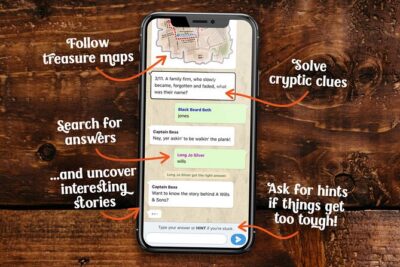 ★ 5.0Fun, Flexible Treasure Hunt Around Birmingham with Cryptic Clues & Hidden GemsFrom $20167 reviews
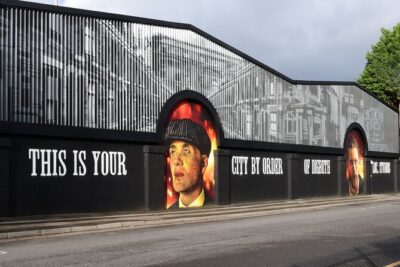 ★ 5.0Digbeth, Public Art & Peaky FilmFrom $1991 reviews
 ★ 5.0Daily Nottingham City Centre Walking Tour (10:30am)From $1981 reviews
Browse the lists this tour appears in