
REVIEW · BIRMINGHAM AND THE MIDLANDS
Discovering Birmingham 2 hour Walking Tour to the Jewellery Quarter
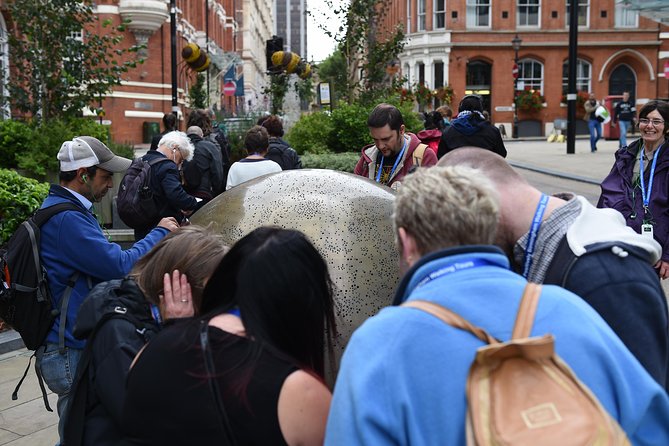
Birmingham hides its best side in backstreets. This 2-hour walk links big city squares to the Jewellery Quarter, using a secret canal route and tight local storytelling. I especially like the way the guides mix facts with personality, and I like the extra hearing boost from the loaned audio receivers. The only drawback: it’s still a real walking tour, so you’ll want moderate fitness and the right coat if the weather turns.
At a price of $20.80, it feels like good value because you’re paying for people and context, not entry tickets. There are no admissions to handle, and the route is designed to reach places a coach or car can’t. When it rains, guides like Bernard and Jonathan Berg keep the mood up, which matters more than it sounds.
The tour starts at the Library of Birmingham in Centenary Square at 1:30 pm and loops back to the same meeting point. It’s a small group, capped at 40, so you can actually hear what’s going on even if you’re not standing right at the front.
In This Review
- Key things to know before you go
- Where the tour starts, and why Centenary Square matters
- The Jewellery Quarter via a secret canal route (the walk’s highlight)
- The Georgian church exterior, and why outside-only still counts
- Birmingham Cathedral, English Baroque, and stained glass possibilities
- St Chads from the inner ring road, and the post-war question
- Victoria Square and Chamberlain Square: the modern city returns
- The guide experience: why humor and props make the tour stick
- Price, duration, and value: what you’re really buying
- Getting the most out of the walk
- Who this tour fits best
- Should you book this Birmingham Jewellery Quarter walking tour?
- FAQ
- How long is the Birmingham 2 hour Walking Tour to the Jewellery Quarter?
- How much does the tour cost?
- Where does the tour start?
- What time does the tour start?
- What language is the tour offered in?
- Is there an admission ticket required?
- What is included in the tour price?
- How many people are in a group?
- Is the tour near public transportation?
- Are service animals allowed?
- What should I bring if the weather is bad?
Key things to know before you go
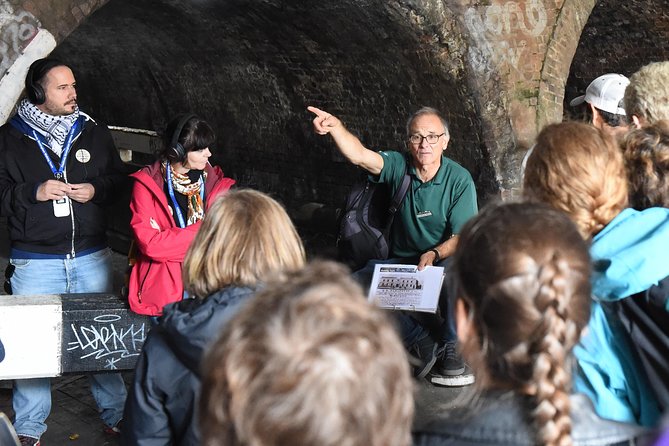
- Secret canal route into the Jewellery Quarter, with a way in that locals may not use
- Audio receiver loaned to you, so you can hear the guide even from farther back
- Guides with humor and props on some departures, including Jonathan Berg
- A smart mix of old and new Birmingham, from Georgian-era details to today’s redevelopment
- Stops built for quick context, including Centenary Square and multiple city squares before you head back
More Midlands walks, canals and all
- Birmingham Walking Tour: Canals, Victorians & Today (1:30pm)★ 5.0 · 346 reviews
- Discovering Birmingham 2 hour Walking Tour to the Jewellery Quarter★ 5.0 · 333 reviews
- Birmingham Slogging Gangs Walking Tour with Edward Shelby★ 4.5 · 306 reviews
- Birmingham City Centre Daily Walking Tour (10:30am & 2pm)★ 5.0 · 265 reviews
Where the tour starts, and why Centenary Square matters
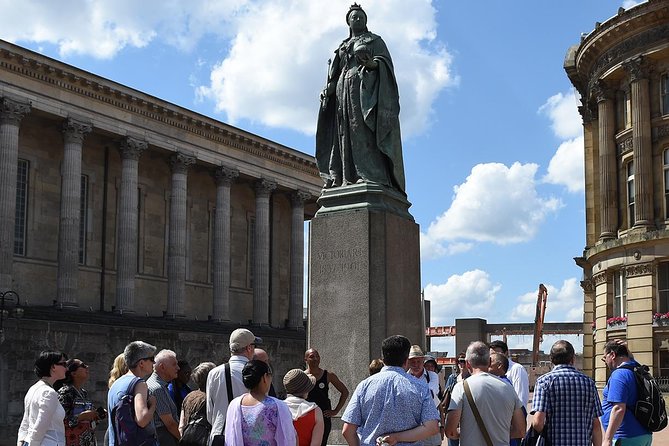
Meet at the Library of Birmingham at Centenary Square, and that first area does a lot of work for such a small start. You’ll begin with a tour intro right where Birmingham keeps its civic rhythm. Even if you’ve passed through Centenary Square before, the guide frames it as more than a transit zone. The area becomes a mental map, so later streets and buildings make more sense.
Stop one is about 20 minutes, and the goal here is orientation. You learn what to look for as the walk moves away from the “main road” version of the city and into narrower lanes. This is also where you get the tone of the tour. If your guide is Bernard, you’ll likely notice how he keeps people cheerful in bad weather, turning the conditions into part of the experience instead of a problem.
Practical tip: arrive a bit early. Not because you’ll be rushed, but because you’ll start with a short briefing that makes the rest of the walk easier to follow.
The Jewellery Quarter via a secret canal route (the walk’s highlight)
Stop two is where the tour earns its name. You enter the Jewellery Quarter using a secret canal route, a shortcut through the waterway side of things that even locals don’t necessarily use. This is a big deal because it changes how you see the district. Instead of arriving through the obvious front doors, you get an unexpected approach that feels more like discovering a working part of the city than taking a photo stop.
This segment takes around 30 minutes. You’ll hear how the Jewellery Quarter developed and how different kinds of businesses took root from Georgian times onward. The point is not just “old buildings exist.” It’s how a district’s purpose shapes its streets, canals, and architecture, and how that legacy continues in the modern city.
As you move through, pay attention to the transition the guide points out: the older fabric of the area making room for the contemporary Birmingham that’s taking its place now. That contrast is one reason this tour works. It helps you see the Jewellery Quarter as a living district, not a museum.
If you’re the kind of traveler who likes quiet, working-city details, this canal approach is the part you’ll remember days later. It’s also the part that makes the walk feel genuinely local, because it’s not just “walk and look,” it’s “walk and understand.”
The Georgian church exterior, and why outside-only still counts
After the Jewellery Quarter section, you view the outside of a church linked to the Jewellery Quarter. The highlight here is its 1779 Georgian architecture, and it’s specifically an exterior look. Even without going inside, exterior Georgian details can tell you plenty: proportions, style cues, and how the building sits in its context.
Why does this stop matter in a short tour? Because the guide uses it as a visual anchor. You’ll remember what “Georgian” looks like when you see it again in other parts of the walk, and you’ll be able to connect the earlier explanation of older development to a real building, not just a timeline.
At this stage, the tour is also paced so you don’t feel like you’re sprinting. It’s more of a steady rhythm, so your attention can shift from canal and district layout to architecture.
Birmingham Cathedral, English Baroque, and stained glass possibilities
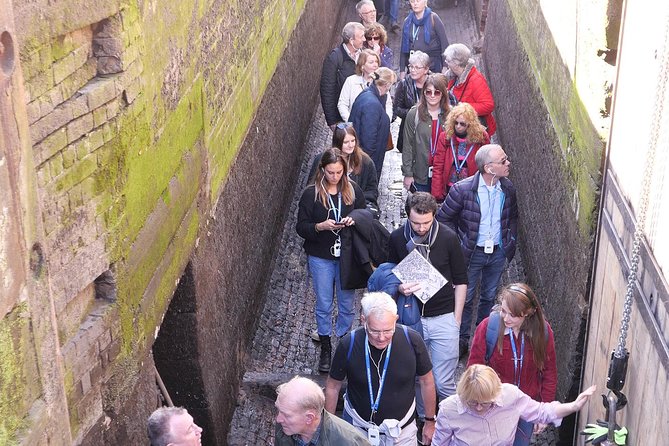
Next up is Birmingham Cathedral. You’ll look at the fine English Baroque style, and you may be able to step inside on occasions if there’s time and nothing conflicts with events. The tour also notes the possibility of seeing Edward Burne-Jones stained glass if the timing works out.
Plan your expectations like this: you’re guaranteed the exterior and the architectural viewpoint, and inside is an add-on only when circumstances allow. Either way, this stop helps you widen the lens. Up to now, you’ve been focused on the Jewellery Quarter and Georgian-era development. Here you see Birmingham’s religious and civic presence in a different architectural language.
It’s also a short stop, around 5 minutes. Don’t expect a long sit-down conversation here. Expect key points that help you read what you’re seeing quickly, then move on.
More on foot, at a pace you can hear the guide

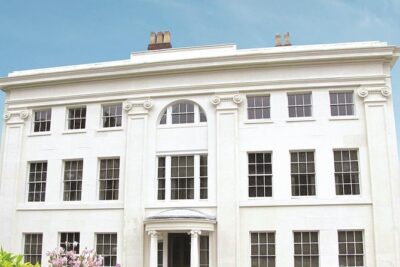
St Chads from the inner ring road, and the post-war question
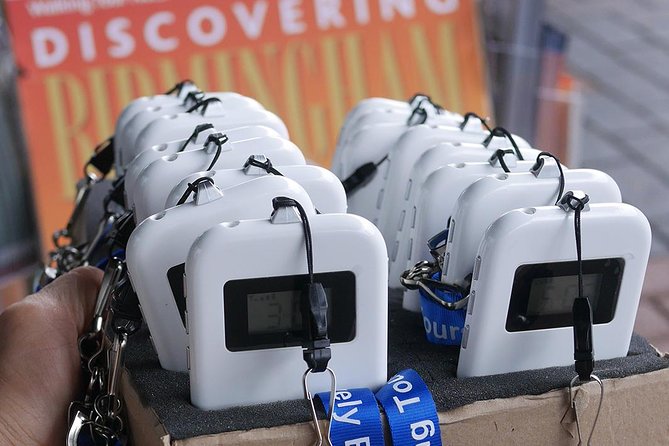
Then you look at St Chads from the inner ring road. This is a strategic choice, because the guide uses the viewpoint to talk about post-war redevelopment, especially when cars took priority over people. You’re not just viewing a church, you’re viewing a planning philosophy.
This is one of those parts of the walk where a guide’s storytelling matters more than the building itself. The city’s “car first” era reshapes sightlines, street life, and how neighborhoods knit together. From this angle, you can judge for yourself whether Birmingham seems planned for people or for traffic.
I like this stop because it doesn’t pretend the city is either all beauty or all mistakes. It puts a real question in front of you. And for travelers, having a guide frame the debate gives you a way to form your own opinion without getting lost in facts overload.
Victoria Square and Chamberlain Square: the modern city returns
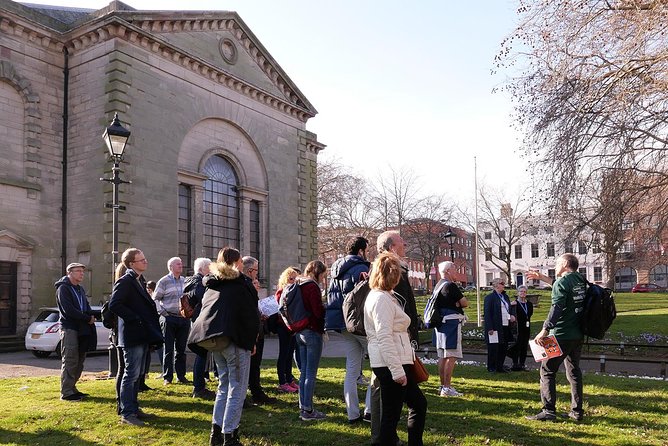
After St Chads, you work your way back toward the Library area using major squares. These are small stops that function like punctuation marks.
Victoria Square is about 10 minutes. You’ll see how Birmingham moves from the cathedral and redevelopment conversation back into public spaces. Squares are where you get a feel for city scale, and guides can explain why certain spaces matter to how people gather.
Then you hit Chamberlain Square for about 5 minutes, focusing on the renovated square and how the modern city is reconfiguring for the future. This isn’t just “here’s a renovated building.” It’s a chance to connect the earlier story about development with what you can see today, close to where you started.
These final square stops also help you close the loop. The tour ends back at the meeting point, so by the time you reach the Library, you’ll feel less like you wandered and more like you followed a route with meaning.
The guide experience: why humor and props make the tour stick
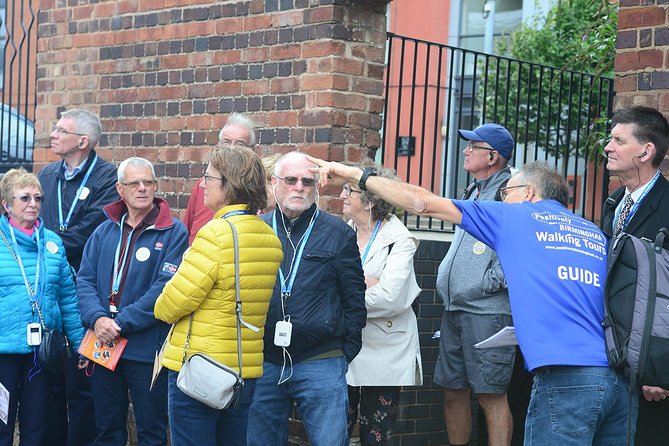
The guide is the real engine. The strongest praise you’ll see again and again is about guides who are funny, friendly, and genuinely city-literate. Jonathan Berg shows up in multiple accounts, and the details are consistent: he tells stories with humor, he uses artifacts and props, and he makes the walk interactive rather than lecture-y.
Bernard is another name mentioned with a similar theme. In rain, he’s credited with keeping people cheerful and interested. That’s not fluff. On a walking tour, your attention depends on the emotional tone. A good guide turns weather from an obstacle into a shared moment.
If you like this style of guiding, you’re in good hands. If you prefer very quiet tours with minimal speaking, this one might feel a bit lively. But that’s also part of why it scores so high for enjoyment and repeat interest.
Price, duration, and value: what you’re really buying
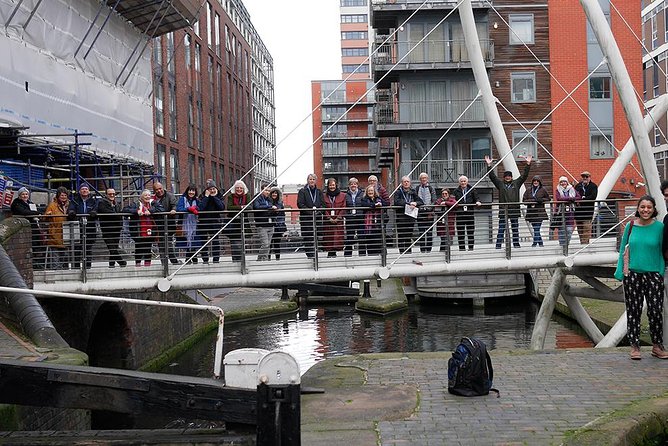
The tour costs $20.80 per person and runs about 2 hours. For that length, it’s not trying to cover every landmark in Birmingham. Instead, it concentrates on a high-signal route: squares for context, the Jewellery Quarter for identity, and two or three architecture/planning viewpoints to give the city texture.
Here’s what makes it feel like value:
- No entry tickets required. You’re paying for the guide, route design, and hearing setup.
- Audio receivers are included, which helps a lot on busy pavements or windy days.
- The route includes places that are harder to reach by car or coach, which usually means the tour is more than “view from a street corner.”
Also, on average it’s booked about 21 days in advance, which tells you something: this tour has steady demand. If your dates are firm, I’d treat that as a signal to reserve early rather than waiting.
Getting the most out of the walk
A walking tour is simple, but you can make it better with a few habits.
Bring a coat or umbrella. The tour tries not to cancel in adverse weather, and rain is basically part of the deal. If conditions are icy, the route may be adapted, so expect a slight change rather than a perfect script.
Wear shoes you trust. There are canal-side paths and city pavements, and you’ll be standing and walking continuously for about two hours. The tour notes moderate physical fitness. That usually means you can keep moving, not that you need to run marathons.
Use the audio receiver. It’s there for a reason. Even if you think you can hear fine, the receiver helps you catch details without straining.
If you’re sensitive to crowds, remember the group cap is 40 travelers. That’s not huge, but it’s still a walking line. Stay near the middle or back if you want to hear while also not feeling boxed in.
Who this tour fits best
This works especially well if you:
- Want a local-feeling Birmingham route rather than a single landmark checklist
- Like hearing how cities change over time, from Georgian-era development to modern redevelopment
- Enjoy architecture and planning stories, especially the contrast between older districts and newer priorities
- Prefer guided interpretation that’s fast, funny, and easy to follow
It may be less ideal if you:
- Want long cathedral interior time every time. Inside is only on occasions, depending on events
- Get overwhelmed by steady walking and prefer lots of seating or slow pacing
Should you book this Birmingham Jewellery Quarter walking tour?
Yes, I think you should book it if you want a high value, two-hour snapshot of Birmingham that feels specific. The secret canal entry into the Jewellery Quarter is the kind of detail that doesn’t happen by accident. And the combination of squares, architecture viewpoints, and redevelopment discussion gives you a rounded picture without turning it into a textbook.
I’d skip it only if you hate walking in rain and dislike active guides. If that’s you, choose a different style of tour. If not, this one is a fun way to connect Birmingham’s old trade roots to what the city is building now, all while hearing stories from guides who know how to keep people smiling.
FAQ
How long is the Birmingham 2 hour Walking Tour to the Jewellery Quarter?
It runs for about 2 hours.
How much does the tour cost?
The price is $20.80 per person.
Where does the tour start?
The meeting point is the Library of Birmingham at Centenary Square, Birmingham B1 2ND, UK.
What time does the tour start?
The start time listed is 1:30 pm.
What language is the tour offered in?
The tour is offered in English.
Is there an admission ticket required?
No. There are no entry tickets required for this tour.
What is included in the tour price?
A local guide is included, and you are loaned an audio receiver so you can hear the guide even from a distance.
How many people are in a group?
This tour has a maximum of 40 travelers.
Is the tour near public transportation?
Yes, it is near public transportation.
Are service animals allowed?
Service animals are allowed.
What should I bring if the weather is bad?
If it is raining, bring a suitable coat or umbrella. If conditions are icy, the route may be adapted.
More Of Birmingham On Foot






More Midlands Walks



Fresh off the notebook in Birmingham
- Birmingham to Heathrow Airport private taxi transfers
★ 5.0 · 7 reviews - Best of Birmingham 12km Running Tour
★ 5.0 · 12 reviews - Birmingham Private Self-Guided Walking Tour
★ 4.0 · 13 reviews - On the Origins of Charles Darwin: A Self-Guided Audio Tour of Shrewsbury
★ 4.5 · 16 reviews - Taste of Shrewsbury Food and Drink Tour with Guide
★ 5.0 · 22 reviews - Cotswolds Full-Day Tour From Birmingham
★ 4.5 · 30 reviews
Birmingham and the Midlands, compared.
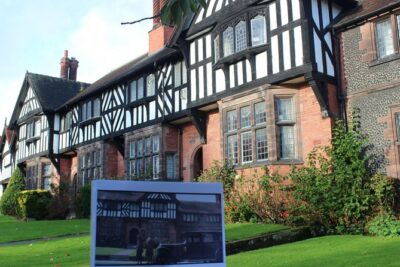 ★ 5.0Peaky Blinders Coach Tour of Outer Liverpool & The WirralFrom $55433 reviews
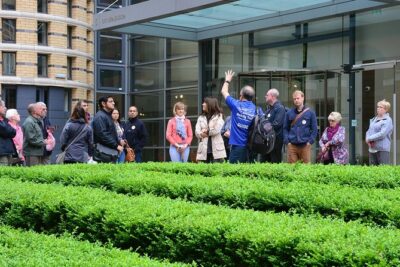 ★ 5.0Birmingham Walking Tour: Canals, Victorians & Today (1:30pm)From $20346 reviews
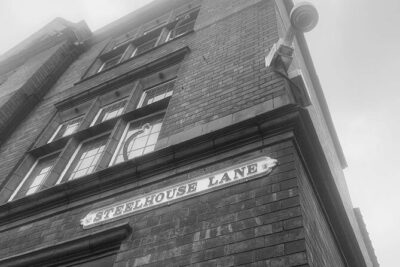 ★ 4.5Birmingham Slogging Gangs Walking Tour with Edward ShelbyFrom $27306 reviews
 ★ 5.0Birmingham City Centre Daily Walking Tour (10:30am & 2pm)From $19265 reviews
 ★ 3.0SEA LIFE Birmingham Admission TicketFrom $26218 reviews
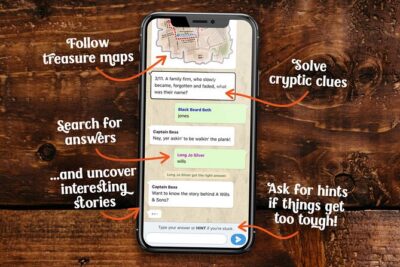 ★ 5.0Fun, Flexible Treasure Hunt Around Birmingham with Cryptic Clues & Hidden GemsFrom $20167 reviews
 ★ 5.0Digbeth, Public Art & Peaky FilmFrom $1991 reviews
 ★ 5.0Daily Nottingham City Centre Walking Tour (10:30am)From $1981 reviews
Browse the lists this tour appears in