
REVIEW · BIRMINGHAM AND THE MIDLANDS
Birmingham Private Self-Guided Walking Tour
Canals, churches, and a good audio guide. This Birmingham walk strings together industrial-era landmarks and modern city life with help from Helen’s audio, so you keep moving without waiting for a group. The route is built for an easy rhythm: stop, listen, look around, then go again.
I particularly like the real audio guide by Helen (no computer voice) and the way the narration connects what you see to why it mattered. I also like that you get a map, GPS route, and turn-by-turn style directions, so you are not guessing your way through central Birmingham.
One thing to consider: if your phone access is glitchy, the day can get frustrating. A couple of past users reported confusion with the app link flow, and directions can be easy to miss if you do not check the right section first, so do a quick setup before you leave.
In This Review
- Key highlights
- How this self-guided tour actually feels in real life
- Price and time: what $12.26 buys you
- Start at 197 Wharfside St, then follow the route like a local
- Gas Street Basin to Brindley Place: Birmingham’s canal engine, explained
- Brindley Place to Roundhouse Birmingham: architecture with a story
- Arena and ICC: how modern Birmingham runs its big events
- Centenary Square, Library of Birmingham, and Chamberlain Square
- Victoria Square and St Philip’s Cathedral Garden: small cathedral, strong focus
- Bullring and Grand Central: where rail-era Birmingham meets shopping
- St Martin in the Bull Ring and the city’s oldest parish thread
- Chinatown and Gay Village: two endings that feel like Birmingham today
- Small logistics that make or break your experience
- Who should book this Birmingham self-guided audio walk?
- Should you book this Birmingham Private Self-Guided Walking Tour?
- FAQ
- Is this tour fully self-guided?
- Who is the audio guide?
- How long does the tour take?
- Where does the tour start and end?
- What is included with the purchase?
- Is the tour available in English?
- Are any admissions included at the stops?
- Is it refundable if plans change?
- What should I know about walking and getting around?
Key highlights
- Helen’s audio guidance keeps the story clear without a live guide meeting you
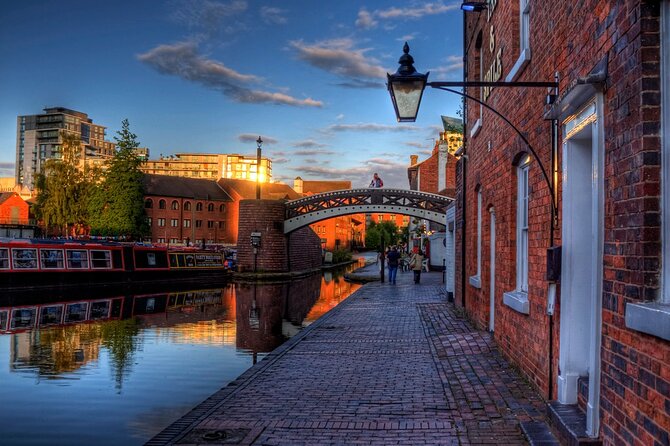
- Canal history in plain English starts at Gas Street Basin, right where Birmingham’s commerce made sense
- Roundhouse Birmingham (1874) is a distinctive, off-the-mainstream stop you might otherwise overlook
- 19th-century squares on foot take you from Congreve Square roots to Victoria Square naming
- Bullring to Grand Central mixes classic rail-era Birmingham with a modern shopping and dining hub
- Two major neighborhood changes finish the walk with Birmingham Chinatown and the Gay Village
More Midlands walks, canals and all
- Birmingham Walking Tour: Canals, Victorians & Today (1:30pm)★ 5.0 · 346 reviews
- Discovering Birmingham 2 hour Walking Tour to the Jewellery Quarter★ 5.0 · 333 reviews
- Birmingham Slogging Gangs Walking Tour with Edward Shelby★ 4.5 · 306 reviews
- Birmingham City Centre Daily Walking Tour (10:30am & 2pm)★ 5.0 · 265 reviews
How this self-guided tour actually feels in real life
This is a private, self-guided walking tour, meaning it is just you and your group on the route, with no in-person guide to coordinate. You follow an audio guide, using the app for directions and the stop details, and you can move at your own pace within the overall 2 to 3 hour window.
The big win is that the audio does the heavy lifting. Instead of reading plaques or guessing at context, you get short, story-focused segments that explain what you are looking at and why it fits Birmingham. For a first-time visit, that matters, because the city can look like a patchwork of eras unless someone gives you the threads.
The other practical win is that your walking time stays flexible. The itinerary has stop durations (some are short, like 5 minutes), so if you linger for photos, you can usually catch up later. For me, that balance is exactly what you want from a self-guided format.
Price and time: what $12.26 buys you
At about $12.26 per person, this tour is priced like a low-cost entry into context. You are not paying for a staff-led stroll, you are paying for a guided route package: app access, offline-friendly guidance depending on your setup, GPS directions, and an audio narration voice that is human, Helen.
For value, the key detail is the 3 weeks of unlimited access. That means if you finish in 2.5 hours and want to revisit a stop later, you can. It also helps if you start late, because you are not locked into a single time slot.
Duration is listed as 2 to 3 hours (approx.), and the stop structure supports that. Many stops are 5 to 15 minutes, which keeps your feet moving and keeps your brain interested.
My advice: treat this as a planning tool plus a “walking playlist.” You will get more out of it if you show up with at least a basic sense of what era you want to focus on, industrial canals, civic squares, religious buildings, or the city center’s modern energy.
Start at 197 Wharfside St, then follow the route like a local
The tour begins at 197 Wharfside St, Birmingham B1 1QH, and it ends in the Gay Village. The near 24-hour opening window listed for this period (12:00 AM to 11:30 PM daily) is really about when you can use the route, since most stops are outdoors or publicly accessible areas.
Before you set off, do two quick things:
- Open the app and confirm you can reach your tour inside it
- Check that your directions are showing for the first stop, so you do not waste time at the start
One caution from real-world experience: some people got tripped up by how the activity link opens, especially if it takes you out to a browser and throws an error. I would rather see you spend 5 minutes at home or at your hotel than spend an hour on your phone in the street.
Once you are rolling, the route makes sense geographically. It starts close to the city’s canal and “old industry, new face” area, then moves through civic spaces and into the shopping district and neighborhoods.
Gas Street Basin to Brindley Place: Birmingham’s canal engine, explained
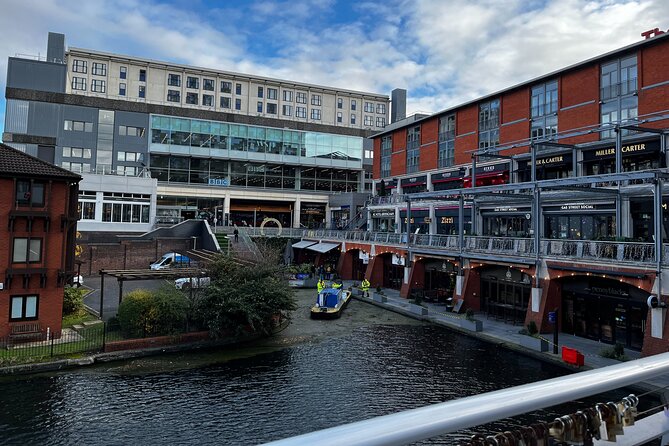
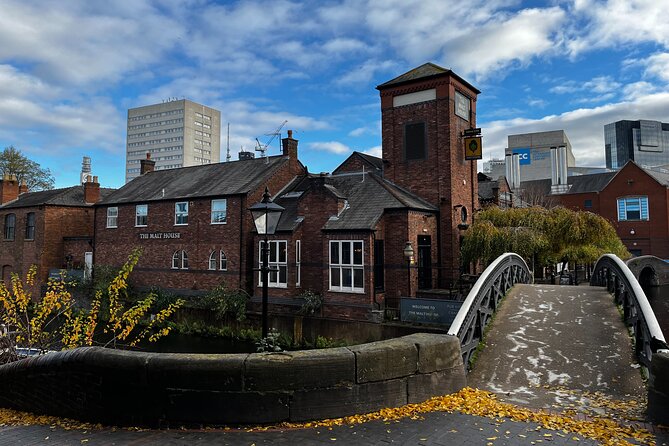
Your first anchor point is the Birmingham Mailbox area, which kicks off the walk with the city’s shift from heavy industry to a modern, retail and office vibe. It is a good start because it sets up the theme: Birmingham builds, adapts, and keeps going.
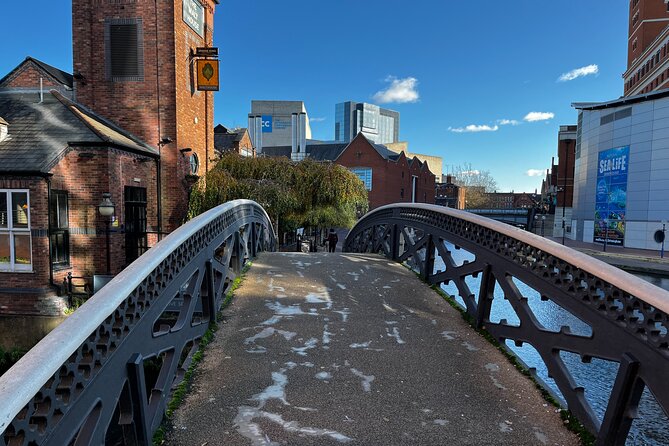
Next comes Gas Street Basin for about 15 minutes. Here you get an arresting fact in the story: the oft-repeated Venice comparison is not literally true, but Birmingham does have 35 miles of waterways, and more canal mileage than Venice. You also learn the practical reason canals mattered: goods and materials like coal and iron needed efficient transport, and waterways were part of the logistics.
This stop works well for your first listen because the views are immediate. You can look at the canal setting while the narration puts it into economic context. If you rush, you will miss the calm, moody atmosphere along the water that makes the rest of the story click.
From there, you move to Brindley Place for about 5 minutes. The narration ties the name to James Brindley, a key engineer in the 18th-century canal system. You even get a biographical detail worth remembering: Brindley was born in 1716 in Buxton, Derbyshire. That kind of detail helps the city stop feeling anonymous.
If you like transportation history, this is a short but satisfying moment. If you do not, it is still worth listening because it explains why Birmingham’s geography and industry connected.
More on foot, at a pace you can hear the guide
Brindley Place to Roundhouse Birmingham: architecture with a story
At Brindley Place, you also get a mention of the National Sealife Centre. Entrance is not included, but the tour tells you what to know, so you can decide on the spot whether you want to pay extra or simply appreciate the area from outside.
This matters for planning. If you are traveling with kids or you love aquariums, you can treat this as an optional add-on without the tour becoming a “wait in line” experience. If you are not interested, you can keep moving and not feel like you are missing a required ticket.
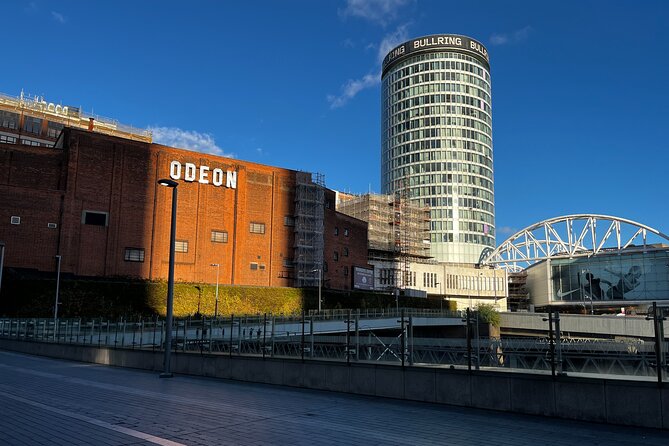
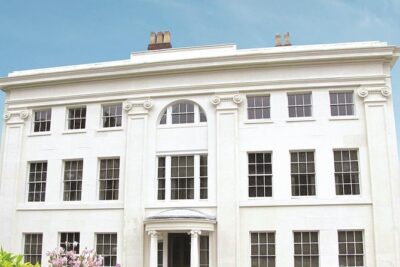
Then you detour to Roundhouse Birmingham (about 5 minutes). This is one of those places the city has, but most first-time visitors skip. The narration gives you specific credit: architect W.H. Ward, built in 1874. The building’s distinctive look helps you connect “industrial-era structures” with “Birmingham keeps repurposing.”
I like this stop because it is quick and visual. You can look, learn, then head toward the next concentration of entertainment and civic buildings without losing momentum.
Arena and ICC: how modern Birmingham runs its big events
After Roundhouse, the route passes by Arena Birmingham, which is described as a cutting-edge entertainment venue and a cornerstone of the city’s cultural landscape. Right after that, you reach the International Convention Centre (ICC), a modern building tied to Birmingham’s global events reputation.
Even though these are more about function than architecture trivia, they help you understand a modern layer of the city. Birmingham is not just a museum city, it hosts conferences, shows, and big gatherings. Walking past these landmarks gives you a clearer sense of why the city invested in large-scale venues.
Practical tip: since these are major facilities, the sidewalks can feel busier at certain times. If you are aiming for photos, plan for a slower pace for a minute or two, then keep your audio segments flowing.
Centenary Square, Library of Birmingham, and Chamberlain Square
Next up is the civic core, starting with Centenary Square (about 10 minutes). The story goes back to late 19th-century urban planning initiatives, when it was originally called Congreve Square, named for Sir William Congreve. You get a quick portrait: a British Army officer, politician, and innovator. That background helps you read the square as more than a pretty open space.
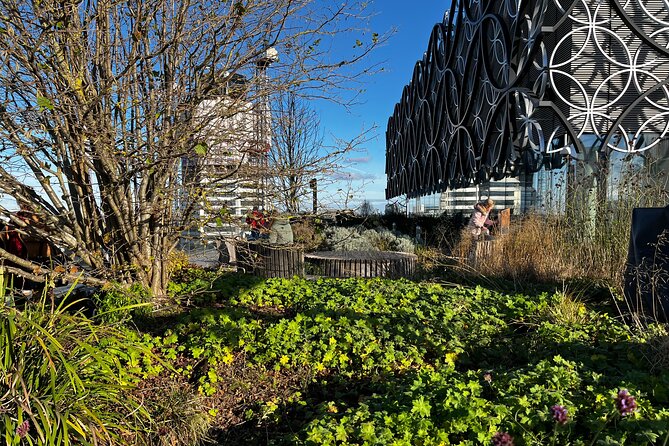
From there, you stop at the Library of Birmingham (about 10 minutes). The narration traces its roots to the predecessor library established in 1861. Libraries are a good theme in self-guided city tours because they connect learning, civic pride, and the way Birmingham sees itself.
Then you reach Chamberlain Square (about 10 minutes). It is named after Joseph Chamberlain, and the itinerary notes its earlier title as Corporation Street Square in the late 19th century. This is one of those areas where the audio helps you see continuity: a city keeps updating names, but it keeps returning to public institutions.
This cluster of stops is ideal if you like cities that organize themselves around civic spaces. The downside is simple: if you are tired or it is hot, civic squares can feel like lots of open walking with fewer photo hits. Pace yourself and use the audio segments like breathing breaks.
Victoria Square and St Philip’s Cathedral Garden: small cathedral, strong focus
At Victoria Square (about 10 minutes), the story shifts again. It goes back to the 19th century, originally Council House Square, and then renamed in 1901 to honor Queen Victoria’s Diamond Jubilee. Even if you do not care about royal dates, this renaming detail gives you a quick way to decode British city planning.
Then you reach St Philip’s Cathedral Garden (about 10 minutes). This stop is tied to St Philip’s Cathedral, described as Birmingham Cathedral and noted as the third smallest cathedral in the UK. It is Anglican and traceable back to the early 18th century.
I like this moment because it gives you a pause from the city’s movement. A cathedral garden area is a natural reset for your feet and your attention. Even if you do not go inside, listening to the brief timeline helps you place what you are looking at in the broader age of the city.
Bullring and Grand Central: where rail-era Birmingham meets shopping
The tour then transitions to the commercial heart. You visit Bullring and Grand Central Birmingham for about 15 minutes. The story connects Grand Central’s setting to the wider station area by referencing Birmingham New Street Station, a Victorian-era rail hub, and then focusing on Grand Central’s Atrium with over 60 shops and restaurants.
This is a practical stop even if you are not shopping. The Atrium is a clear landmark in a maze of streets, and it can give you a sheltered break from weather. Plus, it is useful for planning where to eat after the tour ends.
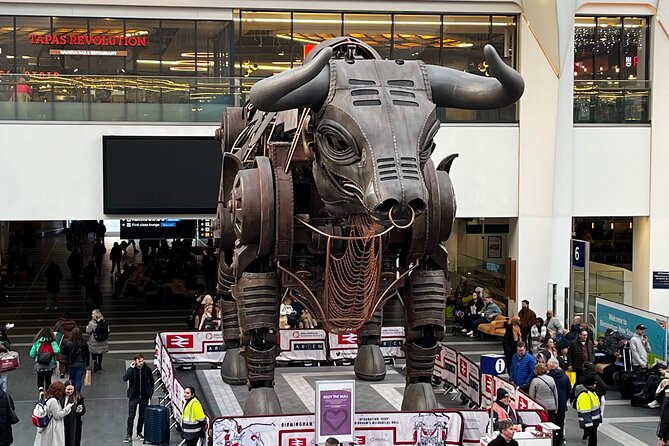
The itinerary also calls out a Bull Statue, described as a symbol of strength, resilience, and the industrious spirit that defines Birmingham. Statues are usually just “look at that” moments, but here the narration gives you the meaning, so it turns into a quick reflection stop rather than clutter.
St Martin in the Bull Ring and the city’s oldest parish thread
After the station and shopping area, you head to St Martin’s Church Centre, known as St Martin in the Bull Ring. The walk includes about 10 minutes here, with a standout detail: it is Birmingham’s oldest parish church, with roots over 800 years.
For me, this is where the walking tour does its best work. You get an easy contrast: Victorian station-adjacent modern shopping area on one side, and an 800-year-old parish story on the other. Even if your day is mostly about getting oriented, this stop anchors you.
If you want a quick win, listen to the audio and then take 60 seconds to look slowly around the church area. You will notice more once you know it is the oldest parish thread.
Chinatown and Gay Village: two endings that feel like Birmingham today
You finish with two neighborhood shifts, both listed for about 10 to 15 minutes.
First is Birmingham Chinatown (about 10 minutes). The description frames it as a culturally rich Chinese Quarter with traditions and flavors in the city center. The audio angle here is less about one building and more about “how neighborhoods form and stay.”
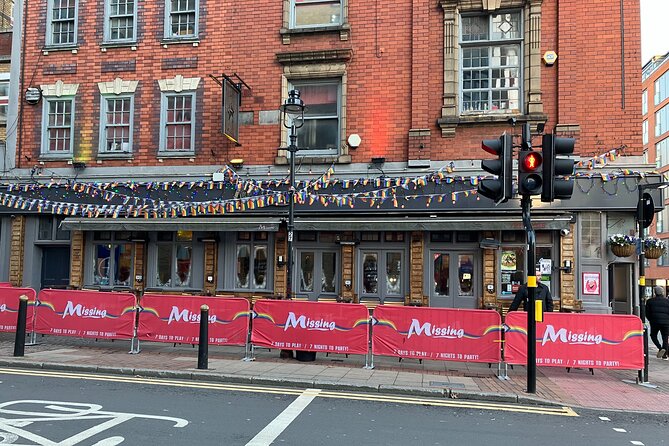
Then you land in Gay Village (about 15 minutes) and your tour ends there. The narration emphasizes inclusion and the LGBTQ+ community’s resilience and triumphs, with the area described as a colorful, celebration-driven part of the city. This stop is a good “walk-off” finale because it is natural to keep exploring at the end, either for a meal, a drink, or just a wander.
A small practical note: the route ends in an area that is lively in many travel seasons. If you want photos or quieter streets, you might prefer finishing earlier in the day. The audio still works anytime, but your surroundings change.
Small logistics that make or break your experience
Because this is self-guided, the details that matter are simple and mostly on your side.
1) Do a quick app test before you go. If the link flow is confusing for you, fix it before you step into the route.
2) Keep an eye on directions. One common stumble is missing the first points because directions can show up in a place that is easy to overlook.
3) Plan your walking pace. Many stops are short, so a calm photo stop at each one keeps the timing realistic.
4) Optional ticket moments are your decision. The National Sealife Centre is called out as not included, so you control whether you add it.
Also, you are told this fits a moderate physical fitness level, and the tour has lots of short segments. Most of the time, you should be fine as long as you can handle a steady walking pace for a couple of hours.
Who should book this Birmingham self-guided audio walk?
This tour is a strong match if you want:
- A low-cost way to get orientation plus context
- A walking route that is not tied to a live guide meeting time
- An audio-led city focus on canals, civic squares, and neighborhoods
It is less of a fit if you want long museum-style stops or if you know you struggle with app-based instructions. In that case, check your phone setup carefully, or consider a city tour with an in-person guide.
Should you book this Birmingham Private Self-Guided Walking Tour?
I think it is worth booking if you are comfortable following a route in an app and you like short, story-led stops. The price is low for what you get: a 3-week guided audio plan, GPS directions, and Helen’s human narration that helps Birmingham’s industrial-to-modern story make sense.
Book it if your ideal day is: walk smart, learn a few memorable details, and finish with time to roam Chinatown or the Gay Village on your own terms. Skip it if you want a fail-proof, phone-free experience, because self-guided tours live or die by your access and your directions display.
If you do book, I would show up with your app tested, start at 197 Wharfside St, and treat the canal-and-squares rhythm as the backbone of your visit. That mindset will make the whole route feel effortless.
FAQ
Is this tour fully self-guided?
Yes. It is a self-guided walking tour, and there is no in-person guide included. You follow the audio and route using the app.
Who is the audio guide?
The tour says Helen will guide you through the audio guide, and it is not a computer-generated voice.
How long does the tour take?
The duration is listed as approximately 2 to 3 hours.
Where does the tour start and end?
It starts at 197 Wharfside St, Birmingham B1 1QH, UK, and it ends in the Gay Village, Birmingham.
What is included with the purchase?
You get 3 weeks of unlimited access on the app, plus map, directions, GPS route and stops, and audio guide content with videos, pictures, recommendations, and the info you need. You also receive a Before you go section in the email confirmation.
Is the tour available in English?
Yes, the tour is offered in English.
Are any admissions included at the stops?
The tour notes free admission for many stops, but the National Sealife Centre entrance is not included. The tour will still tell you what you need to know about it.
Is it refundable if plans change?
The experience is non-refundable and cannot be changed for any reason.
What should I know about walking and getting around?
Service animals are allowed, the tour is near public transportation, and it asks for a moderate physical fitness level.
Routes You Can Walk Unaccompanied

More Of Birmingham On Foot



More Midlands Walks


Fresh off the notebook in Birmingham
- Birmingham to Heathrow Airport private taxi transfers
★ 5.0 · 7 reviews - Best of Birmingham 12km Running Tour
★ 5.0 · 12 reviews - Birmingham Private Self-Guided Walking Tour
★ 4.0 · 13 reviews - On the Origins of Charles Darwin: A Self-Guided Audio Tour of Shrewsbury
★ 4.5 · 16 reviews - Taste of Shrewsbury Food and Drink Tour with Guide
★ 5.0 · 22 reviews - Cotswolds Full-Day Tour From Birmingham
★ 4.5 · 30 reviews
Birmingham and the Midlands, compared.
 ★ 5.0Peaky Blinders Coach Tour of Outer Liverpool & The WirralFrom $55433 reviews
 ★ 5.0Birmingham Walking Tour: Canals, Victorians & Today (1:30pm)From $20346 reviews
 ★ 5.0Discovering Birmingham 2 hour Walking Tour to the Jewellery QuarterFrom $20333 reviews
 ★ 4.5Birmingham Slogging Gangs Walking Tour with Edward ShelbyFrom $27306 reviews
 ★ 5.0Birmingham City Centre Daily Walking Tour (10:30am & 2pm)From $19265 reviews
 ★ 3.0SEA LIFE Birmingham Admission TicketFrom $26218 reviews
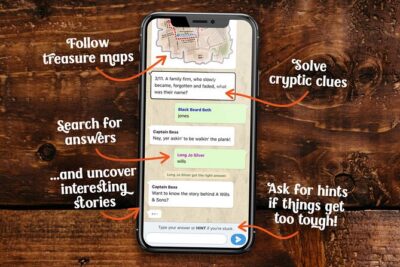 ★ 5.0Fun, Flexible Treasure Hunt Around Birmingham with Cryptic Clues & Hidden GemsFrom $20167 reviews
 ★ 5.0Digbeth, Public Art & Peaky FilmFrom $1991 reviews
Browse the lists this tour appears in