
REVIEW · HISTORICAL TOURS
History of London Photography Tour
One good photo starts with knowing where to look. This tour turns London’s big monuments and quieter corners of the City of London into a hands-on lesson in composition and light you can use right away. You’ll also get a guided path through places most people rush past.
I especially like how the guiding focuses on seeing like a photographer, not just checking sights. You’ll get professional photography advice as you move, with plenty of encouragement for different camera levels, even if you mostly shoot on auto. And it ends with a strong payoff at Tate Modern, where modern architecture gives you a clean final-frame moment.
One thing to consider: this is weather dependent. You also need to bring a camera or camera phone, since that part isn’t included.
In This Review
- Key highlights you will feel during the walk
- Why this City of London photo walk beats the usual sightseeing
- What the professional guide actually helps you do
- Getting started at St Mary Woolnoth, a church with Roman layers
- Royal Exchange and Bank of England, shooting the money-city angles
- Guildhall and St Mary Le Bow, Gothic lines and a very London tradition
- St Paul’s Cathedral: your chance at the serious, memorable shot
- From the Millennium Bridge to Tower Bridge, turn views into a sequence
- Tate Modern finale: end with big lines and a modern-art anchor
- Price and value: what you get for $71.63
- What to bring so you leave with stronger photos
- Who this tour suits best (and who might feel disappointed)
- Should you book this London photography tour?
- FAQ
- How long is the London Photography Tour?
- What does the tour cost?
- Where does the tour start and end?
- Is there a mobile ticket?
- What is the minimum age to join?
- Can children join?
- Do I need a camera?
- Is the group small?
- Is the tour dependent on weather?
Key highlights you will feel during the walk
- Pro-led photo instruction on the move so you can try techniques immediately
- A tight 18-person maximum, which keeps the group manageable for help and feedback
- Free admission at each featured stop, so your money goes to guidance, not entry fees
- Iconic London buildings plus lesser-seen angles, especially around the City and the South Bank
- End at Tate Modern, where you can finish with wide views and strong lines
More history led walks worth the hour
- London Small Group Tour of Historical Pubs★ 5.0 · 10,422 reviews
- Soho Music & Historic Pubs Tour★ 5.0 · 1,993 reviews
- Royal Historic Pubs Walking Guided Tour in London★ 5.0 · 803 reviews
- Private Group: Historical Pub Walking Tour of London★ 5.0 · 660 reviews
Why this City of London photo walk beats the usual sightseeing
London can be loud, fast, and a bit scripted. This tour keeps you moving at a smart walking pace while teaching you how to slow down with your camera. Instead of saying yes to every landmark, the guide pushes you to notice angles, textures, and light conditions.
The setting is also ideal. You’re in the City of London first, where narrow streets and historic buildings sit close together. Then you drift toward the river area and end at the South Bank. That mix gives you both “wow” architecture shots and more personal, creative compositions.
If you like the idea of photographing monuments without just doing the same postcard view, this tour matches that mood. You get a planned route with strong visual variety, and you learn how to shape what you capture.
What the professional guide actually helps you do
The biggest value here is how the guide teaches, not just where the group walks. A professional photographer leads the session, and that changes the whole experience. You’re not left guessing.
From the way the tour is described, you should expect advice that covers:
- Camera settings basics and how to escape auto when you want
- How to aim for better composition, not random framing
- Timing your photos around the look of buildings and changing light
- Practical angles to reduce distractions and show the subject clearly
In the reviews, the guide Richard gets specific credit for being friendly and supportive, including for people who were not fully up to speed with camera settings. That matters, because London photography often becomes frustrating when you feel behind. Here, the goal is to help you get usable photos even if you are still learning.
Getting started at St Mary Woolnoth, a church with Roman layers
Your first stop is St. Mary Woolnoth Church in the financial City, at 10-13 Lombard St. The site is described as having worship going back at least 2,000 years. Even better for photography lovers, traces of Roman and pagan religious buildings were discovered under the foundations of the current church.
This is the kind of stop where the story helps your photos. When you know the building has layers underneath, you start looking for continuity and details instead of only the front view. The church was rebuilt in 1727 and commissioned from Nicholas Hawksmoor, which adds another reason to pay attention to architectural elements.
Photo ideas you can try here:
- Look for symmetry in the facade and balance in the streetscape
- Use the surrounding streets to frame the church instead of centering it
- Shoot at multiple heights, then compare which angle feels most intentional
This stop is short, about 10 minutes, and the admission is listed as free. That means you should arrive ready with at least two framing plans: one wide and one close.
Royal Exchange and Bank of England, shooting the money-city angles
Next you’ll head to the Royal Exchange building. It’s a historic anchor in the City, and the guide helps you photograph it in the way that makes architecture look crisp instead of crowded. Ten minutes is not long, but it’s enough to practice two techniques: changing your lens distance (or stepping forward and back) and finding an angle where lines lead toward your subject.
Then comes the Bank of England, a building packed with history and architecture. The tour description promises the guide will help you find the best angles, and this is where a professional’s eye pays off. Tall buildings and busy streets can make “good views” harder than they sound. The guide can steer you toward positions that reduce visual clutter.
Practical tips for these two stops:
- If the street is busy, wait for small gaps and shoot quickly
- Use your camera phone’s grid or your camera’s focus points to keep vertical lines straight
- Try a “detail-first” shot, like a doorframe, stone pattern, or architectural edge
Both stops are listed with free admission, and each one is around 10 to 15 minutes. Think of them as technique practice rounds.
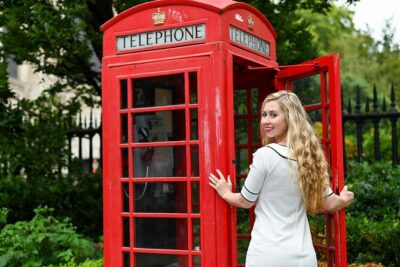
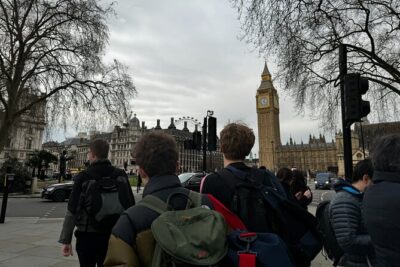
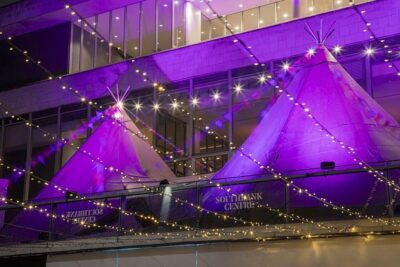
Cameras out: further shoots we tagged along on
Guildhall and St Mary Le Bow, Gothic lines and a very London tradition
After the financial landmarks, you shift to two classic London church and civic-photo vibes.
Guildhall is next, with Gothic splendour and an age of about 800 years. Fifteen minutes here is a gift for photographers because you’ll want time to experiment. With Gothic architecture, your main challenge is getting depth without distortion. Move slightly, keep your verticals under control, and search for leading lines.
Then you’ll visit St. Mary Le Bow Church. There’s a fun London tradition tied to this place: true Cockneys must be born within earshot of its bells. For photography, that kind of tradition changes how you frame the church. It’s not just a building, it’s a recognizable part of local identity.
This stop is about 10 minutes and listed as free. The best way to use your time is to shoot:
- A wider “church within the street” view
- A tighter version that emphasizes the main architectural feature
St Paul’s Cathedral: your chance at the serious, memorable shot
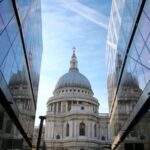
St. Paul’s Cathedral is a big one on any London list, and this tour gives it real context. It’s described as the nation’s church, and it has witnessed landmark moments, including:
- The marriage of Catherine of Aragon to Prince Arthur in 1501
- A visit by Queen Elizabeth I after the defeat of the Spanish Armada in 1588
- Guy Fawkes and co-conspirators being hung, drawn and quartered for trying to assassinate James I by blowing up Parliament
That’s heavy material, and it’s exactly why a guided photo approach works. When you know the stakes of the place, you tend to frame it more thoughtfully. You might still want the iconic exterior shot, but you’ll also want to photograph the cathedral’s presence and geometry.
This stop is 20 minutes, so you’re not rushed. Use it to:
- Try one low angle and one eye-level angle
- Photograph the cathedral with the surrounding skyline as context
- If people are in your frame, shoot anyway, then shoot again with a cleaner view
The tour description also highlights that you’ll get help taking memorable photos of this iconic building. That is especially valuable if you are newer with settings, because St Paul’s can be bright, reflective, and high-contrast depending on the day.
From the Millennium Bridge to Tower Bridge, turn views into a sequence
After St Paul’s, you get a quick jump to the National Firefighters Memorial and then the Millennium Bridge, with the river area setting you up for a strong “London by water” section.
First, the National Firefighters Memorial. It is by sculptor John Mills and commemorates people who helped London survive the Blitz, including professional firefighters, men and women. Winston Churchill called them heroes with grimy faces. The tour sets up the monument for dramatic photography with the statue in a setting near iconic landmarks.
This is one of the stops where your mindset matters. You’re not photographing a generic statue. You’re photographing respect, endurance, and history in public space. If your instinct is to shoot straight-on, try one dramatic variation:
- Frame the monument with a darker background
- Use a wider shot that shows it in relation to the landmarks behind
Then comes the Millennium Bridge, described as 325 meters long and opened on June 10, 2000. It links Tate Modern with the City of London and St Paul’s Cathedral. For photography, bridges give you leading lines instantly. They’re also great for trying shutter speed experiments on the river if your camera supports it.
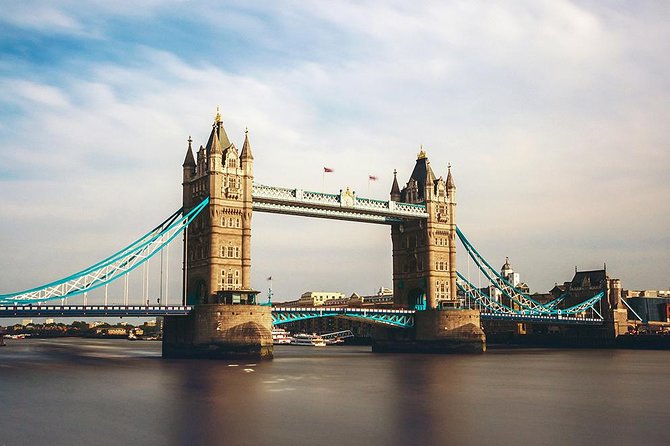
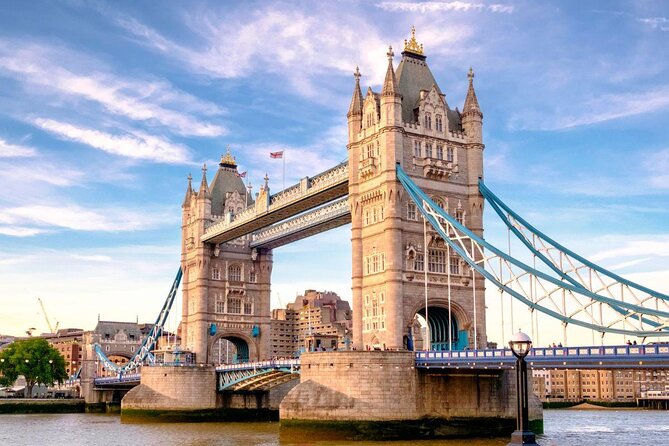
Your next big view is Tower Bridge, where you’ll get panoramic views of the River Thames and Tower Bridge itself. This stop is about 10 minutes, so treat it like a “capture the sweep” window. Wide shots plus one closer detail shot will usually give you the best set.
Tate Modern finale: end with big lines and a modern-art anchor
The tour ends at Tate Modern at Bankside, London. This is a strong finish for two reasons.
First, the building is described as being housed in the former Bankside Power Station, originally designed by Sir Giles Gilbert Scott, who also designed Battersea Power Station. That industrial shell creates huge photographic shapes, and it changes the way you see modern London.
Second, it’s identified as Britain’s national gallery of international modern art. Even if your real goal is photography, Tate Modern’s setting helps you build a final portfolio shot that feels contemporary and purposeful, not just historic.
This final stop is 10 minutes. You probably won’t do a full exploration. Instead, you’ll want to choose a viewpoint that gives you:
- The bold exterior lines of the building
- A sense of scale with the surrounding South Bank area
- A clean “end-of-tour” frame that looks like you planned it
Price and value: what you get for $71.63
At $71.63 per person for an approximate 2-hour walking experience, the key question is what you’re buying. You’re paying for a guided photo session led by a professional photographer, plus historical context and advice. The stops are listed with free admission tickets, so your cost is not inflated by entry fees.
This can be good value if:
- You want help improving your results quickly
- You like structure, so you are not wandering for hours
- You’re using a camera for more than casual snapshots
It’s less ideal if:
- You already know your settings well and don’t need coaching
- You expect completely off-the-map locations, because many stops are major landmarks
Also note the group size is capped at 18 travelers. For a photography tour, that’s the sweet spot where the guide can still look at your framing and offer direction.
What to bring so you leave with stronger photos
The tour doesn’t include a camera. So bring whatever you shoot with, but bring it ready.
For best results, I recommend:
- A charged battery and enough storage for lots of trial shots
- A strap or a stable way to move quickly on foot
- A plan for at least two framing styles, wide and detail
- If you use a phone, turn on grid lines so verticals stay straight
If you’re using a DSLR or mirrorless, you can also use the tour as a settings reset. The tour is designed for learning, so it’s a good time to test one new setting at a time instead of trying to overhaul everything in one go.
Who this tour suits best (and who might feel disappointed)
This is a great match if you want a guided photo session that mixes iconic London with quieter, more photo-friendly viewpoints. The tour is described as ideal for tourists and London locals alike, which makes sense. Locals often enjoy seeing familiar landmarks from a fresh angle. Tourists benefit from learning what to look for beyond the obvious.
It’s also a nice fit for mixed ability groups. The reviews emphasize that the guide supports people at different skill levels. That matters if you are traveling with someone who shoots manual while you shoot mostly auto.
The main risk is expectations. If you want rare secret corners only, you might find the landmarks familiar. The tour tries to solve that by teaching angles and creative perspectives at each stop, but the main bones of the route are still the well-known places around the City and river.
Should you book this London photography tour?
Book it if you want a short, focused photo lesson with a pro guide and a route that makes it easy to practice what you learn. The combination of free admission stops, a small group limit, and guided composition help makes it a practical way to improve your photos without spending a day figuring things out.
Skip it if you already have a strong London photo plan and you mainly want hidden locations with zero famous landmarks. In that case, you might prefer unguided time.
If you are somewhere in the middle, this tour is a smart choice. You’ll leave with better habits for framing and lighting, plus a tidy set of landmark-and-architecture photos that look more intentional than accidental.
FAQ
How long is the London Photography Tour?
It runs for about 2 hours.
What does the tour cost?
The price is $71.63 per person.
Where does the tour start and end?
It starts at IMPRINT Church London, St Mary Woolnoth, 10-13 Lombard St, London EC3V 9AN, UK and ends at Tate Modern, Bankside, London SE1 9TG, UK.
Is there a mobile ticket?
Yes, the tour uses a mobile ticket.
What is the minimum age to join?
The minimum age is 18 years.
Can children join?
Children must be accompanied by an adult, and both the child and the adult must have paid tickets.
Do I need a camera?
You will need a camera or camera phone to get the most out of the tour.
Is the group small?
The tour has a maximum of 18 travelers.
Is the tour dependent on weather?
Yes, it requires good weather. If it is canceled due to poor weather, you will be offered a different date or a full refund. It can also be canceled if a minimum number of travelers is not met, with a different date or full refund offered.
More Photo Walks And Shoots

More History Led Walks


Fresh off the notebook in London
- Private Rock ‘n’ Roll Music Tour of Central London
★ 5.0 · 7 reviews - London Walking Tour: Camden Town Photography Walkabout
★ 5.0 · 7 reviews - Private Transfer from London accommodation to Cruise terminal
★ 5.0 · 7 reviews - Amazing Nightlife in London East Tour
★ 4.5 · 7 reviews - The British Museum: a highlights tour with a TV historian
★ 5.0 · 7 reviews - Heathrow Airport to Cambridge private taxi transfers
★ 5.0 · 7 reviews
Historical Tours, compared.
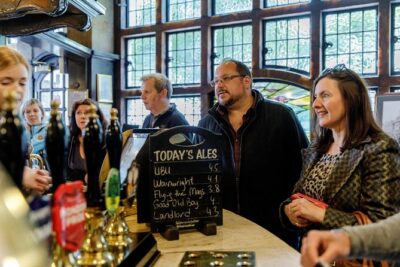 ★ 5.0London Small Group Tour of Historical PubsFrom $4010,422 reviews
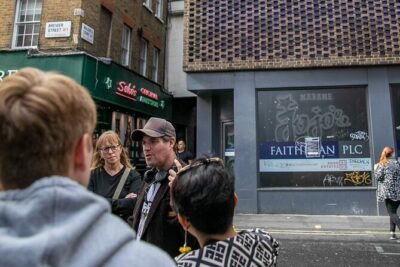 ★ 5.0Soho Music & Historic Pubs TourFrom $441,993 reviews
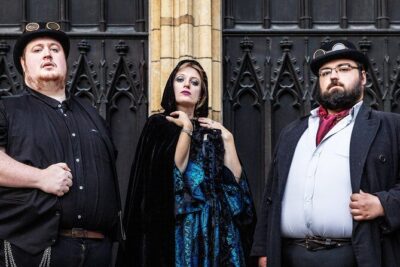 ★ 5.0Shadows of York: Ghost Walk and Horrible History.From $181,403 reviews
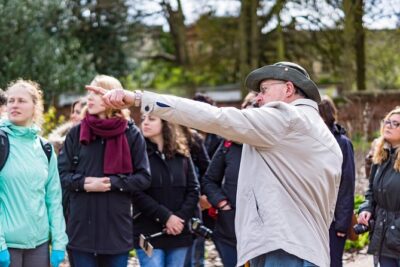 ★ 5.0Private Historical Walking Tour of YorkFrom $1951,324 reviews
 ★ 5.0A Walk Through Time: History of Liverpool Walking TourFrom $27911 reviews
 ★ 5.0Royal Historic Pubs Walking Guided Tour in LondonFrom $44803 reviews
 ★ 5.0Private Group: Historical Pub Walking Tour of LondonFrom $173660 reviews
 ★ 5.0Best Of Liverpool Heritage, History & Culture Guided Walking TourFrom $31539 reviews
Browse the lists this tour appears in