
REVIEW · HISTORICAL TOURS
City of London History Tour: The Square Mile that Rose to Empire
One neighborhood, two thousand years of London.
This City of London History Tour strings together Roman defenses, medieval churches, and today’s financial and civic power in a tight, practical walk. I especially liked the off-the-beaten stops like St. Giles Cripplegate and St Mary Aldermanbury Garden, because they feel like real City corners, not postcard set pieces. I also like the value angle: the tour focuses on sights with free entry, so you are paying mainly for interpretation and time with your guide.
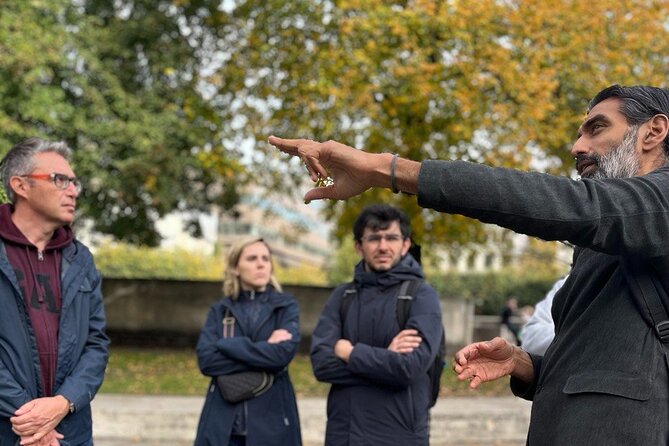
The guide, Argun, keeps the story moving without turning it into a lecture, and the pace is generally friendly for most people. One drawback to consider is the time at each place is short, often around 5 to 15 minutes, so if you want long photo breaks or to linger inside buildings, you may find the rhythm brisk.
In This Review
- Key things I think you will love
- Price and logistics: does $30.69 feel fair?
- Getting started at Barbican and ending near Cornhill
- Stop-by-stop walkthrough: the Square Mile story, in human scale
- 1) St. Alphage London Wall (Salters Garden), where many peoples meet
- 2) The Roman city wall, the oldest physical proof
- 3) St. Giles Cripplegate, Norman-era roots in a lived-in church
- 4) Salter’s Hall Garden, trade, governance, and sacrifice
- 5) Brewers’ Hall, where the story keeps a wink
- 6) St Mary Aldermanbury Garden, ruins, wards, and Shakespeare-adjacent lore
- 7) City of London, the governing unit behind the streets
- 8) Guildhall, town hall power and the mythology layer
- 9) St. Lawrence Jewry, a saint story with sharp edges
- 10) Guildhall Art Gallery, Roman amphitheatre ground
- 11) St. Margaret Lothbury Church, wards and “Worshipful”
- 12) The Royal Exchange, myths, adventurers, and the grasshopper
- 13) Mansion House, the Lord Mayor’s home and role
- 14) London Troops War Memorial, the dragon circle and the Minotaur thread
- 15) Bank of England, tradition with a forward look
- Pacing, comfort, and the real-world feel of the walk
- Who should book this tour, and who might pass
- Should you book City of London History Tour, The Square Mile that Rose to Empire?
- FAQ
- How long is the City of London History Tour?
- How much does the tour cost?
- Where do I meet and where does the tour end?
- Is the tour offered in English?
- Is it wheelchair and stroller accessible?
- Can I cancel for free?
Key things I think you will love
- A small group (up to 8), so questions stay easy and the walk feels personal
- Roman-to-empire story with stops that connect walls, worship, trade, and governance
- Free-entry stops across the route, which makes the $30.69 price feel more like value than a ticket fee
- Not-so-typical City sights, including livery halls and tucked-away church gardens
- Short, clear timing at each stop, which works well if you are short on time but craving meaning
- Wheelchair and stroller accessible, plus you get “near public transportation” convenience
More history led walks worth the hour
- London Small Group Tour of Historical Pubs★ 5.0 · 10,422 reviews
- Soho Music & Historic Pubs Tour★ 5.0 · 1,993 reviews
- Royal Historic Pubs Walking Guided Tour in London★ 5.0 · 803 reviews
- Private Group: Historical Pub Walking Tour of London★ 5.0 · 660 reviews
Price and logistics: does $30.69 feel fair?
At $30.69 per person for about 2 hours 30 minutes, this is priced like a tour you take early in a London stay. That is when a “how the city works” walk pays off, because the names you hear today start making sense later when you roam on your own.
The real value lever here is that the stops are set up as free-admission locations. You are not stacking paid attractions on top of each other. Instead, the cost buys your guide’s ability to connect the dots between street-level details, the City’s institutions, and the myths that Londoners have told about power for centuries.
You will also appreciate the practical side: you get a mobile ticket, the tour runs in English, and it operates with a maximum of 8 travelers. That small size matters in the City, where sidewalks and crossings can get tight.
One more logistics note that helps your planning: it is typically booked about 39 days in advance on average, so if you are traveling in peak season, do not wait until the last minute.
Getting started at Barbican and ending near Cornhill
The tour starts at Barbie Green2, London Wall Pl, Barbican, London EC2Y 5AU. That is a good launchpad because the area sits right on the edge of the historic City core, so you are not spending your first 30 minutes riding or rerouting to get to the meaningful parts.
The walk ends at the London Troops War Memorial, Cornhill, London EC3V 3LN. That finish point is helpful if you want to continue exploring right away, since Cornhill is a straightforward place to connect to other walking routes.
Because the tour is marked as near public transportation and stroller and wheelchair accessible, you can usually expect an easier time than you would on some older, staircase-heavy London walks.
Stop-by-stop walkthrough: the Square Mile story, in human scale
1) St. Alphage London Wall (Salters Garden), where many peoples meet
You begin at St. Alphage London Wall in the Salters garden area. The timing here is about 15 minutes, which is long enough for your guide to set context without losing your attention.
This opening matters because the “Square Mile” only sounds small. In reality, this corner has layers that overlap: Roman-era fortification logic, medieval reuse, and later Norman influence. You start with the idea that London did not grow randomly. People built defenses, then built institutions.
Practical tip: use this first stop to get your bearings. Once you understand where you are in relation to walls and governance, the rest of the route lands better.
More city runs, half day and full


2) The Roman city wall, the oldest physical proof
Next comes a look at the Roman city wall, about 10 minutes. This is one of those stops where you are seeing more than a landmark. You are seeing an engineering decision that shaped who could live safely in this area.
The tour frames it as the oldest part of the wall, tied to a fortification that helped Londinium resist outside pressure. Even if you are not a Roman fan, this part gives you a concrete “why” behind the City’s survival.
Quick consideration: because this is outdoors, winter wind or summer heat can be felt more than at indoor stops. Bring a layer if the weather looks moody.
3) St. Giles Cripplegate, Norman-era roots in a lived-in church
At St. Giles Cripplegate, the stop is roughly 10 minutes. The church is described as one of the oldest medieval churches in the City, with Norman time connections and earlier Saxon context.
This stop helps you shift from military history to human history. Fortifications keep people safe, but churches show what people believed and how communities organized around worship.
If you like symbolism, pay attention to how your guide links the physical location to older settlement patterns. It makes the City feel older than its buildings look.
4) Salter’s Hall Garden, trade, governance, and sacrifice
Stop 4 is Salter’s Hall Garden for about 10 minutes. Here you get the thematic thread that ties the whole tour together: trade, governance, and sacrifice across time.
The explanation emphasizes the Roman wall as a physical structure that supported the City’s ability to resist outside influence, then zooms outward to the people involved, including mention of Celtic peoples and the indigenous backdrop that made Roman fortification necessary.
Then your guide pivots to the Salter’s Hall connected to livery governance. It is ranked 9th among 12 most important livery companies (guilds). Even if “livery companies” sounds like jargon, this stop helps you understand that the City’s power was never only government. It was also merchants, trades, and civic responsibility.
5) Brewers’ Hall, where the story keeps a wink
Brewers’ Hall is another about 10 minutes. The tour’s description is playful, calling it the livery company that set the standard for booze.
That tone is a gift. The City can feel serious, and livery halls can sound like history you need a textbook to enjoy. A guide who can make it human keeps you engaged, and this is one of those stops where the guide’s voice makes the institutions easier to remember.
If you are a beer person, you will probably enjoy the mental image of how regulated trades helped fuel the City’s growth.
6) St Mary Aldermanbury Garden, ruins, wards, and Shakespeare-adjacent lore
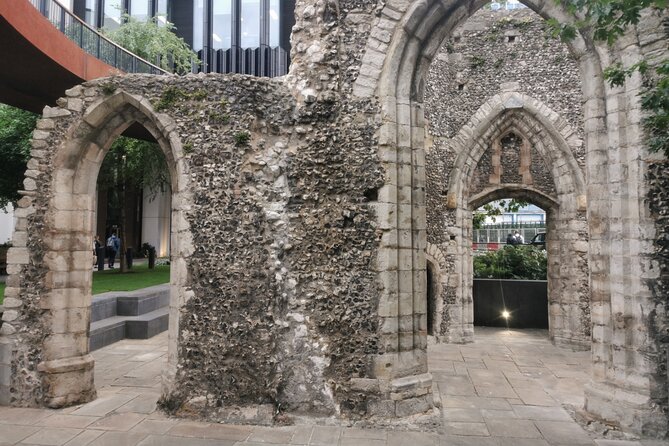
Stop 6 is St Mary Aldermanbury Garden for about 10 minutes. This spot is tied to an ancient court or bery of the aldermen, and it connects to what is now held at the Guildhall.
The garden today hosts memorials tied to a Shakespeare connection and two legends from different livery companies. That is a good example of how the City layers famous names onto civic institutions.
One practical drawback: because gardens and churchyard spaces are calm, you might have to work a little to spot what you are meant to notice. Let your guide point you to the specific memorials or details, then take your photos after you understand what you are looking at.
7) City of London, the governing unit behind the streets
You get about 5 minutes at the City of London itself, the municipal governing body and historic center. This is a short stop, but it is important.
This tour uses time-efficient explainers, because the real goal is to help you understand that “London” has different identities inside it. The City of London is not just a neighborhood. It has its own governance story that shaped everything around it.
8) Guildhall, town hall power and the mythology layer
At Guildhall, you spend about 15 minutes. The tour notes it has been on the current site since at least the 13th century, and it includes mythology connections spanning Greek through Roman, Saxon, and Norman influences.
That can sound like a lot, so what matters is the approach: your guide is not listing dates. They are showing how myths and political legitimacy travel through time. Power likes stories. London’s civic center is where those stories got formalized.
If you like political history, this is a must-not-miss stop. It turns a building into a symbol.
9) St. Lawrence Jewry, a saint story with sharp edges
Stop 9 is St. Lawrence Jewry for about 5 minutes. It is framed as a City church tied to the saint associated with Christianity’s spread, including a sacrifice described as unforgettably cruel.
This is a quick stop, but it adds contrast. After governance and trade, you get the religious narrative again, including the darker edge of martyrdom stories.
If you are sensitive to violent historical accounts, just be aware this stop includes that kind of framing.
10) Guildhall Art Gallery, Roman amphitheatre ground
You then head to the Guildhall Art Gallery for about 25 minutes. This is the longest stop on the route, and it is the one where you get extra time to slow down.
The key detail is that the site is connected to the Roman Amphitheatre location. That is a neat way to connect art and culture to the physical ground underneath.
This stop is ideal if you want a break from constant walking and quick photo stops. It is also where you can soak up the idea that the City’s past is often literally under your feet.
11) St. Margaret Lothbury Church, wards and “Worshipful”
Stop 11 is St. Margaret Lothbury Church for about 5 minutes. The framing here is very City-specific: it represents two wards of the City of London, and your guide explains how livery companies come to be named Worshipful.
This is one of those moments where your understanding jumps. Instead of treating livery companies like strange heritage, you learn what the terms mean and why they matter for civic identity.
12) The Royal Exchange, myths, adventurers, and the grasshopper
Stop 12 is The Royal Exchange, about 5 minutes. It is described as built by a legend for adventurers to meet, with the guide linking these men to shaping the new world.
You also look for the golden grasshopper on top. That detail matters because the City’s symbols often hide in plain sight. If you miss it, you miss the fun part of the story.
This is brief, but it helps you see how commerce and legend got tied together in a single place.
13) Mansion House, the Lord Mayor’s home and role
At Mansion House, you spend about 5 minutes. The tour frames it as where the Lord Mayor of the City of London works and lives, including the note that the role supports the UK’s financial and professional services sector as an international ambassador.
Even without going inside, this stop clarifies how civic leadership in the City is both ceremonial and connected to real economic influence.
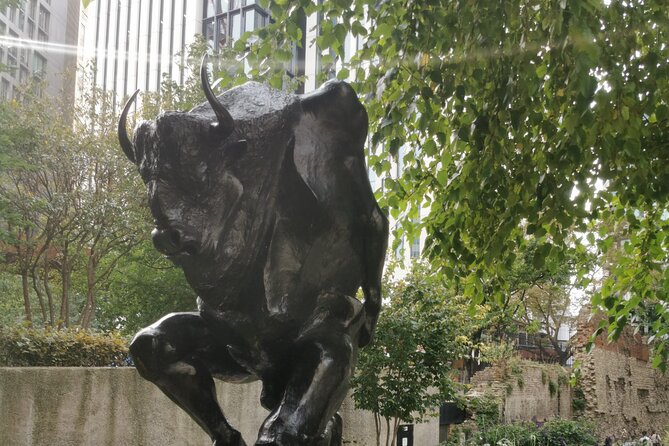
14) London Troops War Memorial, the dragon circle and the Minotaur thread
Stop 14 is the London Troops War Memorial for about 10 minutes. This is one of the most story-rich stops.
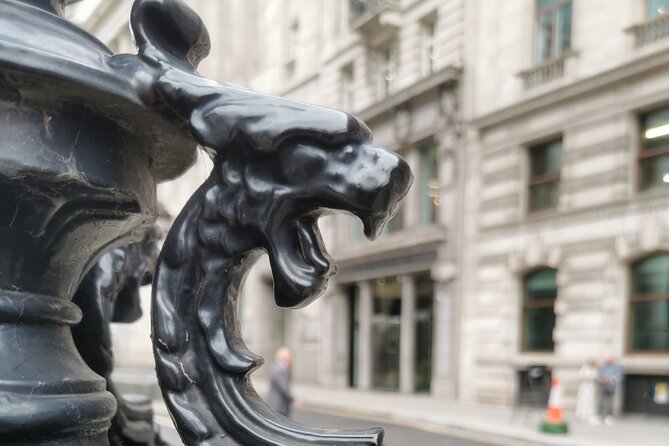
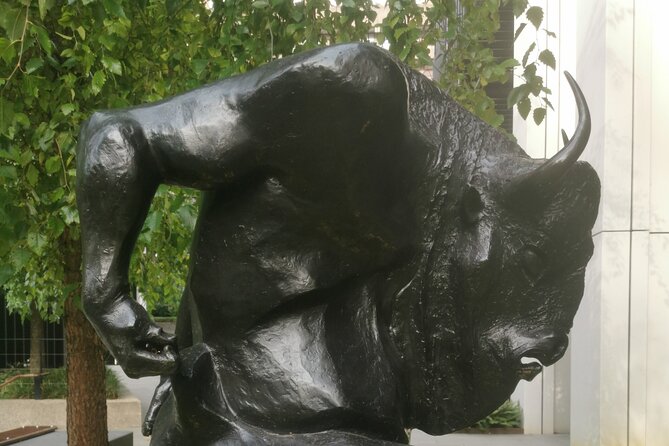
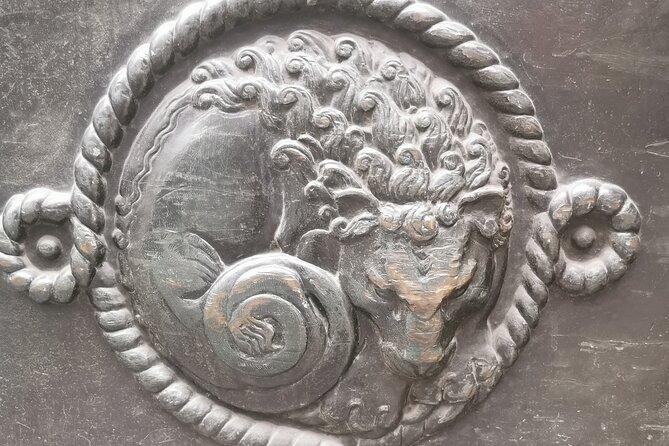
The tour description highlights a circle of 12 dragon lamposts representing the 12 great livery companies. It also mentions notable figures remembered around this area, and then it wraps back to the Minotaur story before the tour concludes.
This ending beat is effective. You are not just seeing a memorial. You are seeing how the City uses mythic imagery to tie its identity to institutions.
15) Bank of England, tradition with a forward look
Finally, you get about 5 minutes at the Bank of England. The description points out the influence of a traditional institution that is still looking forward, and it notes a golden statue on top with an interesting story.
Even though the time here is short, the placement at the end makes sense. You end with the modern financial powerhouse after seeing how trade and governance helped set the stage.
Pacing, comfort, and the real-world feel of the walk
This is a 2.5 hour tour built out of many quick stops. That is great for first-timers because you get a lot of meaning without spending the whole day in one area.
The trade-off is you cannot expect long sit-down moments. Most stops are 5 to 15 minutes, with a bigger exception at Guildhall Art Gallery at about 25 minutes. If you need extra time for slow photos or reading plaques, plan on using your guide’s directions well, then doing your own slow loop afterward on your own.
On the comfort side, it is marked wheelchair and stroller accessible, which is a strong signal that the route is designed to be walkable with support.
Also, the group limit of up to 8 helps. In a packed place like the City, small groups feel calmer, and your guide can keep you together without rushing.
Who should book this tour, and who might pass
This tour suits you if you:
- are a history buff who likes institutions, trade, and governance stories
- are new to London and want a mental map of the Square Mile’s power structure
- like quirky details like the golden grasshopper and mythic links such as Minotaur
- want an off-the-beaten City route, not only the usual big-name stops
You might pass if you:
- want long interior time inside major museums or churches
- prefer slow, unstructured wandering with minimal talking
- dislike historical stories that include cruel martyrdom context
Should you book City of London History Tour, The Square Mile that Rose to Empire?
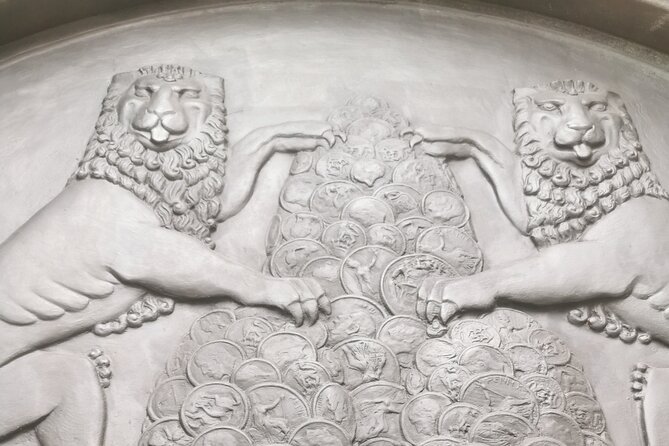
If you want a smart, story-driven walk that helps you understand how London’s City worked long before skyscrapers, this is an easy yes. The biggest reason is the mix: Roman walls, medieval churches, livery halls, civic leadership, and modern finance all connect in a single route. Add in the small group size, the free-entry feel at stops, and the guide’s ability to make it stick, and you get strong value for the time.
Book it early if you are starting your London trip. You will notice what you missed before, and later walks around the City will feel like you finally understand the labels on the doors.
FAQ
How long is the City of London History Tour?
It runs for about 2 hours 30 minutes.
How much does the tour cost?
The price is $30.69 per person.
Where do I meet and where does the tour end?
You start at Barbie Green2 London Wall Pl, Barbican, London EC2Y 5AU and finish at London Troops War Memorial, Cornhill, London EC3V 3LN.
Is the tour offered in English?
Yes, it is offered in English.
Is it wheelchair and stroller accessible?
Yes, it is listed as wheelchair and stroller accessible.
Can I cancel for free?
Yes. You can cancel for a full refund if you cancel at least 24 hours in advance of the experience start time.
More City Runs In London






More History Led Walks






Fresh off the notebook in London
- Witchcraft, Ancient Cults & MI15 Spy Secrets
★ 4.0 · 3 reviews - Arrival Transfer: London Train Stations to London Hotels
★ 5.0 · 3 reviews - Royal Afternoon Tea & Walk at Kensington Palace
★ 4.5 · 3 reviews - Bridgerton Tour in London
★ 5.0 · 3 reviews - Private Transfer from central London to Southampton Cruise Terminal
★ 5.0 · 3 reviews - Photographer, Professional Photo Shoot – London
★ 5.0 · 3 reviews
Historical Tours, compared.
 ★ 5.0London Small Group Tour of Historical PubsFrom $4010,422 reviews
 ★ 5.0Soho Music & Historic Pubs TourFrom $441,993 reviews
 ★ 5.0Shadows of York: Ghost Walk and Horrible History.From $181,403 reviews
 ★ 5.0Private Historical Walking Tour of YorkFrom $1951,324 reviews
 ★ 5.0A Walk Through Time: History of Liverpool Walking TourFrom $27911 reviews
 ★ 5.0Royal Historic Pubs Walking Guided Tour in LondonFrom $44803 reviews
 ★ 5.0Private Group: Historical Pub Walking Tour of LondonFrom $173660 reviews
 ★ 5.0Best Of Liverpool Heritage, History & Culture Guided Walking TourFrom $31539 reviews
Browse the lists this tour appears in