
REVIEW · HISTORICAL TOURS
Ilfracombe Seafront History Walking Guided Tour
Ilfracombe feels like it has secrets, if you know where to look. This guided seafront history walk strings together sea-facing landmarks into one easy, story-driven route. You get a guided shortcut into the town’s oddball past, with enough mystery to keep you awake and enough context to make it make sense.
Two things I really like about this tour: the focus on specific buildings you can actually see, and the way the guide keeps the pace light but informative. On the route, Ilfracombe’s past is explained with enthusiasm, including notes and old imagery that help you picture how the town looked when it was in its Victorian tourist heyday.
One drawback to consider is timing: it is a tight 90 minutes, so each stop is only a short look. If you love lingering and taking photos for ages, you may want to plan extra time on your own after the tour, especially around St Nicholas Chapel and the harbour.
In This Review
- Key reasons this Ilfracombe seafront tour works
- Start at the Landmark Theatre, then watch the resort era unfold
- The Ilfracombe Hotel to Alexandra Hotel story, and why the details matter
- Follow the harbour, from medieval port life to modern sea days
- St Nicholas Chapel, the beacon chapel that still guides ships
- How the guide makes it more than a checklist
- Timing and what to do with the rest of your afternoon
- Who should book this Ilfracombe seafront history tour
- Should you book it?
- FAQ
- How long is the Ilfracombe Seafront History Walking Guided Tour?
- Where does the tour start and where does it finish?
- Is the tour offered in English?
- Do I need to print a ticket?
- What group size should I expect?
- Are dogs or service animals allowed?
- Does the tour run in any weather?
Key reasons this Ilfracombe seafront tour works
- A compact 90-minute route that covers big eras without making you wait around
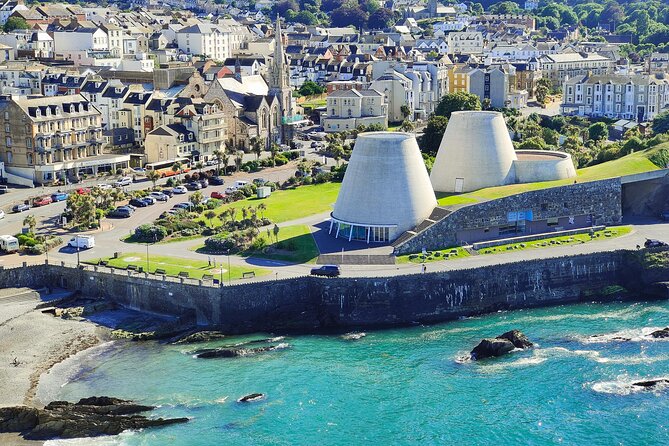
- Landmark Theatre area links to the Victorian Ilfracombe Hotel and later Alexandra Hotel stories
- Harbour context from medieval times, including Ilfracombe’s long-running port role
- St Nicholas Chapel’s beacon and lighthouse legacy, including a still-lit guiding feature
- A small group size (max 15), which helps questions feel normal
- Ghost tales mixed in with real local history, not instead of it
More on foot, at a pace you can hear the guide
- The Fawlty Tours walking experience★ 5.0 · 42 reviews
- Walking Tour of Exmouth in East Devon★ 5.0 · 12 reviews
Start at the Landmark Theatre, then watch the resort era unfold
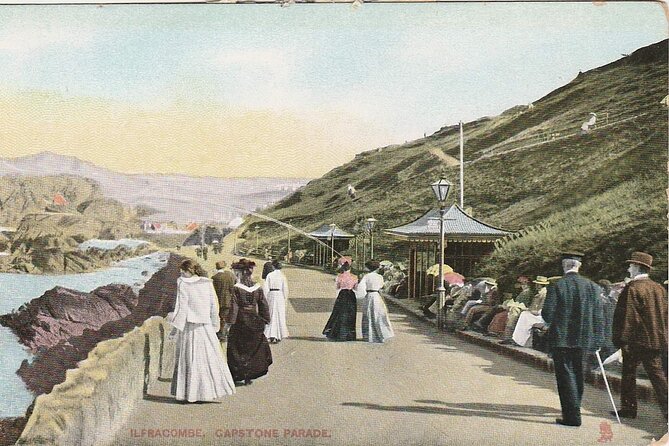
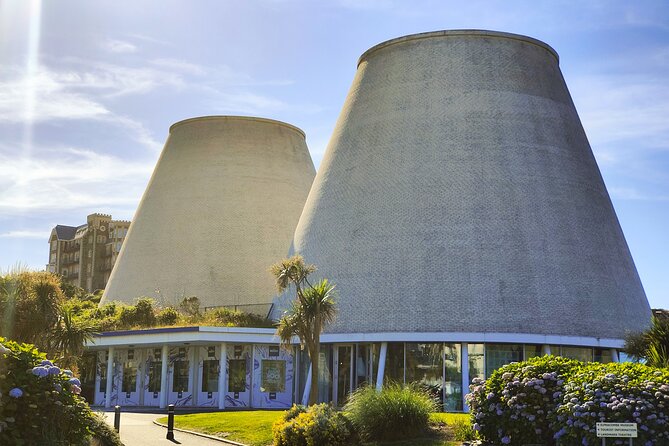
Your walk begins at the Landmark Theatre on The Promenade, Ilfracombe. Even before you get to the first big story stop, the setting does some work for you. You are right by the sea. Wind off the water keeps you alert. And when you have a guide talking about Ilfracombe’s “sea through time” angle, you can’t help but look at the buildings with new eyes.
Stop one centers on the site of the Victorian Ilfracombe Hotel, opened May 15, 1867. That date matters because it anchors the town in its rise as a seaside getaway. The building sat in a prime spot along the shore, with views over Capstone Hill and Wildersmouth beach. In other words, it was made for visitors who came for the promenade life and the sense of arrival.
The tour does a smart thing here: it does not treat history like a lecture. It treats it like layers. The Ilfracombe Hotel later became known as the Alexandra Hotel in the 1880s, and then there are more 20th-century threads tied to a couple named Blackmore, who owned or managed it in the 1970s. From there, the story shifts toward the town’s haunted reputation, with this location described as one of Ilfracombe’s most haunted pubs.
If you are the type who likes to travel by stories, this stop gives you a strong hook. You will probably find yourself mentally matching what you see now to what the town once sold to visitors: comfort, luxury, and the feeling of staying somewhere special by the sea.
The Ilfracombe Hotel to Alexandra Hotel story, and why the details matter
This first segment is where the tour’s personality shows. It moves between factual dates and local folklore, but it never loses the thread. You learn the building’s “name changes” and ownership shifts because those changes reflect what Ilfracombe itself was doing across decades: hosting guests, rebranding itself, and then sliding into the darker side of local legend as the glamour cooled.
I like that the tour leans into that contrast. Ilfracombe was, at one point, a resort with grandeur that reminded people of Mediterranean rivieras, just about 100 years earlier. That detail helps you understand why a place would build something that looks imposing and sea-forward. It was part of the sales pitch, and the guide helps you see that the architecture was doing the marketing.
The practical win for you is that you leave stop one with a clear mental map. Instead of just thinking, That is a theatre and some buildings by the sea, you start to connect them. You get a sense of how visitors moved through town, what they expected to experience, and how the same spaces can later become associated with haunted talk.
Heads-up: because it is a walking tour, this story is fast. You get the bones of the legend and the structure of the timeline, but not time to read every plaque or window display. Plan to slow down afterward if you want to go deeper on your own.
Follow the harbour, from medieval port life to modern sea days
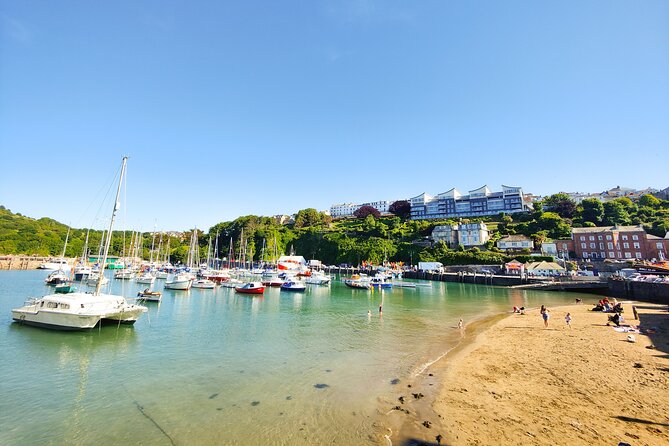
Next, you head to Ilfracombe Harbour. This is where the tour shifts from hotels and tourism to trade and survival. Ilfracombe has had a port since the 12th century, and settlement activity goes back even earlier than that. So while the first stop feels like the town presenting itself to visitors, this one shows the town relying on the sea for practical reasons.
The harbour part is especially valuable because it explains why Ilfracombe became a significant safe port, including being registered as a port of refuge on the Bristol Channel. That is a useful detail to know. It means the harbour was not just scenic. It mattered when weather turned, when ships needed shelter, and when survival depended on finding a safe place along a rugged stretch of coast.
As you walk near the harbour, the guide’s job is to help you read the space. Natural layout does the heavy lifting here, and once someone points that out, you start to notice how the harbour’s shape supports safe docking and shelter. It is the kind of explanation that makes the coastline feel purposeful, not random.
One more thing I appreciate: you get context without feeling stuck. The tour gives you a short, focused look that is enough to change your mindset. You are not just seeing boats and railings. You are thinking about medieval shipping, seasonal movement, and the long timeline of people using the same sheltered water.
Potential drawback for some people: if you are expecting a long harbour promenade plus lots of time for photos, you might wish you had more minutes here. It is timed to keep the full story moving, so you will likely want to return later if the harbour is a big priority for your trip.
St Nicholas Chapel, the beacon chapel that still guides ships
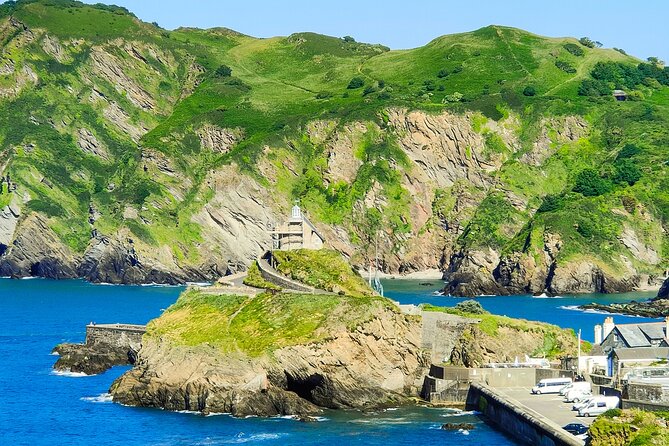
The final major stop is St Nicholas Chapel on The Quay. This is the part of the tour that feels most “place-specific.” You are not just learning about a location. You are learning about a building with a job that literally involved light.
St Nicholas’s Chapel dates from the 14th century and is described as a seamen’s chapel. That means it was built for the people who lived and worked around the harbour. It is a rare combination: worship and maritime life in one structure.
Even more striking, it is said to be the only surviving beacon chapel and lighthouse. The tour also explains that it was used as a lighthouse at the time of Henry VIII, and that to this day the light remains on, helping guide shipping into the harbour. Even if you know nothing about how coastal navigation worked, that fact lands. You can stand there knowing the building still carries part of its original purpose.
What makes this stop worth the effort is how the guide connects past and present. Many history tours stop at describing what used to be. Here, the story reaches forward. The chapel’s continuing light means you can look at modern shipping and think, People have relied on this kind of signal for centuries.
If you are into architecture, religion, or maritime history, this is the “why it exists” moment. If you are into ghost stories, it is also the sort of place where stories feel believable, not forced, because the site is tied to real hardship and real nights at sea.





How the guide makes it more than a checklist
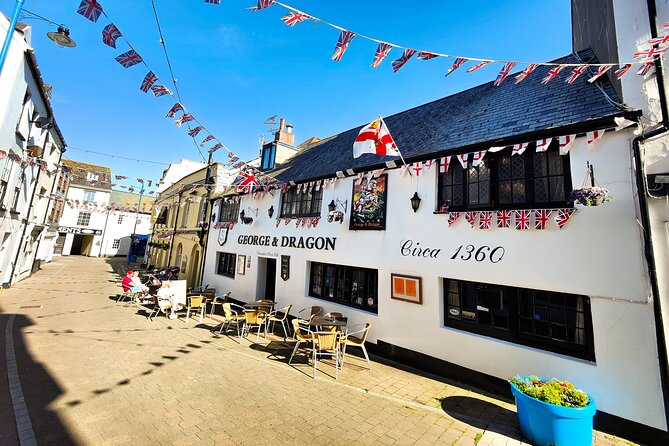
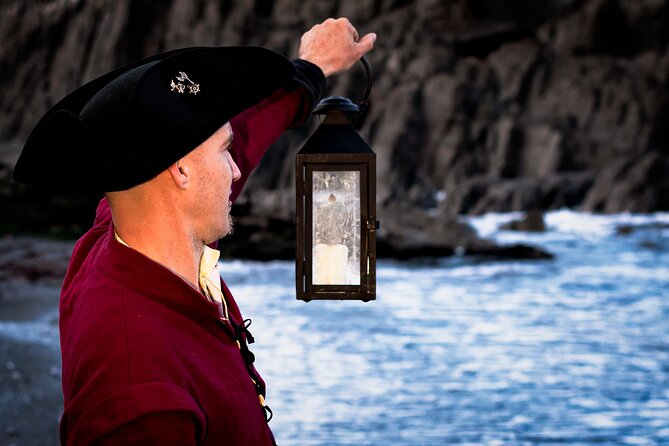
A huge part of what keeps this tour in the high-rating territory is the guide’s storytelling style. The name Mark comes up often in the tour feedback, and the pattern is consistent: he answers questions, shares old photos, and threads in a few mystery stories along the way. That matters because it prevents the walk from turning into a dry recitation of dates.
You should expect an energetic, relaxed pace where you can ask things without feeling like you are interrupting. The tour is set up so the group can stay engaged, and with a maximum group size of 15, you are not swallowed by a crowd.
I also like that the tour blends the unusual with the grounded. There are ghost tales, yes. But they are anchored to real locations like the harbour and the chapel. That gives you something you can carry home: a sense that the weird stories come from a real place with real history, not just a theme-park script.
One practical tip: bring your curiosity. If you ask simple questions, like how a port of refuge actually helped ships, you will get more from the walk. The guide does not just talk at you.
Timing and what to do with the rest of your afternoon
The tour runs about 1 hour 30 minutes. It starts at 2:00 pm and keeps you moving along the seafront and harbour corridor. The stops are short on purpose. You get enough time to understand the key facts, then you move on before the group gets restless.
Here is how I’d plan your day. Do this walk as a foundation, then give yourself time afterward to slow down. If St Nicholas Chapel pulls you in, go back and look longer. If the harbour story sparks interest, hang around for a second pass on your own and see what catches your eye when you are not listening to narration.
Another scheduling benefit: because the tour is outdoors in a coastal setting, the weather will affect your comfort. The experience notes good weather is needed, so if the forecast looks grim, keep your plans flexible. When it is clear, the sea views do a lot of the work for the mood.
Finally, if you are traveling with a dog, this tour is friendly to that. Dogs on leads are welcome, and service animals are allowed. That makes it easier to include the whole crew without splitting up your plans.
Who should book this Ilfracombe seafront history tour
This is a great fit if you want history without heavy museum time. It works especially well if you:
- Like stories tied to specific buildings you can see
- Want a guided way to understand Ilfracombe’s evolution from tourist resort to working harbour
- Enjoy a bit of haunted local folklore, as long as it is backed by real context
- Prefer small-group attention, with a maximum of 15 people
- Are short on time but still want your visit to feel meaningful
It may be less ideal if you want deep, stop-by-stop reading and lots of free time inside buildings. Each major site is a brief, guided look. Think of it as a strong introduction and a map, not the final word.
Should you book it?
Yes, if you want an efficient, story-rich way to connect Ilfracombe’s sea life, harbour importance, and beacon-lighthouse legacy. The value is in how the route turns familiar views into a chain of meaning, from the Victorian hotel era through the medieval port and ending at St Nicholas Chapel, where light still serves ships.
Book it especially if you learn better with a guide talking and pointing out how places connect. You will likely come away with a clearer mental picture of why Ilfracombe looks the way it does, and why the town’s stories are so hard to shake.
If you are deciding between this and a slower, self-guided wander, choose this for focus. Choose a self-guided plan if you want maximum time per stop. Either way, doing something early in the afternoon helps, because you will spot more on the rest of your trip.
FAQ
How long is the Ilfracombe Seafront History Walking Guided Tour?
It lasts about 1 hour 30 minutes.
Where does the tour start and where does it finish?
It starts at Landmark Theatre on The Promenade, Ilfracombe EX34 9BZ. It ends at St Nicholas Chapel, The Quay, Ilfracombe EX34 9EQ, or at the harbour pier near to Verity.
Is the tour offered in English?
Yes, it is offered in English.
Do I need to print a ticket?
No, it uses a mobile ticket.
What group size should I expect?
The tour has a maximum of 15 travelers.
Are dogs or service animals allowed?
Service animals are allowed, and friendly dogs on leads are welcome.
Does the tour run in any weather?
It requires good weather. If it is canceled due to poor weather, you are offered a different date or a full refund.
Other Departures With A Guide Attached


More Of Devon On Foot

Fresh off the notebook in Devon
- Explore North Cornwall on Electric Bikes
★ 5.0 · 8 reviews - Doc Martin, Fishermans Friends & North Cornwall
★ 5.0 · 9 reviews - Walking Tour of Exmouth in East Devon
★ 5.0 · 12 reviews - Half Day Sea kayak Guided Tour
★ 5.0 · 15 reviews - Ilfracombe Seafront History Walking Guided Tour
★ 5.0 · 18 reviews - Dartmoor Tour
★ 5.0 · 36 reviews
Historical Tours, compared.
 ★ 5.0London Small Group Tour of Historical PubsFrom $4010,422 reviews
 ★ 5.0Soho Music & Historic Pubs TourFrom $441,993 reviews
 ★ 5.0Shadows of York: Ghost Walk and Horrible History.From $181,403 reviews
 ★ 5.0Private Historical Walking Tour of YorkFrom $1951,324 reviews
 ★ 5.0A Walk Through Time: History of Liverpool Walking TourFrom $27911 reviews
 ★ 5.0Royal Historic Pubs Walking Guided Tour in LondonFrom $44803 reviews
 ★ 5.0Private Group: Historical Pub Walking Tour of LondonFrom $173660 reviews
 ★ 5.0Best Of Liverpool Heritage, History & Culture Guided Walking TourFrom $31539 reviews
Browse the lists this tour appears in