
REVIEW · HISTORICAL TOURS
The History of London City Center Tour Semi-Private 12ppl Max
London makes sense on foot.
This semi-private tour strings together major sights into one walk, with stories that reach back to Roman London and ripple through the royals and wartime years. I like the way it keeps you moving from Covent Garden through Parliament Square, so you get a clean overview fast, without getting stuck at one monument.
Two things I especially like: the 12-person max really helps you hear your guide, and you end at Westminster Abbey with your ticket in hand. One thing to think about first: several spots are seen from the outside, and some inside access depends on security and timing, so it is not a ticket-heavy tour.
In This Review
- Key highlights I’d plan around
- Why This 2.5-Hour City-Center Walk Works So Well
- Meeting at Covent Garden and What the Small Group Means
- Stop-by-Stop: Covent Garden to Westminster Abbey
- Covent Garden: A West End start with older roots
- Trafalgar Square: Protests, victory, and statues
- Admiralty Arch: Royal memory with a practical purpose
- Whitehall: The road between politics and history
- 10 Downing Street: Close enough to feel the weight
- St. James’s Palace: A senior royal presence
- Buckingham Palace: Working monarchy in plain sight
- Churchill War Rooms: The wartime command centers you pass by
- Big Ben and the Palace of Westminster area
- Westminster Abbey: The finish with your entry ticket
- The Landmarks You See from the Outside, and What You Miss
- History Lessons That Actually Help You Navigate London
- Price and Value: Why About $59.28 Might Be a Smart First-Day Plan
- Who This Walk is Best For, and Who Should Plan Differently
- Should You Book This London City Center Tour?
- FAQ
- Where does the tour start and where does it end?
- How long is the London city center tour?
- What is the group size limit?
- What is included at Westminster Abbey?
- Are there extra tickets needed for Churchill War Rooms or Big Ben?
- How does cancellation work if plans change?
Key highlights I’d plan around
- Small-group format (12-person max) keeps questions possible and pacing comfortable
- End-at-Westminster Abbey entry with interior access on your own, not a guided walkthrough
- Prime Ministers, kings, and wartime Britain tied to what you see on the street
- Major landmarks in 2.5 hours: Trafalgar Square, Whitehall, Downing Street, Buckingham Palace, and more
- Rain or shine, guided walking so you still get value even when weather turns
More history led walks worth the hour
- London Small Group Tour of Historical Pubs★ 5.0 · 10,422 reviews
- Soho Music & Historic Pubs Tour★ 5.0 · 1,993 reviews
- Royal Historic Pubs Walking Guided Tour in London★ 5.0 · 803 reviews
- Private Group: Historical Pub Walking Tour of London★ 5.0 · 660 reviews
Why This 2.5-Hour City-Center Walk Works So Well
London City Center is packed. If you try to see it all alone, you can waste time zigzagging and missing the “why” behind each place. This tour solves that with a focused route, timed at about 2 hours 30 minutes and built for active walking.
The pacing matters. You get frequent stops, but not long, exhausting museum sessions. That makes it a smart plan if you want first-day orientation, or if you already have tickets later and just need the downtown story now.
You’ll also like the rhythm of the route. It starts in the lively West End area, then shifts toward government and monarchy sites, and finishes at one of the most important church buildings in the country. By the time you reach Westminster Abbey, the map in your head feels far less confusing.
Meeting at Covent Garden and What the Small Group Means
Your tour starts in Covent Garden at 10:00 am, and it ends in front of Westminster Abbey. The meeting point is in a central area with public transport nearby, so you are not fighting London logistics before you even begin.
The group size is capped at 12 travelers. That matters more than it sounds. In a city like London, the difference between 6 people and 20 people is whether you can actually hear your guide, ask a question, and get small pacing adjustments.
This is also a semi-private setup, with the tour described as running with no more than 12 guests. In the reviews, I saw people highlight small groups as a big part of why the walk felt friendly and not crowded. One person even noted a group size of six, which is exactly the kind of scenario that makes street-level history feel personal.
One practical note: bring a mobile phone number with country code for the mobile ticket process. Also expect a walk that is not built for wheelchairs or walking disabilities, based on the tour details. Comfortable shoes and water help, since you are outside most of the time.
Stop-by-Stop: Covent Garden to Westminster Abbey
This route is designed like a story moving through London’s power centers. You’ll hear it as you walk, not as a list of facts you forget five minutes later. Below is how the stops tend to feel in real life, plus what you should watch for.
Covent Garden: A West End start with older roots
You begin at Covent Garden, where the area’s thriving life is said to trace back to at least the 7th century, when it was a Saxon settlement. Today it’s known for shopping, theatre, food, bars, and culture. Starting here is a good move because it feels lively and approachable.
Time on this stop is about 10 minutes, with no ticket required. If you want photos, this is one of your easiest moments to get them, because you are starting in a pedestrian-friendly zone.
Potential drawback: Covent Garden can be busy, so if you’re sensitive to crowds, try to keep your head up and let the guide lead you through the area quickly.
More city runs, half day and full

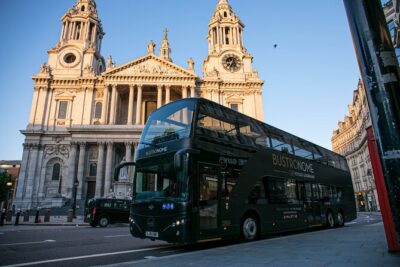

Trafalgar Square: Protests, victory, and statues
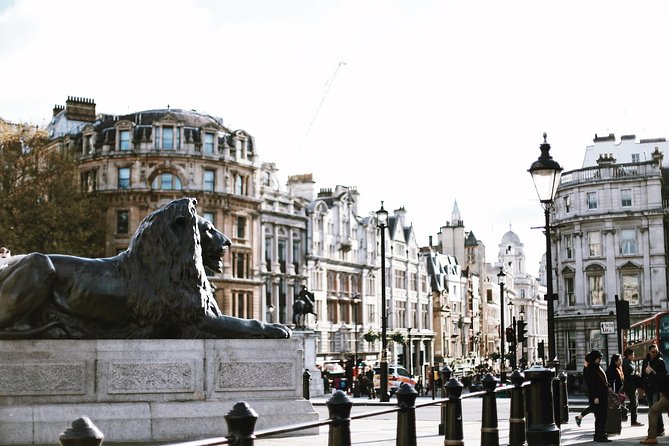
Next comes Trafalgar Square, built around the commemoration of the Battle of Trafalgar, a major British naval victory in the Napoleonic Wars. You’ll also hear how the square has been used for protests and demonstrations over time.
You’ll see Nelson’s Column here. It’s a straightforward landmark, and it helps your brain anchor the entire square. Since it’s only about 10 minutes, the guide focus matters. A good guide will connect the dots between who Nelson was, why the monument is here, and why the square still matters.
This stop is 10 minutes with no ticket needed. It’s a great place to orient yourself since you can spot major nearby government buildings once you start walking again.
Admiralty Arch: Royal memory with a practical purpose
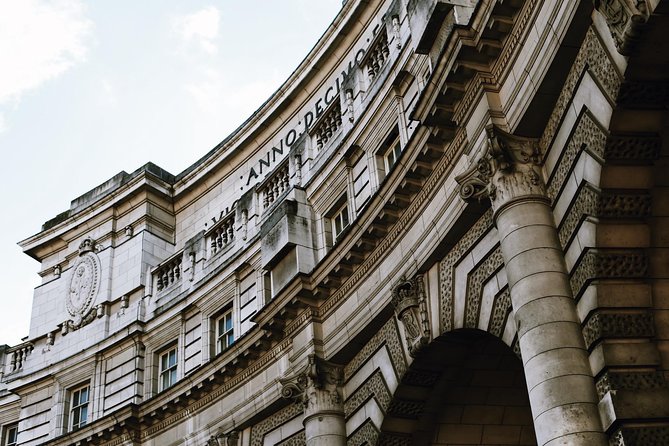
Then you’ll pass Admiralty Arch, a landmark that provides road and pedestrian access between the Mall and Trafalgar Square. The detail to listen for is that it was commissioned by King Edward VII in memory of his mother, Queen Victoria.
This is one of those stops where you might not think, I need to stop here. But it’s valuable because it shows London’s habit of mixing function with symbolism. You’re literally moving through a designed corridor between two important civic areas.
You’ll spend about 10 minutes, and there’s no ticket required. Watch the building details as you walk, not just the big picture.
Whitehall: The road between politics and history
You then walk along Whitehall, the street between Charing Cross and the Houses of Parliament. The name also refers to the cluster of small streets, squares, and government buildings around it.
Whitehall is said to have been the site of principal government offices since Henry VIII’s court at Whitehall Palace in the 1530s. That is a useful anchor for understanding why so many political and ceremonial moments feel concentrated here.
It’s another 10-minute segment with no ticket required. The drawback is you will be walking, not stopping long. If your ideal tour is lots of time to linger, you may want to plan a follow-up walk of this area on your own after the tour ends.
10 Downing Street: Close enough to feel the weight
Next is 10 Downing Street, the famous address for the office and official residence of the UK Prime Minister. The tour description notes Downing Street dates to the 1680s, so you’ll get a timeline feel even from a distance.
There’s no ticket required for the stop. You will get what most people actually want from this sight: the sense of place. You see how the street and surrounding area look and feel, and you connect it to the stories about leaders your guide mentions.
If there’s one consideration, it is that security can affect what you can view closely at any given time. The tour data specifically notes that due to increased security measures at many attractions, some can’t be visited from the inside. That is normal, and it’s why you should treat this as a viewing and storytelling walk, not a behind-the-scenes tour.
St. James’s Palace: A senior royal presence
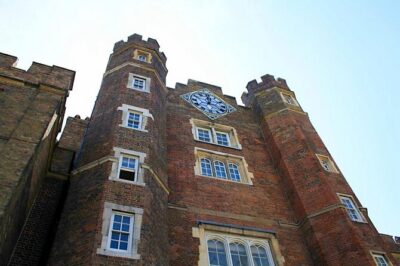
You’ll also walk by St. James’s Palace, described as the most senior royal palace in the UK. It’s been a royal residence for over 300 years, and it has held the setting for important events in royal history.
This is typically a “look and listen” stop, about 10 minutes, no ticket. It works well because palace history is easier to grasp when you’ve been primed by stops just before it. By now you’re already in the royal and government zone.
Buckingham Palace: Working monarchy in plain sight
You’ll see Buckingham Palace, the official London residence of the UK sovereigns since 1827. The tour information adds that it is a working building, with administrative headquarters of the Monarch.
This is a major photo moment. But it’s also a great time to listen, because the palace can feel like a postcard until you hear how the building functions day to day.
It’s about 10 minutes, free to view from the outside. If you want palace interior access, you will need another plan. This route is built for outdoor seeing and story context.
Churchill War Rooms: The wartime command centers you pass by
Next you pass Churchill War Rooms, part of the Imperial War Museum family. The tour description specifically points to the Cabinet War Rooms, an underground complex used as a British government command center during the Second World War, plus a Churchill Museum.
Important detail: the tour says admission for Churchill War Rooms is not included. So in practice, you’re likely getting the street-level context and the pointing-out moment, not ticketed entry.
If wartime history is your top interest, you may want to buy tickets separately and extend your day after the walk. The upside is that your guide can give you the framework first, so you appreciate what you’re stepping into later.
Big Ben and the Palace of Westminster area
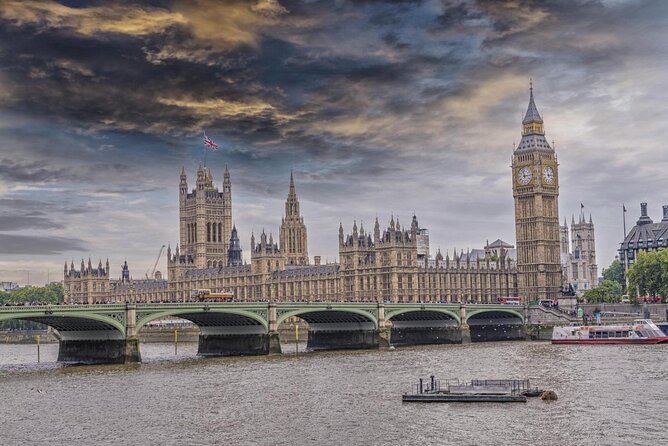
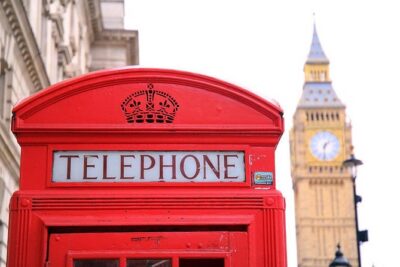
You’ll see Big Ben, described as the clock tower at the end of the Palace of Westminster. You’ll also see the Houses of Parliament, a Gothic building with history spanning over 900 years, where the House of Commons and House of Lords meet.
This section hits two important needs: landmark recognition and political context. Even without entering, it helps to understand how these buildings relate to Britain’s system of government and ceremonial traditions.
Ticket note: the tour says admission tickets are not included for Big Ben and the Westminster Abbey segment. That means you should plan on seeing them from the outside during this part.
Westminster Abbey: The finish with your entry ticket
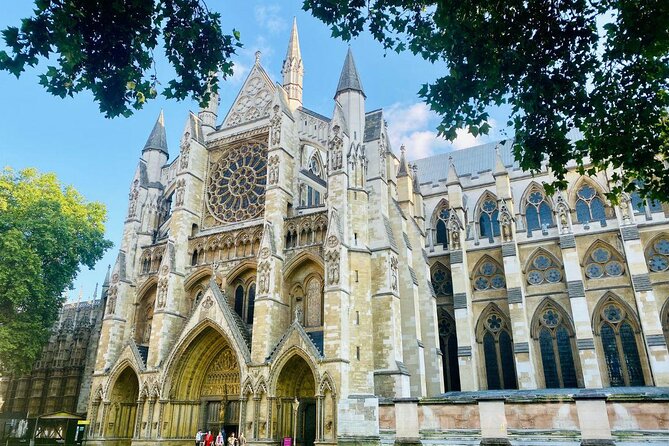
The tour ends at Westminster Abbey, with the stop timing about 10 minutes. Entry or interior touring with a guided guide is not included, but you do receive entry at the end of the tour. The interior is unguided, so you can explore on your own.
This ending is designed well. You build up meaning through the walk, then you step into the Abbey when your brain is already primed to notice royal and political connections. The interior might feel less random than if you visited without context.
One more practical note from the tour details: the tour finishes with entry tickets, and it sounds like that entry is at the end only, not during earlier stops. So be ready to transition right away when you reach the Abbey area.
The Landmarks You See from the Outside, and What You Miss

This is a classic “see the icons, learn the story” walking tour. Several major sights are viewed from the outside, and the tour data is upfront that security can limit inside access. That means you should not expect behind-the-scenes visits during the walk.
You do get one strong built-in exception: Westminster Abbey entry at the end. But even there, it is unguided, not a guided tour.
Also, Churchill War Rooms and Big Ben are mentioned with tickets not included. You may be passing by these, or stopping at the viewing points, but you will probably need to plan separate admission if you want deeper time.
The tradeoff is time and value. You get a large downtown overview in one sitting, instead of spending your whole day queuing for individual attractions. If your goal is orientation and context, this format is a good match.
History Lessons That Actually Help You Navigate London
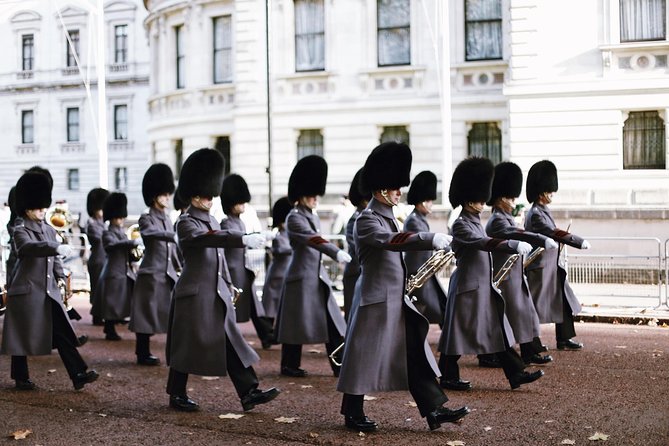
The guide portion is what turns “cool buildings” into a city you can understand. The tour description says the route includes stories dating back to Roman times, and it adds leader-focused context around Queen Elizabeth II and Winston Churchill.
That approach matters. When you understand the roles these places played, you see more than architecture. You see how Britain’s power shifted over time, from early urban roots through monarchy and wartime command, then into modern government.
The reviews reinforce that the guides keep the information clear and fun. I noticed names like Matilda, Guy (the animal whisperer), Andrew, Gerg, Andy, Jake, Alexandra, Becky, and Becca. More than the names, the common theme is guides who tailor the talk to the group, keep it upbeat, and make history feel usable instead of like a lecture you can’t keep up with.
One helpful tip you’ll benefit from during the walk: ask questions as you go. In a small group, questions do not slow everything down as much. This is the kind of tour where one question can reshape how you look at the next street corner.
Price and Value: Why About $59.28 Might Be a Smart First-Day Plan
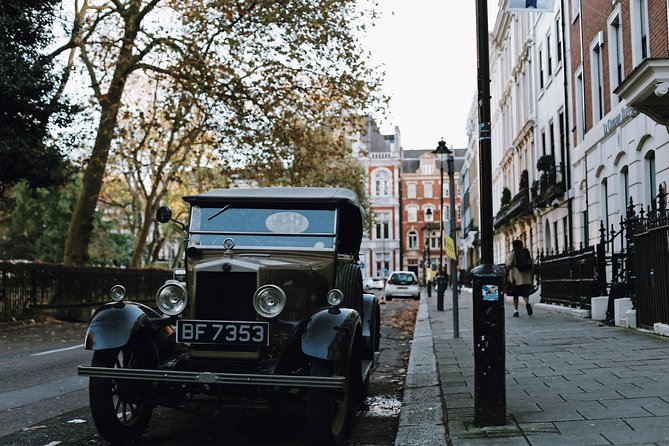
At $59.28 per person, you are paying for a guided, structured walk through a dense cluster of London icons in about 2.5 hours. That price is not only for the guide. It also covers the time you save by skipping the guesswork about what to see and the storytelling that helps the sights connect.
If you were to do this self-guided, you would still spend time tracing routes. You would also miss some of the context, especially around things like why Whitehall evolved into the government hub area, or why Trafalgar Square became more than a monument.
The value is strongest if you do this early. One review specifically called it a first-day introduction. That makes sense. You walk away with bearings, and later tickets and neighborhoods feel easier.
What you should expect to pay separately: Churchill War Rooms and Big Ben admissions are not included, and inside Westminster Abbey is unguided. So think of this as the orientation layer, not a full attraction bundle.
Who This Walk is Best For, and Who Should Plan Differently
This tour fits active people who like moving city to city on foot. The tour details call for moderate physical fitness, and it is not available for those with walking disabilities or wheelchair users. If you need step-free routes or longer sit-down breaks, you should look for an alternative format.
It is also a solid pick for families. One review noted that a family liked how the guide made the visit work for both kids and adults, and another mentioned the group size helped everyone enjoy it. If you travel with kids, a timed stop structure can help keep attention.
If you love history, but you hate information overload, this hits a practical middle. You get time to see each landmark, hear the main story, then move on. For anyone who wants to understand the Royals, Parliament, and wartime Britain in one compact loop, it’s a good match.
If you’re the type who wants deep museum time and long interior exploration, you’ll likely want to pair this tour with separate tickets afterward. The walk sets the stage. It does not replace longer indoor visits.
Should You Book This London City Center Tour?
I’d book it if you want the fast London overview, with a guide who can connect the big landmarks to real stories. The 12-person max format, the strong end point at Westminster Abbey entry, and the fact it is built to run rain or shine all point to a practical, low-stress plan.
I would skip or rethink it if you mainly want inside access at multiple attractions, since the tour notes that some inside visits are limited and Churchill War Rooms and Big Ben tickets are not included. I’d also reconsider if your mobility needs are beyond a moderate walking route.
If you are coming in with limited time and want your first day to feel organized, this is one of the simplest ways to get there.
FAQ
Where does the tour start and where does it end?
The tour starts in Covent Garden, London and ends at Westminster Abbey.
How long is the London city center tour?
It runs for about 2 hours 30 minutes.
What is the group size limit?
This is a semi-private walking tour with a maximum of 12 travelers.
What is included at Westminster Abbey?
Westminster Abbey entry is included at the end of the tour, but a guided tour inside the Abbey is not included. The interior visit is unguided.
Are there extra tickets needed for Churchill War Rooms or Big Ben?
Yes. The tour data lists Churchill War Rooms and Big Ben as not included for admission.
How does cancellation work if plans change?
Free cancellation is available if you cancel up to 24 hours in advance for a full refund. If you cancel less than 24 hours before the start time, the amount you paid is not refunded. The tour also has a minimum number of travelers, and if it does not meet that minimum, you will be offered an alternative date or a full refund.
More Private Departures






More City Runs In London






More History Led Walks






Fresh off the notebook in London
- Private Rock ‘n’ Roll Music Tour of Central London
★ 5.0 · 7 reviews - London Walking Tour: Camden Town Photography Walkabout
★ 5.0 · 7 reviews - Private Transfer from London accommodation to Cruise terminal
★ 5.0 · 7 reviews - Amazing Nightlife in London East Tour
★ 4.5 · 7 reviews - The British Museum: a highlights tour with a TV historian
★ 5.0 · 7 reviews - Heathrow Airport to Cambridge private taxi transfers
★ 5.0 · 7 reviews
Historical Tours, compared.
 ★ 5.0London Small Group Tour of Historical PubsFrom $4010,422 reviews
 ★ 5.0Soho Music & Historic Pubs TourFrom $441,993 reviews
 ★ 5.0Shadows of York: Ghost Walk and Horrible History.From $181,403 reviews
 ★ 5.0Private Historical Walking Tour of YorkFrom $1951,324 reviews
 ★ 5.0A Walk Through Time: History of Liverpool Walking TourFrom $27911 reviews
 ★ 5.0Royal Historic Pubs Walking Guided Tour in LondonFrom $44803 reviews
 ★ 5.0Private Group: Historical Pub Walking Tour of LondonFrom $173660 reviews
 ★ 5.0Best Of Liverpool Heritage, History & Culture Guided Walking TourFrom $31539 reviews
Browse the lists this tour appears in