
REVIEW · HISTORICAL TOURS
City of London Historic Walking Tour (With Rooftop Visit*)
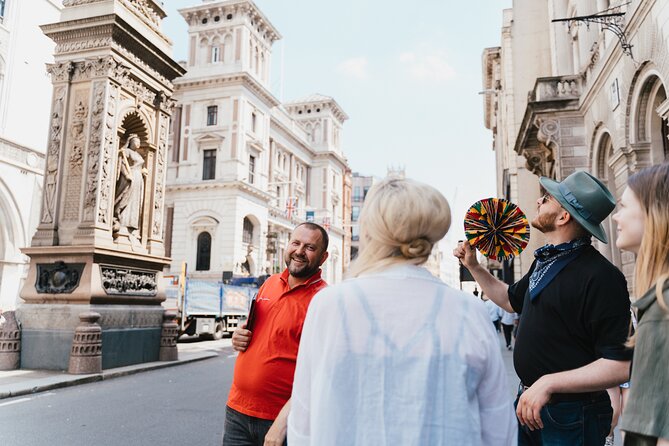
Two thousand years, told on a smart walk. You cover the City of London with stops that feel like live history, from Wren-era churches and the RAF story at St Clement Danes to courtroom power at the Royal Courts of Justice, all threaded together with humor. The icing is a Garden at 120 rooftop visit on Sundays and Mondays, when you get a wide skyline view.
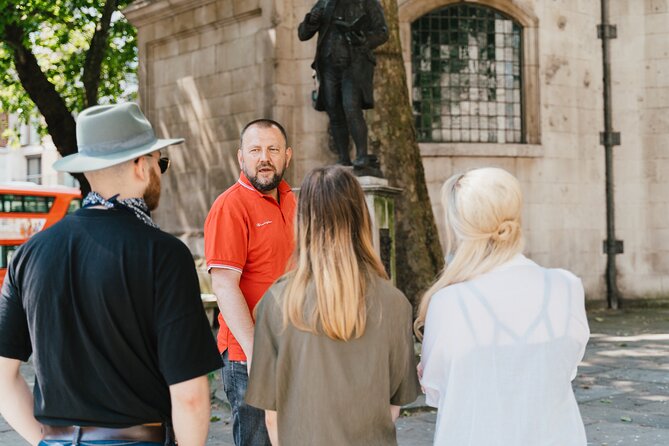
I love how the guide helps you spot details you would miss on your own, like the boundary marker at Temple Bar and the courtyard story connected to Dr. Samuel Johnson’s dictionary. I also love the tour’s family-friendly energy, with guides such as Matt and Margaret highlighted for being funny and patient when kids ask questions.
One possible drawback: most stops are focused on seeing and learning from the outside or from specific viewpoints, and the tour does not include admission tickets for many sites. Plan for extra entry costs if you decide you want to go in beyond what the tour covers.
In This Review
- Key things that make this tour work well
- City of London in Three Hours, plus a Rooftop Skyline
- Price and what you actually get for $49
- Logistics that keep the walk easy to follow
- St Clement Danes, Royal Courts of Justice, and the City’s serious face
- Temple Bar and the 2,000-year boundary trick
- Dr. Johnson’s House, the Johnson courtyard statue, and a dictionary moment
- Ye Olde Cheshire Cheese and why pubs fit into history routes
- St Bride’s Church and the journalists’ connection
- St. Paul’s Cathedral and the Wren view strategy
- Royal Exchange, Mansion House, and Bank of England vault time
- The Monument to the Great Fire and the stairs-and-views choice
- London Bridge, The Shard, and Tower Bridge from the river view
- HMS Belfast and why the Thames is more than scenery
- Tower of London: fortress layers and what to look for
- Garden at 120 rooftop on Sundays and Mondays
- Who this tour is best for
- Should you book the City of London Historic Walking Tour?
Key things that make this tour work well
St Bride’s Church is described as a major landmark with roots back to the 6th century, but the current structure is credited to Christopher Wren and completed in 1675 after the Great Fire of London. You also learn why it is called the Journalists’ Church, tied to the nearby newspaper and printing industries.
The architecture gets the attention it deserves. The tour calls out its distinctive tiered spire and suggests it inspired the tiered design idea behind traditional wedding cakes.
This stop feels especially good for anyone who likes London’s working culture. You get a sense that print and news were once anchored in physical buildings you can still stand near.
St. Paul’s Cathedral and the Wren view strategy
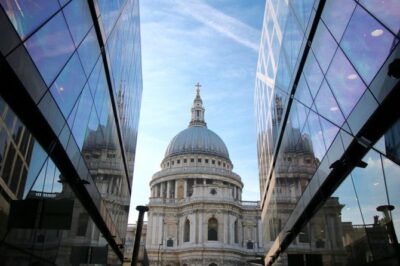
St Paul’s Cathedral is one of the most recognizable landmarks in the world, and the tour treats it as a moment for camera work. You learn it was Christopher Wren’s masterpiece, completed in the early 1700s, and you hear about major events connected to it, including the funeral of Sir Winston Churchill and the wedding of Prince Charles and Lady Diana Spencer.
If you are the type who likes meaning, the interior details matter too: mosaics, impressive arches, and the Whispering Gallery are highlighted for their acoustics. Even if your personal plan does not include going inside, the guide’s approach is practical, helping you get the best views of the building so your photos look intentional.
You then move to another Wren church completed in 1680 after the Great Fire of London. The tour links it to the Bow Bells tradition, using that as a way to talk about Cockneys as people born within earshot of the bells. You also walk along the Cheapside area, tied to the city’s medieval market place.
Royal Exchange, Mansion House, and Bank of England vault time
The Royal Exchange Building is explained as a historic commerce hub, originally established in the 16th century under Queen Elizabeth I. The current building is newer, opened in 1844 and designed by Sir William Tite in a neoclassical style with a grand portico and Corinthian columns. The practical takeaway: the Exchange still functions as a commercial site, mixing luxury shops, restaurants, and offices.
Then you hit Mansion House, the official residence of the Lord Mayor of London. Built between 1739 and 1752 by George Dance the Elder, it is a Georgian-style facade with Corinthian columns. The tour adds color by noting it hosts ceremonies and receptions for dignitaries, and it plays a role during the annual Lord Mayor’s Show.
After that comes the most striking “how does a building work?” stop: the Bank of England Museum. The tour frames the Bank as the UK’s central bank and explains its role in monetary stability, setting interest rates, and regulating the financial system. Then you get the wow detail, your guide having you stand on top of the vaults, described as holding 310 tonnes of solid bars of gold.
If you usually skim finance stories, this stop is a good reset. It turns an abstract institution into something physical you can picture.
The Monument to the Great Fire and the stairs-and-views choice
No London route through the City should ignore the Great Fire, and this one gives it a signature location: the Monument to the Great Fire of London.
The tour shares the story that Christopher Wren was chosen by King Charles II to rebuild the City and to build the Monument to commemorate the disaster. The Monument is open to the public, and the tour notes you can climb 211 steps for unique views of the capital.
Your main decision here is whether you want to do the climb. If you are in good shape and your group likes viewpoint payoffs, this is the type of effort that feels worth it. If not, even just standing nearby while the guide explains the story helps you connect London’s layout to why rebuilding mattered.
London Bridge, The Shard, and Tower Bridge from the river view
Then the tour starts working its magic with river landmarks. London Bridge is introduced as a site with crossings since AD42. The guide adds a detail about a medieval version that famously fell down, and you also hear that the current bridge version was constructed in the 1960s. There’s even a playful line about where to go to see the previous version, with the guide joking about passports as you prepare for the photo hunt.
Next comes The Shard, described as the tallest building in Western Europe at 310 meters and completed in 2012 to a design by Renzo Piano. The tour frames it as controversial but visually unforgettable, with a glass facade and a pyramid-shaped summit for views from observation decks. Even if you do not buy tickets for the top, learning the design intent helps you understand why it dominates the skyline.
Tower Bridge is the iconic pairing. The tour highlights its Victorian engineering, completed in 1894, and points out the Gothic-style architecture and detailed design. You also learn it offers walkways for panoramic views, and the guide mentions you may get a chance to see it open on certain summer afternoon tours.
This whole Thames stretch works well because it shows the contrast between old crossings and new skyline statements. London keeps upgrading the same river corridor.
HMS Belfast and why the Thames is more than scenery
Across the water, you see HMS Belfast, a former Royal Navy cruiser now serving as a floating museum moored on the Thames. The tour’s story anchors it in World War II, including commissioning in 1939 and roles during the D-Day landings and the Arctic convoys.
For you, the value is clear: this is not just a ship you pass by. The tour explains that visitors can explore decks and compartments and that interactive exhibits and artifacts help you understand life onboard a warship. If you are the type who likes learning by touring physical spaces, this is a strong follow-on stop.
Then you get Thames River viewpoints. The tour frames the Thames as 215 miles long, flowing from the Cotswolds to the North Sea, and shaping London through trade, transport, and recreation. You get landmark examples along the banks like Tower Bridge and the Houses of Parliament.
Even in a short stop, you leave with a mental map of the river as the city’s spine.
Tower of London: fortress layers and what to look for
The Tower of London is introduced as one of London’s oldest buildings and a UNESCO World Heritage Site, founded by William the Conqueror in the 11th century. The tour positions it as a royal palace, prison, and treasury across its layered history, which helps you understand why the place looks the way it does.
Inside the complex, you are told what key areas are known for. The White Tower houses exhibitions of royal armour and weaponry, and the Jewel House is connected with the Crown Jewels. You also get pointers like medieval battlements and Tower Green as areas to imagine while you look around.
Because the tour duration is tight, you should treat this stop as a guided orientation moment. If you want deeper time inside specific buildings, you can plan a separate visit later with tickets.
Garden at 120 rooftop on Sundays and Mondays
The tour’s finale is the Garden at 120 rooftop, included on Sundays and Mondays only. This is where you get sweeping views over the London skyline, a payoff that makes the walk feel like more than a checklist.
The tour also warns you that at busy times there may be a small wait to access the garden. Plan accordingly, especially if you are traveling during peak season or on a clear weekend day when many people want skyline views.
Bring your camera, but also pause. Rooftops are great for wide shots, yet they are also useful for understanding distances, street lines, and how the City and river fit together.
Who this tour is best for
This is a strong choice if you want a guided overview of the City of London without doing a separate museum day for each landmark. It pairs well with first-time London visits because it explains how the City’s rules, courts, markets, and river crossings shaped what you see today.
It is also a nice fit for families. The tour is explicitly designed for everyone, including children, and guide behavior is a big part of the success. Names like Matt and Margaret come up in past experiences tied to humor and patience.
If your group prefers quiet, fully indoor experiences, you might find parts of the walk more active than you want. But if you like standing on sidewalks, hearing stories, and then getting a viewpoint, this format is built for you.
Should you book the City of London Historic Walking Tour?
I’d book it if you want a concentrated slice of the City with a guide who makes the facts stick, plus a rooftop view on the days it is offered. At $49 for about three hours, the value comes from guided storytelling at every stop, not just the landmarks themselves.
Skip or reconsider if your main goal is spending lots of time inside major attractions. Since many entries are not included, you may end up paying extra if you want indoor experiences at St Paul’s, the Bank of England Museum, or other stops.
Finally, if your travel style includes asking questions, this tour is a good match. The guided pacing and the guide approach are set up so people can keep up, which is exactly what you want when kids are part of the plan.
More City Runs In London






More History Led Walks





More Of London On Foot




Fresh off the notebook in London
- Private Rock ‘n’ Roll Music Tour of Central London
★ 5.0 · 7 reviews - London Walking Tour: Camden Town Photography Walkabout
★ 5.0 · 7 reviews - Private Transfer from London accommodation to Cruise terminal
★ 5.0 · 7 reviews - Amazing Nightlife in London East Tour
★ 4.5 · 7 reviews - The British Museum: a highlights tour with a TV historian
★ 5.0 · 7 reviews - Heathrow Airport to Cambridge private taxi transfers
★ 5.0 · 7 reviews
Historical Tours, compared.
 ★ 5.0London Small Group Tour of Historical PubsFrom $4010,422 reviews
 ★ 5.0Soho Music & Historic Pubs TourFrom $441,993 reviews
 ★ 5.0Shadows of York: Ghost Walk and Horrible History.From $181,403 reviews
 ★ 5.0Private Historical Walking Tour of YorkFrom $1951,324 reviews
 ★ 5.0A Walk Through Time: History of Liverpool Walking TourFrom $27911 reviews
 ★ 5.0Royal Historic Pubs Walking Guided Tour in LondonFrom $44803 reviews
 ★ 5.0Private Group: Historical Pub Walking Tour of LondonFrom $173660 reviews
 ★ 5.0Best Of Liverpool Heritage, History & Culture Guided Walking TourFrom $31539 reviews
Browse the lists this tour appears in